Think back to your last family Whats App group debate. Usually, it’s about a "buy land" tip from a random uncle or a viral recipe. But lately, the vibe is shifting.
Your cousin in Indore isn't asking about government exam dates anymore; she's asking about "seed funding" for her logistics app. And no, she hasn’t just been watching too much Shark Tank. She’s part of a nationwide fever.
While the world was busy worrying about global recessions in 2025, India was quietly building. The latest numbers from the DPIIT (Department for Promotion of Industry and Internal Trade) are staggering: India is now officially home to over 2.09 lakh registered startups.
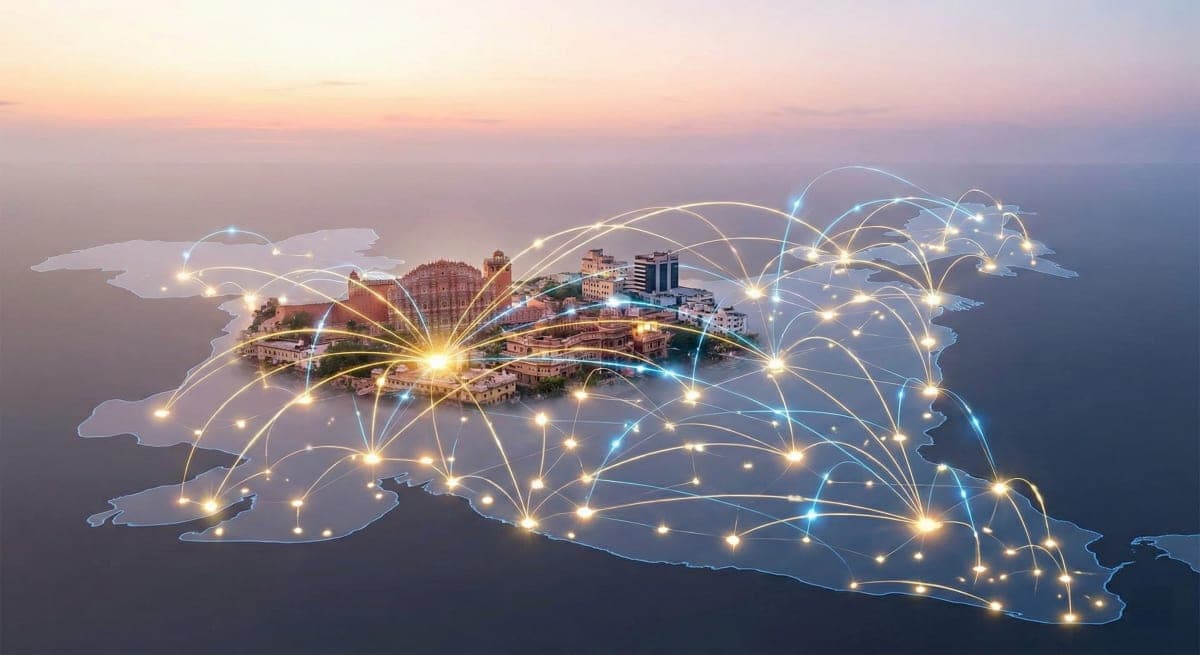
For years, the Indian startup story was a "Golden Triangle" affair—Bengaluru, Delhi-NCR, and Mumbai. That map has been set on fire. According to 2026 data, a staggering 52.6% of India’s startups now originate from Tier-2 and Tier-3 cities.
We’re talking about places like Jaipur, Kochi, and Lucknow becoming the new engines of innovation. These founders aren't building "me-too" apps; they are solving real-world problems like agri-tech supply chains and local-language fintech—things the "metro-bros" often overlook because they don't face those problems at a Starbucks in Indiranagar.
The math of the last year is wild. In 2025 alone, India added roughly 50,000 new startups. To put that in perspective:
- 🚀 That’s 136 new companies being born every single day.
- ⏱️ That’s roughly one every ten minutes.
- 👩💼 Nearly 45% of these have at least one woman director.
As the 8 th Pay Commission kicks in this month (January 2026), a massive wave of liquidity—roughly ₹3.7 to ₹3.9 lakh crore—is hitting the pockets of 1 crore employees and pensioners. This capital will flow directly into the products these new startups are building.
Are these "Zombie" startups? The real test isn't registration—it's revenue. With global interest rates acting like a rollercoaster, the "easy money" is gone. Only the startups that actually solve a problem and make money will survive the next 24 months.
The Bottom Line: The Indian startup story has moved from elite high-rises to the local nukkad. It’s about solving "Bharat" problems with Bharat's grit.
India currently has one of the lowest startup shutdown rates in the world, proving that Indian founders are masters of the "frugal pivot."
The "Technical" Peace Prize: On January 15, 2026, President Trump "technically" became an owner of a Nobel Peace Prize after laureate María Corina Machado physically gifted him her gold medal in the Oval Office. While the title isn't officially transferable, it's a first in geopolitical history!
Join 150,000+ smart readers. No spam, ever.