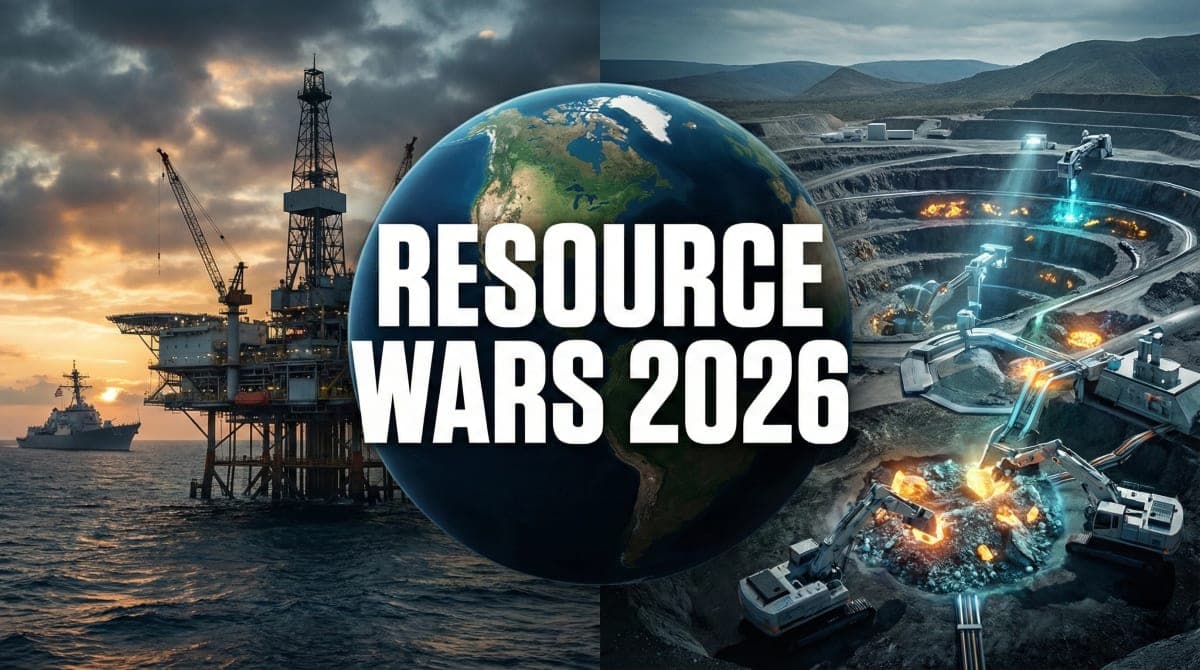
On January 3, 2026, the US launched Operation Absolute Resolve, a military move that resulted in the capture of Nicolás Maduro. To the world, it looked like a political movie. To a business analyst, it was a reorganization of the world’s largest oil warehouse.
Why it happened (The “Shadow Fleet” Problem) For years, Venezuela was like a store with a “Closed” sign on the front door, but a back door open for China and Russia. They used a “Shadow Fleet” of ghost tankers to buy oil at massive discounts, bypassing US sanctions.
The Strategy The US isn’t “invading” in the old sense; they are “managing.” President Trump has stated that US companies will repair the infrastructure and sell the oil to pay back the costs of the intervention.
The Analogy: Think of it like a bank taking over a broken-down apartment building. They fix the plumbing, find new tenants, and take the rent to pay off the debt.
What it means for your wallet If you live in India, this is a potential win. Indian oil companies like ONGC Videsh have nearly $1 billion in unpaid dues stuck in Venezuela. With the US running the “back office,” those checks might finally clear.
While the US is “fixing” Venezuela, it is “squeezing” Iran. The new policy is a 25% secondary tariff on any country that trades with Iran.
The Target: China This isn’t really about Iran; it’s about China’s fuel bill. China buys over 80% of Iran’s oil. If they want to keep buying that oil, their exports to the US suddenly get a 25% “tax.”
The Squeeze: China is forced to choose: stop buying Iranian oil or pay billions in extra tariffs to the US. Either way, China’s manufacturing costs go up.
The Impact on India For India, the direct trade impact is small (our trade with Iran has dropped to $1.6 billion), but the Chabahar Port is the big concern. This port is India’s gateway to Central Asia. India is now working on a “Strategic Balance” to keep the port running without triggering US tariffs.
If you want to build an EV motor, a drone, or a fighter jet, you need Rare Earth Elements. For 30 years, China had a 90% monopoly on the “cooking” (processing) of these minerals.
The “Rapid SX” Game-Changer The US has stopped trying to out-mine China and started trying to out-tech them. New technology called Rapid SX is coming online in 2026. Traditional processing is slow and toxic; Rapid SX is 3-7 times faster and uses 60% less space.
The most mysterious part of the story is happening inside China. Over the last few days, President Xi Jinping has purged his top military command, including General Zhang Youxia, the vice chairman of the Central Military Commission.
The Bombshell Allegation: The Wall Street Journal reports that Zhang is being accused of leaking military nuclear secrets to the US.
The Result for Markets: This signals a breakdown in trust within the Chinese leadership. Analysts suggest this purge reduces the risk of an imminent Taiwan invasion, giving global markets a much-needed “stability window.”
We are moving away from “Just-in-Time” (cheap but risky) to “Just-in-Case” (secure and local). Smart money is moving here:
- The “Dirt” is Gold: Companies with mineral rights in “friendly” countries are the new darlings.
- India’s Middle Path: Amid global re-shoring, India’s 8.2% growth looks like the world’s safest bet.
- Dividend Recovery: Keep an eye on Indian oil PSUs. The “Venezuela Recovery” could bring a massive cash-flow surprise.
The “Resource Siege” of 2026 is a reminder: You can have the best AI in the world, but if you don’t have the oil to power the servers or the magnets to build the motors, the AI is just code on a screen.
Is your portfolio parked in the clouds, or grounded in the stuff that makes the world move?