Imagine using a smartphone app that hasn't been updated since the 60s. It would be buggy, slow, and full of "patches" that don't quite fit. That was India’s Income Tax Act of 1961.
But as of April 1, 2026, the government has officially hit the "Reset" button. The old law has been replaced by the Income Tax Act, 2025.
Here is everything you need to know about this massive upgrade, explained simply.
1. The ₹12 Lakh "Zero Tax" Milestone
The biggest news for the middle class is the new effective tax-free limit.
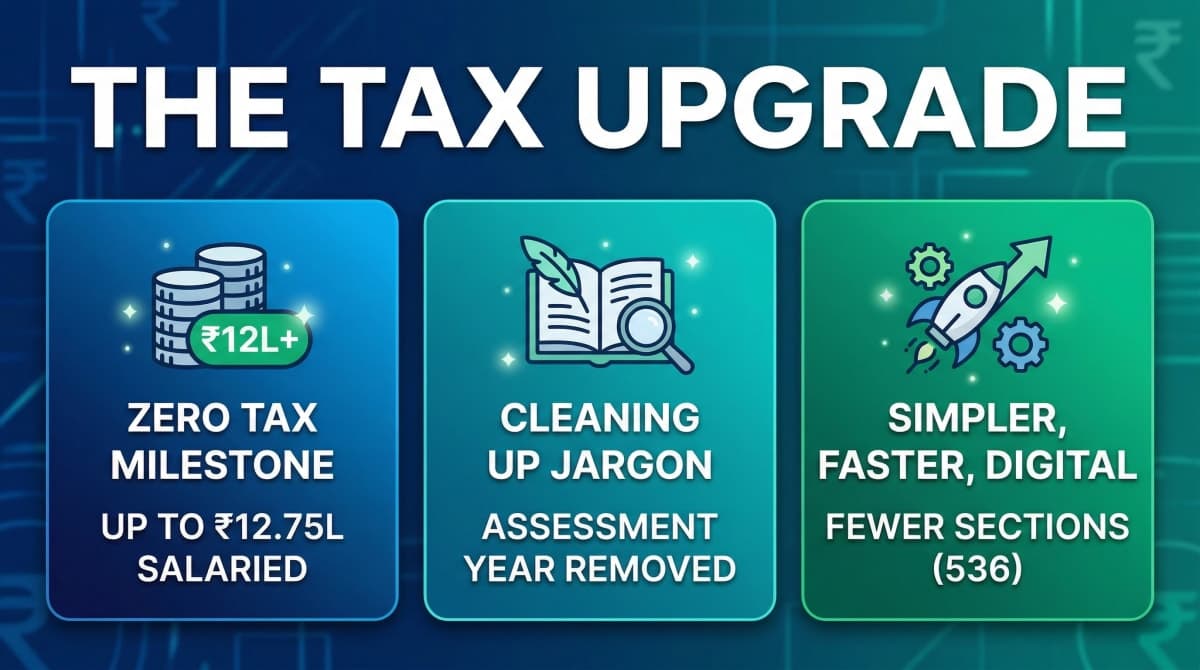
The Rule: If your taxable income is ₹12 lakh or less, you pay zero income tax under the new regime.
How it works: This is achieved through a massive Section 87A rebate (now worth up to ₹60,000).
The "Salaried" Bonus: Since salaried employees get a Standard Deduction of ₹75,000, you can actually earn up to ₹12.75 lakh and still walk away with a tax bill of zero.
2. Cleaning Up the Jargon
The 1961 Act was famous for confusing terms like "Assessment Year" and "Previous Year." The 2025 Act throws those out the window.
Old TermNew TermWhat it meansPrevious YearTax YearThe year you actually earned the money.Assessment Year(Removed)The year you file; now synced with the Tax Year for clarity.Form 16Form 150Your proof of salary and tax deducted.Form 16AForm 151Proof of tax deducted on other income (like interest).
3. Why the Change? (The "Software Update" Analogy)
The 1961 Act had grown from a manageable document into a beast with over 800 sections. It was filled with "provisos" (exceptions to rules) that made it a nightmare for anyone without a CA degree.
Fewer Sections: The new Act has trimmed the fat, reducing the number of sections significantly (from 819 down to 536).
Plain Language: It’s written in modern English, replacing "legalese" with clear instructions.
Digital-First: The law is now built around the e-filing portal, making the process native to the internet rather than paper.
4. What About "The Catch"?
While the simplification is great, there are a few things to keep in mind:
The New Regime is Default: To get the ₹12 lakh benefit, you must stay in the New Tax Regime. This regime doesn't allow most old-school deductions like LIC, PPF (80C), or Home Loan interest for self-occupied houses.
The "Cliff" Relief: If you earn slightly over ₹12.75 lakh, the government has introduced Marginal Relief. This ensures you don't end up paying more in tax than the actual extra income you earned.
5. Summary Timeline
July 2024: Overhaul announced.
February 2026: Final rules and forms (like Form 150) notified.
April 1, 2026: The New Income Tax Act, 2025 officially takes over.
Bottom Line: The goal of this "Tax Upgrade" isn't just to save you money it's to save you the headache of trying to understand a 64-year-old relic.