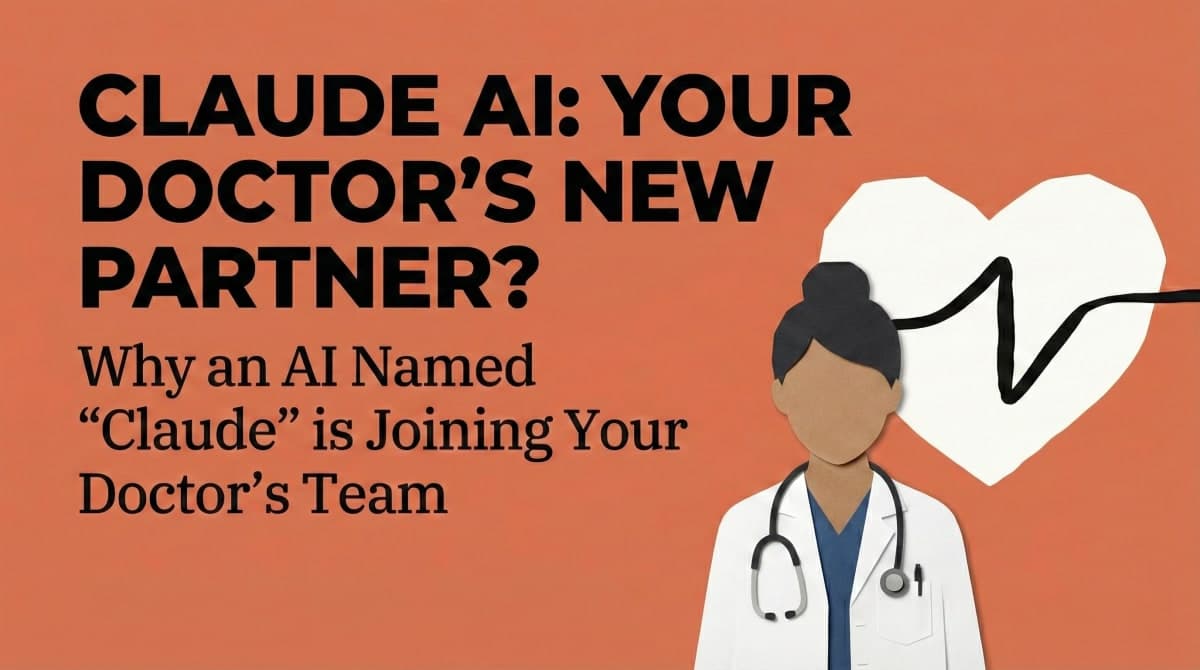
We have all been there. You wait for an hour in a doctor's office. When you finally get inside, the doctor has only five minutes to see you. They are busy typing on a computer, filling out forms, or looking through old files.
It feels like the doctor is spending more time with the "system" than with you. This happens because medical data is messy and huge. No human can remember every new study or check every insurance rule in a few minutes.
This week, a company called Anthropic launched a tool called Claude for Healthcare. It is designed to act like a super-assistant for doctors, doing the boring paperwork so they can focus on healing people.
To build this, the AI was "fed" millions of medical research papers and insurance rules. It isn't just a chatbot; it is a specialist.
- It never forgets: It has read 35 million medical papers.
- It understands insurance: It knows exactly what your plan will pay for.
- It is fast: Tasks that take humans days (like summarizing a long medical history) take Claude about 25 seconds.
India is often called the "Pharmacy of the World" because we make a lot of affordable medicines. But usually, we only make medicines that were invented in other countries.
Inventing a new medicine is very expensive it usually costs around ₹16,000 crore ($2 billion) and takes 10 years. Most attempts fail.
AI tools like Claude help Indian scientists predict which medicines will work before they even go into a lab. This could cut the cost and time in half. This means Indian companies like Sun Pharma or Cipla can start inventing their own world-class drugs.
As of Jan 2026, India has linked over 82 crore (820 million) health records.
This gives India the biggest "library" of data to train these AI tools.
If you follow the stock market, watch these two groups:
- The "Inventors" (Pharma): Companies that use AI to find new cures will save billions of dollars.
- The "Plumbers" (IT Companies): Hospitals have very old computers. Companies like TCS and Infosys are being paid to connect these new AI brains to the old hospital systems.
Technology is great, but health is personal. There are two big things to worry about:
1. Privacy: When you give your medical data to an AI company, where does it go? Anthropic says they don't "look" at your data to train their models, but we have to stay careful.
2. Responsibility: If the AI makes a mistake and the doctor follows it, who is at fault? This is a legal puzzle that India and the rest of the world are still trying to solve.
If markets stress you out, you are not alone.
That is exactly why we built First Scroll. It is a daily, five minute, mobile first finance read that explains what happened, why it matters, and what to remember without hype or panic.
Subscribe to First Scroll