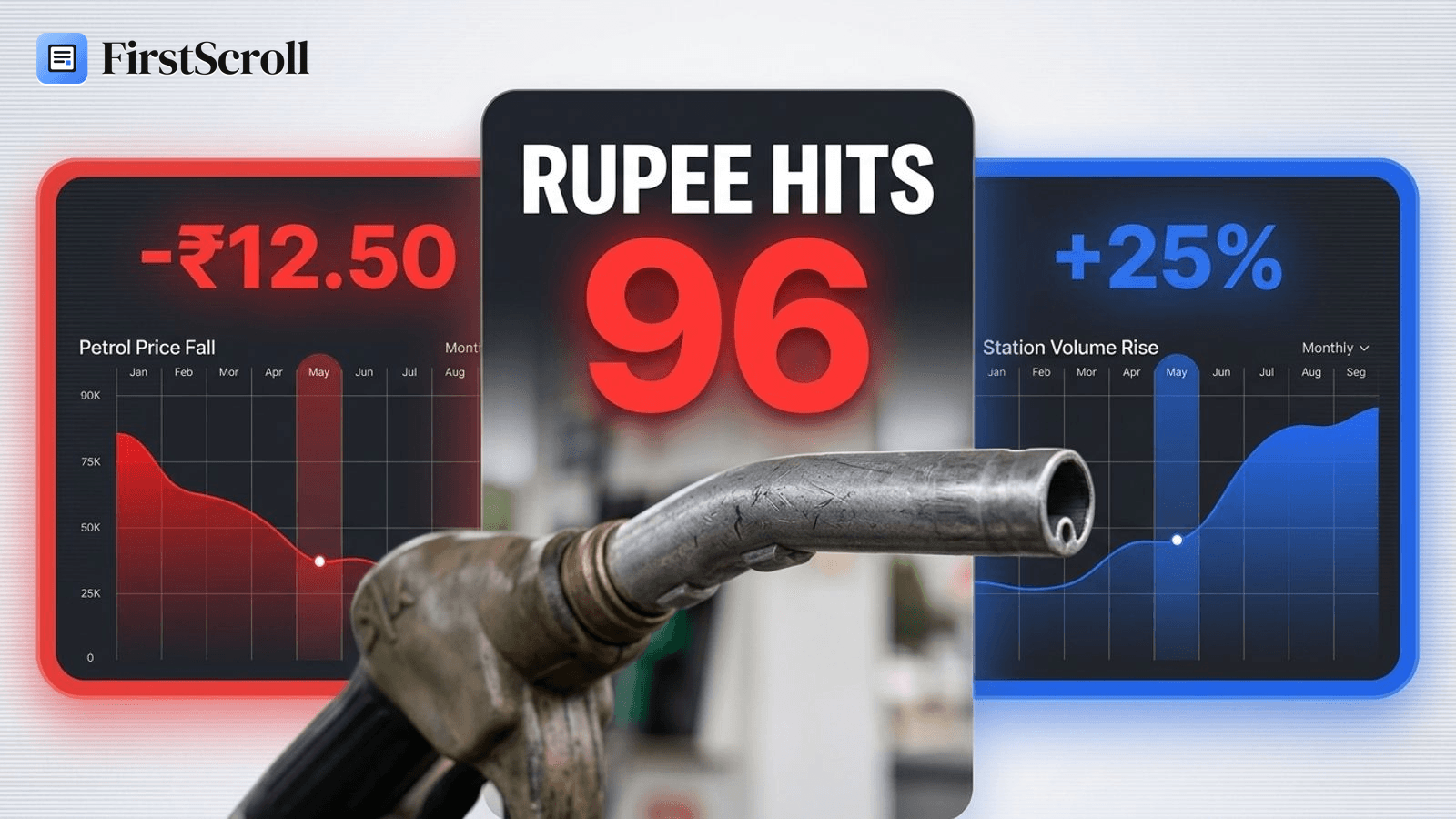
In today's FirstScroll, we break down why your petrol bill barely moved during an oil crisis, and reveal who quietly paid the difference.
With that out of the way, let's dive into today's story.
The Story
Think back to the last time you filled your tank. Crude oil was making front-page headlines. Tankers were dodging the Strait of Hormuz. India's import bill had jumped 60% in a single quarter.
And yet, at your neighbourhood petrol pump, the number on the machine looked almost exactly like it did in March.
That should feel strange. India supposedly moved to market-linked fuel pricing years ago. When crude goes up, pump prices are meant to follow. This time, crude went vertical and your bill just... sat there.
So the question is, if you didn't pay for the world's most expensive oil crisis in years, who did?
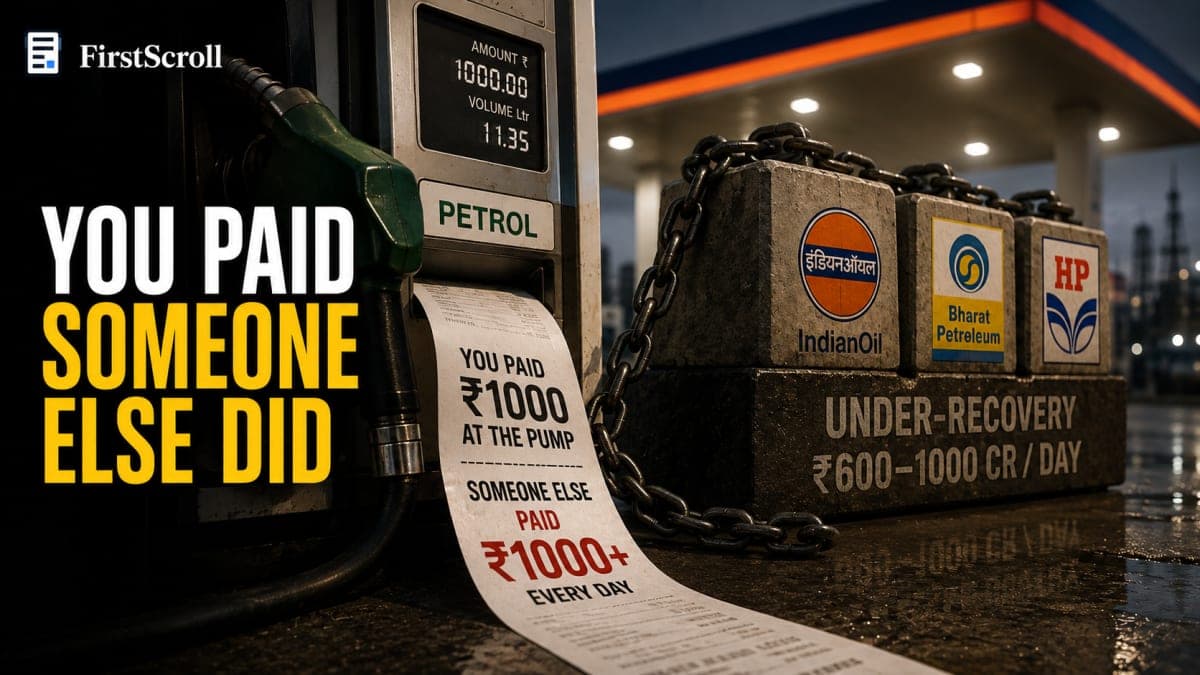
The answer is three companies most of us only know as logos on a fuel station: Indian Oil, Bharat Petroleum and Hindustan Petroleum. Together they're called oil marketing companies, or OMCs, and they sit in the middle of a simple sandwich. They buy crude at global prices, refine it, and sell you petrol at the pump.
When both slices of that sandwich move together, the OMCs earn a steady margin. But when crude spikes and pump prices freeze, the sandwich gets crushed, and the OMCs absorb the gap. The industry has a polite name for this: under-recovery. It means selling every litre for less than it cost to produce.
And in the June quarter, that gap was brutal. Analysts at PL Capital estimated OMCs were losing about ₹7 on every litre of petrol and ₹10 on every litre of diesel. On cooking gas, the damage was worse, with losses estimated at nearly ₹500 on every LPG cylinder. At the peak of the crisis, government sources put the industry's combined bleed at somewhere between ₹600 crore and ₹1,000 crore every single day.
Now, why would three listed companies volunteer to lose that kind of money? Because they didn't exactly volunteer. All three are majority-owned by the government, and the government has a second priority besides their profits: keeping inflation, and voters, calm. Fuel feeds into the price of everything that moves on a truck. Let pump prices track crude in a crisis, and you import the crisis straight into every kitchen in the country.
So the pain got split. The government gave up tax revenue through a ₹10 per litre excise duty cut, which absorbed part of the gap. The OMCs swallowed the rest on their books. And you, the person at the pump, felt almost nothing.
But there's a twist here. That excise cut was crisis management, not policy. And now that crude has cooled, with Brent slipping below $80 a barrel after the US-Iran ceasefire, analysts warn the government may quietly roll the duty back to recover its lost revenue. Which sets up a small irony: your fuel bill could stay flat, or even rise, while crude gets cheaper. The relief you never noticed arriving may also leave without saying goodbye.
Now to be clear, this arrangement did its job. Supplies never broke, there was no rationing, and inflation was spared a direct fuel shock at the worst possible moment. As shock absorbers go, the system worked.
But shock absorbers wear out. Estimates floating in government circles suggested the June quarter alone could cost the OMCs as much as ₹1.2 lakh crore, enough to wipe out nearly a full year of profit. That's money that won't go into refinery upgrades, green energy plans or dividends, some of which flow right back to the government.
So the honest answer to our question is this: you did pay for the oil crisis. Just not at the pump. You paid through the taxes the government gave up, and through the balance sheets of companies your government owns on your behalf. The bill never disappeared. It just changed its address.
Whether the OMCs get compensated, or simply carry the scar into next year, is something only time will tell.
Until then…
If this story helped you make sense of your fuel bill, share it with a friend on WhatsApp, LinkedIn or X.