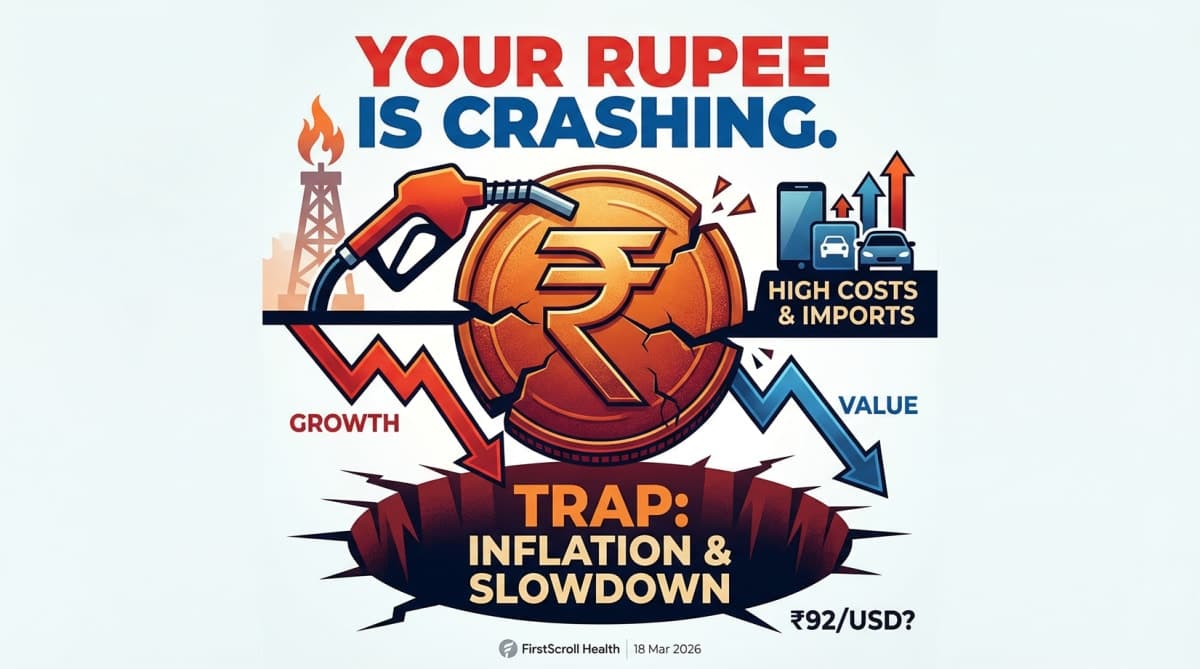
The Indian rupee just hit an all-time low against the dollar. Most people shrug at that headline. They probably shouldn't.
Last week, the Indian rupee crossed ₹92 to the US dollar a level it had never touched before. It's been inching toward this for weeks. And unless something changes in West Asia soon, it's probably not done falling.
But here's the thing most people hear "rupee falls" and tune out. It sounds like a number that economists argue about on news panels. It doesn't feel real.
It is very real. And it's already in your grocery bill.

To understand why the rupee fell, you need to go back to February 27, 2026 the day the Iran conflict escalated sharply. Missiles hit oil facilities. Ships stopped moving through the Strait of Hormuz. And crude oil, which was already expensive, jumped by nearly 20% in just a few weeks.
India imports about 85% of the crude oil it uses every day. When crude prices go up, India suddenly needs to spend a lot more dollars to buy the same amount of oil. More dollars flowing out means less demand for the rupee. And when there's less demand for the rupee, it loses value against the dollar.
Simple enough. But the real damage shows up in a chain reaction.
1 Petrol and diesel prices go up.
When crude costs more and the rupee buys less, fuel becomes expensive. Transport costs rise across the board.
2 Everything that moves by road gets costlier.
Vegetables, milk, packaged goods they all travel in trucks running on diesel. Higher freight costs land on your supermarket shelf.
3 Imported goods become pricier.
Electronics, edible oil, fertilisers India imports a lot. A weaker rupee means all of it costs more in rupee terms.
4 The RBI is stuck.
To stop inflation, the RBI would normally raise interest rates. But the economy is already slowing. Raising rates now could choke growth further. It's a trap.
Finance Minister Nirmala Sitharaman said this week that higher oil prices won't have a "substantial impact" on inflation. The RBI is quietly injecting ₹50,000 crore into the banking system to keep liquidity steady. Both are trying to buy time.
There is a small silver lining, though. A weak rupee is actually good news for a certain group of Indians the roughly 18 million people living abroad who send money home. When the rupee is weak, every dollar they remit converts into more rupees for their families. Remittances to India were already over $120 billion last year. Expect that number to go up.
But for everyone else the salaried worker, the small business owner, the student taking an education loan in dollars the math doesn't work in their favour.
The war in West Asia is thousands of kilometres away. The rupee is right here in your wallet. And right now, both stories are the same story.
Written by FirstScroll · 18 March 2026