In today's FirstScroll, we break down why pre-IPO investors paid ₹300 for Hero Motors shares, and why the official IPO price is up to 77% cheaper.
The Story
Imagine a regular investor browsing a WhatsApp group for "exclusive" financial deals. They see a buzz about Hero Motors, a legendary name in Indian industry, and a message saying shares are available before the company goes public.
They are told this is a once in a lifetime chance to get in early. They pay ₹300 per share, convinced that once the company hits the stock exchange, the price will rocket even higher.
The investor feels like an insider, holding a piece of a giant before the rest of the world can touch it. They wait for the official announcement, expecting a price tag that reflects the "premium" they paid.
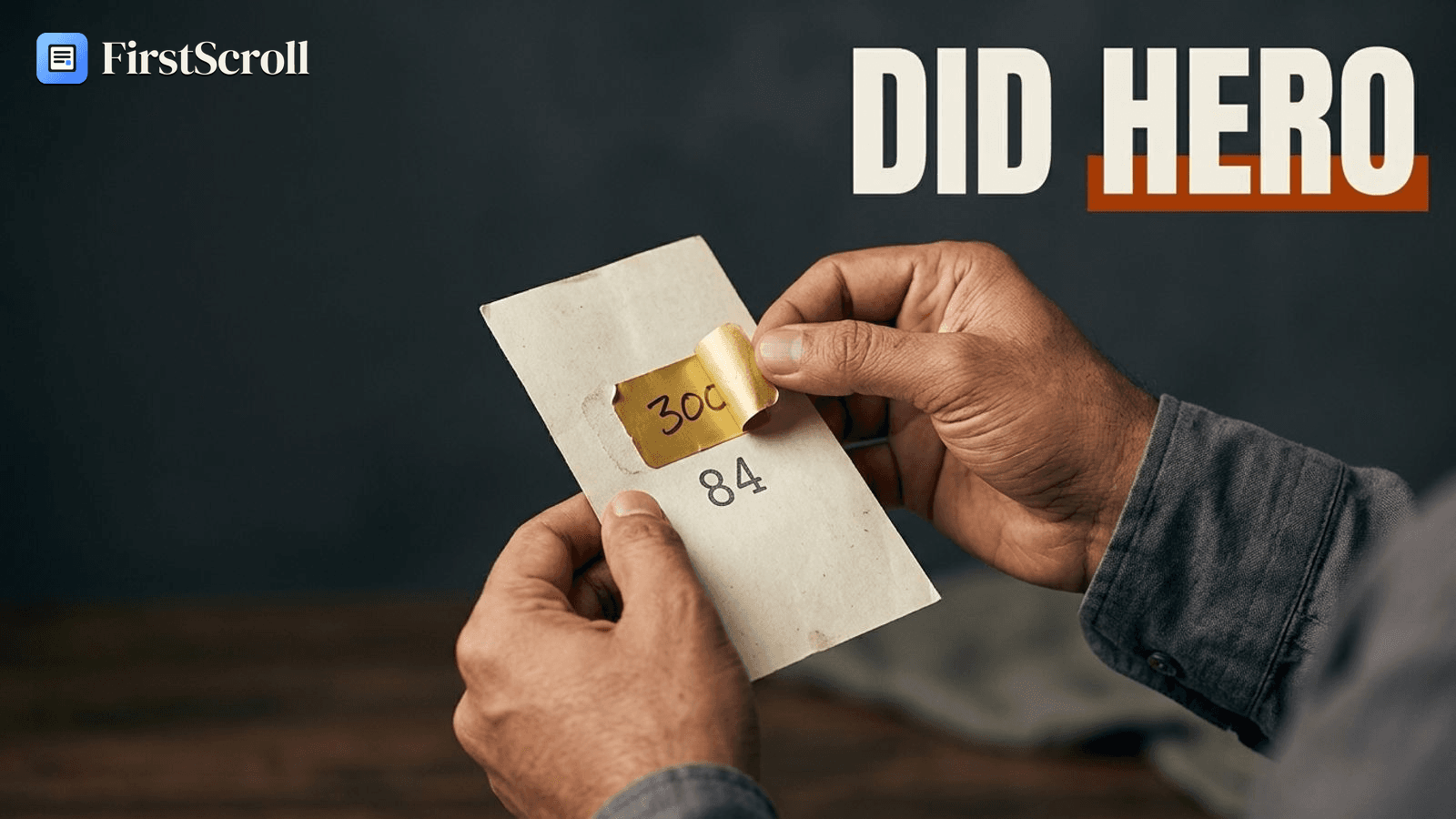
Then, the official news hits the screens. Hero Motors sets its IPO price band between ₹79 to ₹84 per share.
In a single morning, those "exclusive" shares lost nearly three quarters of their value. At the lower end of the band, the price was a 77% discount to the unlisted price.
And here is the strange part. While the unlisted market was quoting ₹300, the company itself decided its business was only worth about ₹80 per share. One broker compared it to buying a silk saree at full price, only to see the store announce a 72% clearance sale a few days later.
So here's the question: if pre-IPO investors were happily paying ₹300 for these shares, why did the company say they were only worth ₹80?
You see, the problem is not how much the company is worth. It is how the unlisted market "discovers" a price when there is almost no information and very few shares to go around.
Think of the unlisted market as a small, private auction in a room with no windows. Because you cannot see what is happening in the street outside, you rely entirely on what the person next to you says a fair price should be.
In the case of Hero Motors, the room was very crowded but the supply was tiny. Promoters and their group own 85.57% of the company, leaving very little for anyone else to trade.
When supply is that low, even a tiny bit of interest can send prices spiraling upward. Since there is no official exchange, prices are often based on whatever a seller feels like asking, and websites simply report those numbers without checking if any real trades happened.
Now add the second ingredient: something called an Offer for Sale (OFS). This is essentially an exit door for early investors or promoters to cash out their shares.
The Hero Motors IPO includes a ₹600 crore fresh issue and a ₹400 crore OFS. You can find these details by learning how to read a DRHP in fifteen minutes.
Now, this is just one company, so why should you care? Because thousands of retail investors are flocking to unlisted shares, hoping to find the next "multibagger" before it lists.
Wealth managers often fuel this fear of missing out. They encourage investors to buy in the private market even when the eventual IPO price is a total mystery.
So who wants what here? The sellers in the unlisted market want the highest price possible, often quoting 52 week highs to lure buyers. The company, however, wants a successful IPO, which means pricing the shares at a level where the public actually wants to buy them.
This creates two completely different realities. One is a bubble built on hype and low supply, and the other is a sober valuation based on what the broader market can actually afford.
But here's the twist. Not every unlisted stock is a trap. Sometimes, the unlisted price is actually quite close to the reality of the public market.
Take the National Stock Exchange (NSE). Just before it announced its IPO price, its shares were trading at ₹1,980 in the unlisted market.
When the official price band was fixed at ₹1,700 to ₹1,785 per share, the gap was much smaller. Why? Because the NSE has much higher liquidity, with 67.5% of its shares held by the public, making the price discovery more honest.
Even with a more "honest" price, the public can be unpredictable. On the second day of the issue, the NSE retail portion remained below full subscription despite the overall issue being fully booked.
Regulatory hurdles also play a huge role. For years, legal battles kept the exchange away from the markets. However, the Supreme Court recently permitted the settlement of co-location cases, clearing the way for its ₹22,562 crore IPO.
This legal cloud is a major reason why the NSE IPO keeps getting delayed for so long. Now that it is finally happening, it serves as a benchmark for how the unlisted market should ideally work.
Now to be clear, the unlisted market is not inherently bad. For companies like Kuku Technologies, which recently got SEBI approval to raise up to ₹3,500 crore in its IPO, the private market is where early growth is funded.
But for a retail investor, the unlisted space is often a game of "musical chairs." If you are left holding the shares when the music stops and the official IPO price is announced, you might find your seat has vanished.
So, is the unlisted market about finding hidden gems? Not really. It is about understanding the difference between a quoted price and a real price.
India's thirst for IPOs is stronger than ever, but whether investors learn to look past the "unlisted premium" and wait for the official price tag is something only time will tell.
Until then…
If this story helped you make sense of the unlisted share market trap, share it with a friend on WhatsApp, LinkedIn, or X. You might also enjoy our story on why the NSE IPO keeps getting delayed.