In today's FirstScroll, we break down how to read a 500-page IPO document in fifteen minutes, and why the company buries the one section you most need to read.
A quick note before we start. This one is a keeper. It is not about a single company or a single IPO. It is the guide we will point back to every time FirstScroll breaks down a new listing, so bookmark it. With that out of the way, let's dive into today's story.
The Story
Picture the last IPO you heard everyone talking about. The grey market chatter, the "apply or not" polls, the friend who swears he got an allotment. Now ask a simple question. Did anyone in that conversation actually open the company's filing?
Almost nobody does. And it makes sense. The document runs between 300 and 700 pages, it is written by lawyers, and it lands with a name that sounds like a warning label: the Draft Red Herring Prospectus, or DRHP.
Here is the thing though. That fat, boring document is the single most honest thing a company will ever say about itself. Every ad, every founder interview, every "India's fastest-growing" headline is marketing. The DRHP is the version the company is legally forced to tell the truth in.
So the question is, if this is the one document that cannot lie to you, how do you actually read it without setting aside a whole weekend?
The answer is that you do not read it front to back. You read it in the right order, which is not the printed order, and you only open five sections. Let's walk through them.
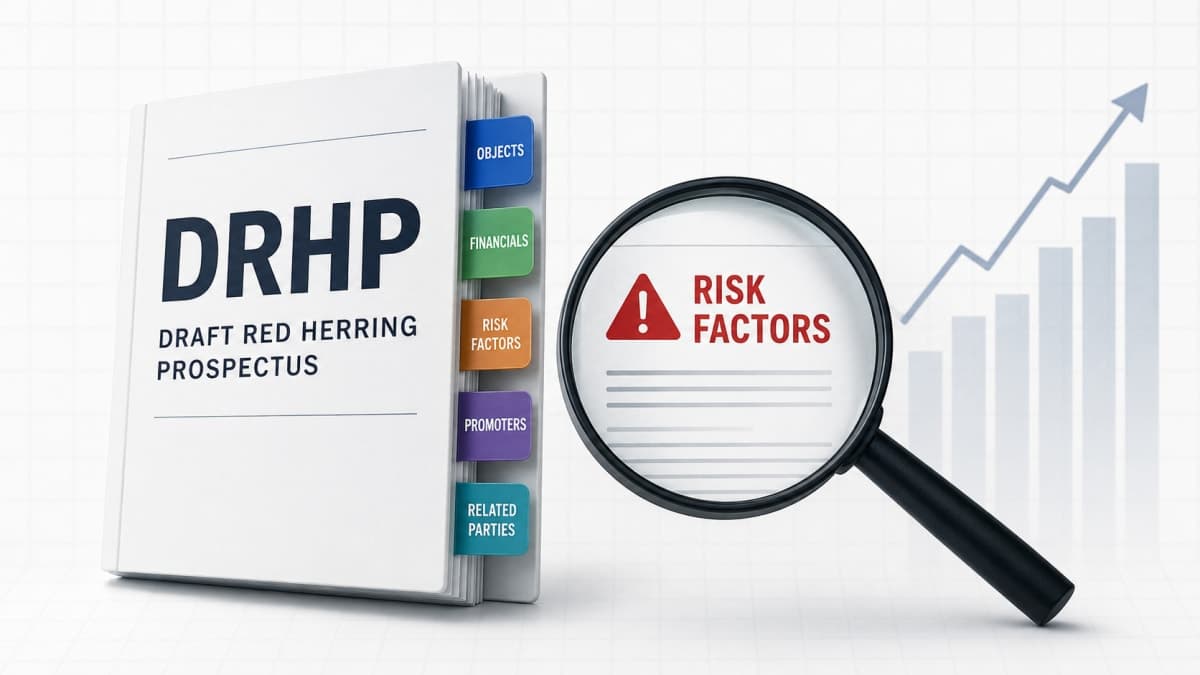
First, a quick definition, because the name trips everyone up. A prospectus is just the formal document a company must publish when it asks the public for money. "Draft" means this is the early version filed with SEBI, the market regulator, before it is cleared. "Red Herring" is simply the regulatory nickname for an offer document that does not yet carry the final share price. So a DRHP is the draft pitch, filed for approval, price still blank. That's all.
Now, the five sections, in the order that actually helps you.
Start with the Objects of the Issue. This is the "where does my money go" section, and it is the fastest way to judge an IPO's intent. Every rupee the company raises is accounted for here, plant setups, acquisitions, debt repayment, or general corporate purposes. What you are really checking is one split: how much of the issue is a fresh issue versus an [Offer for Sale](INTERNAL: what is an offer for sale). A fresh issue means new shares, and the money flows into the company to build something. An Offer for Sale means existing owners are selling their shares, and the money flows out to them. A listing that is almost entirely Offer for Sale is a warning worth pausing on. It means insiders are cashing out and the business itself gets nothing to grow with. Not automatically bad, but always worth asking why.
Second, go to the Financial Statements. Every DRHP carries several years of audited numbers, and you do not need to read all of them. You need three lines. Is revenue growing steadily, or did it spike once and stall? Are operating margins improving or thinning? And the one most people skip, is the company actually generating cash from operations, or does it only look profitable on paper? A business can report a profit while burning cash, and this section is where that gap shows up.
Third, and this is the section the company quietly buries in the middle, the Risk Factors. Companies are legally required to list every material risk, roughly in order of severity, so the scariest ones sit near the top. This is where you find the lawsuits, the regulator notices, the dependence on a single large customer, the debt. As one seasoned reader put it, the wording of each risk tells you as much as the risk itself. Read the first ten. If they make you uneasy, that unease is the most useful thing the document will give you.
Fourth, the Promoter and Management section. You are checking two things: who runs this company, and is there anything in their past you should know. The filing must disclose any criminal proceedings or regulatory actions against the people in charge. A great business run by people with a troubling track record is not the safe bet it looks like from the outside.
Fifth, Related Party Transactions. This is the least glamorous section and often the most revealing. It lists deals the company does with entities the promoter also owns or controls. A few are normal. A web of them, where the company keeps buying from or selling to the founder's other companies, is a flag. It means money may be quietly moving in directions that do not all benefit you, the new shareholder.
That's the fifteen minutes. Objects, financials, risks, promoters, related parties. Five sections, in that order, and you will know more than ninety percent of the people queuing up to apply.
But here's the twist, and it is the mistake even careful readers make. There is a sixth section called the Basis for Issue Price, where the company argues why its shares are worth what they cost, usually by comparing itself to flattering peers. The trap is anchoring on that comparison and accepting the peer set the company chose. Rebuild it yourself. Pick honest comparisons, not the ones the company picked to make itself look cheap, and a premium the fundamentals do not support often appears in plain sight.
And one more thing to keep straight. The DRHP is the draft. After SEBI reviews it, the company files a final version, the RHP, which finally carries the price band and the dates. The draft tells you whether the business is worth owning. The final tells you at what price. You need both, in that order, because a good business at a bad price is still a bad investment.
None of this tells you whether to apply. That was never the point. The point is that the honest version of every company you might invest in is sitting there, free, filed with the regulator, waiting for the fifteen minutes almost nobody spends.
Whether you spend them is the only real edge on offer.
Until then…
If this guide helped demystify the DRHP, share it with a friend on WhatsApp, LinkedIn or X who is about to apply for an IPO.