Remember the sacred weekend ritual of 2019. You, your parents, a giant shopping cart, and the absolute gladiator arena that was the D Mart checkout line. You would fight a tooth and nail battle for parking just to save ₹15 on a bottle of ketchup. It was not shopping. It was a middle class sport.
I realized something slightly terrifying this morning. I have not stepped inside a supermarket in six months. And if you live in a metro, there is a decent chance you have not either.
For the longest time, Avenue Supermarts, the parent company of D Mart, was the unshakeable king of Indian retail. They owned the real estate, negotiated brutally low prices, and made everyone else look like amateurs.
But in the last 24 hours, the Dalal Street vibe has shifted from "Buy D Mart forever" to "Wait, is this model getting cracked."
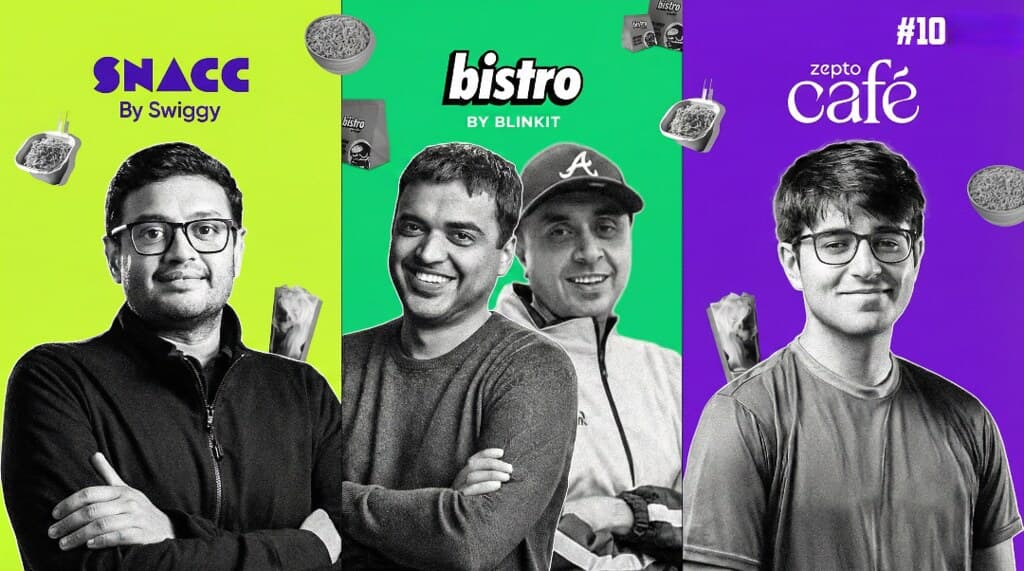
New data suggests quick commerce apps like Blinkit, Zepto, and Swiggy Instamart are no longer just for emergency chips and midnight Maggi. They are stealing the monthly stock up orders.
And those stock up runs were D Mart’s secret weapon. That is the basket size that made the business feel unbeatable.
Analysts estimate quick commerce is now growing
than traditional retail in metro cities.
This is where the finance people bring out a fancy word and act mysterious. Cannibalization.
Here is the simple version.
Imagine your favourite pizza place. The owner opens a burger joint next door. If you start buying burgers instead of pizza, the owner is not really growing. He is just moving your money from his left pocket to his right pocket.
That is cannibalization.
But D Mart’s situation is worse. Blinkit is the burger joint, and D Mart does not own it. Someone else is eating the pizza.
In finance, a moat is a competitive advantage that protects a company from rivals, like a castle moat. D Mart’s moat was lowest prices. Quick commerce built a bridge over it called convenience.
Before we write D Mart’s obituary, take a breath.
Quick commerce is still burning cash to change our habits. A chunk of that "10 minute delivery" is being subsidized by investor money.
The real question is what happens when the party ends.
When delivery fees start hitting ₹80 or ₹100 consistently, and discounts get thinner, will we crawl back to the D Mart checkout line to save that ₹15.
Maybe.
But here is the uncomfortable truth. Once people get addicted to convenience, they hate going backwards. The market is betting your time feels more valuable than your discount.
Convenience is the new currency. And right now, D Mart looks expensive in a world that values time over discounts.
Fun fact: Radhakishan Damani is famously media shy and rarely gives interviews. He prefers to let prices do the talking. But in a quick commerce world, the silence is getting loud.
If market noise stresses you out, you are not alone. That is exactly why we built First Scroll.
It is a daily, five minute, mobile first finance read that explains what happened, why it matters, and what to remember without hype or panic.
If this article helped you think clearly today, you will enjoy reading First Scroll every morning.
Subscribe to First ScrollSources: National Stock Exchange data, brokerage notes and sector reports (Dec 2025).