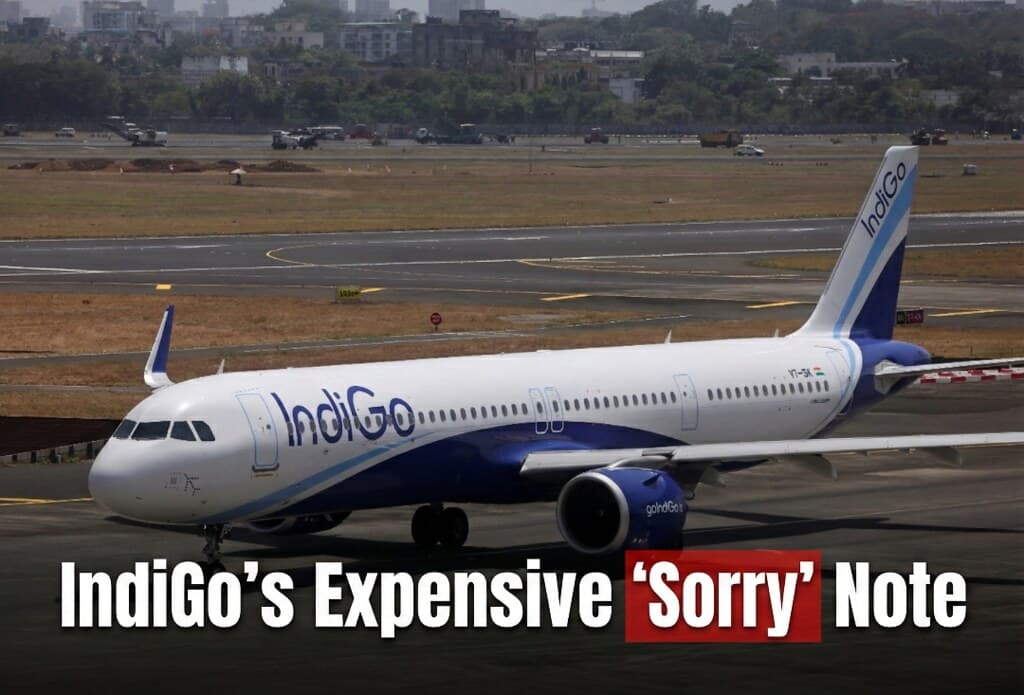
You know that one reliable friend who is never late. The one who shows up at 7:59 PM for an 8:00 PM dinner, looking crisp and organised. For the last decade, that was Indi Go.
While other airlines were declaring bankruptcy or losing bags in the Bermuda Triangle, Indi Go was boringly, beautifully on time. You bought a ticket, you sat in a cramped seat, you arrived. Simple.
But this week, that reliable friend showed up three days late, looking dishevelled, and handed you a bill for the inconvenience. Indi Go is in the middle of a serious operational meltdown.
This is not a few fog delays. This is the kind of disruption that makes airports feel like a pressure cooker. Reports say around 1,600 flights were cancelled in a single day, and the airline has admitted the chaos could cost over ₹500 crore in refunds and compensation.
The trigger is a new rulebook called FDTL (Flight Duty Time Limitations) and a very expensive lack of preparation.
Imagine you run a 24 x 7 pizza delivery joint. You have 10 chefs working 12 hour shifts. It is brutal, but the pizzas keep moving. Then the government steps in and says, to keep chefs safe, they can only work 8 hours and they need proper rest between shifts. A smart owner hires more chefs before the rule kicks in. Indi Go did not do enough of that. The rule arrived, the existing chefs went home to sleep, and the kitchen sat understaffed while customers waited in the lobby.
Here is the part that should make you a little cynical. Even after this mess stranded thousands and ruined holidays, Indi Go’s stock has been recovering.
Why. Because the market knows the uncomfortable truth. Most people have nowhere else to go.
Indi Go controls close to 60% of the Indian aviation market. When you have that kind of dominance, you do not always have to be perfect. You just have to be available. You might rage tweet today, but there is a good chance you still book Indi Go next month because the alternative is often a train, or a pricier seat elsewhere.
Indi Go lost roughly
of market value in about six days at the peak of the crisis. That is roughly the cost of building two new Mumbai Trans Harbour Links.
And because bad weeks love company, the taxman also knocked on the door. Indi Go was hit with a ₹59 crore GST related penalty, which they plan to contest. It is like getting a parking ticket while your car is already on fire.
Indi Go is paying for treating pilot rosters like a suggestion instead of a hard rule. But in a market with limited alternatives, the person who truly pays in time, stress, and cancelled plans is the passenger.
Fun fact: Indi Go operates roughly 2,000 flights a day. When they sneeze, the entire country’s travel plans catch a cold.
If market noise stresses you out, you are not alone. That is exactly why we built First Scroll.
It is a daily, five minute, mobile first finance read that explains what happened, why it matters, and what to remember without hype or panic.
If this article helped you think clearly today, you will enjoy reading First Scroll every morning.
Subscribe to First ScrollSources: Times of India | Live Mint