In today's FirstScroll, we break down Kunal Shah's new job at Meta and explain why making WhatsApp pay is the hardest problem in consumer tech.
With that out of the way, let's dive into today's story.
The Story
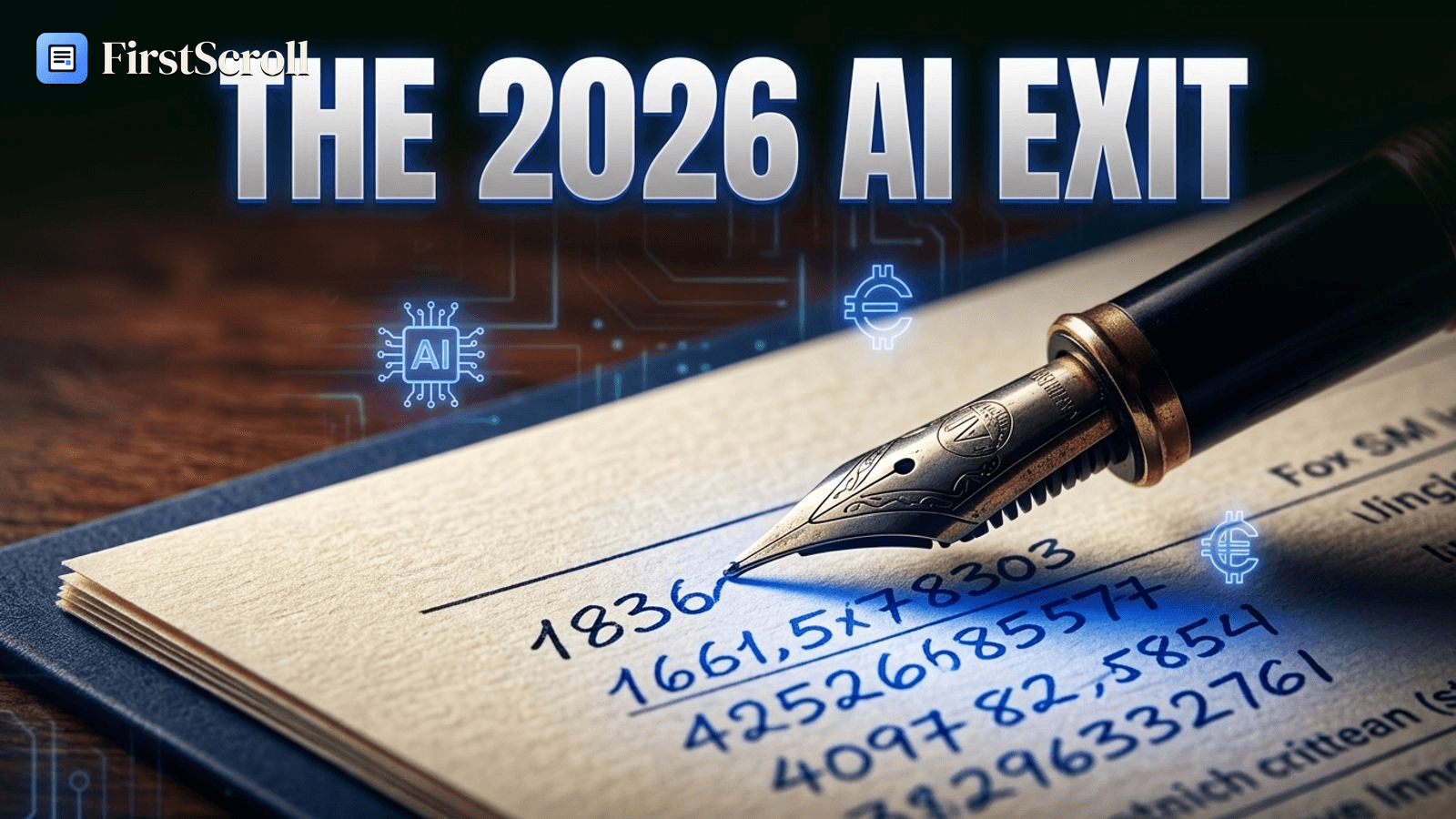
In February 2014, Jan Koum drove a few blocks from WhatsApp's unmarked office in Mountain View to a disused white building across the railroad tracks. It was the old social services office where, as a young immigrant, he had once stood in line to collect food stamps.
That's where he chose to sign the papers selling WhatsApp to Facebook for approximately $19 billion. At the time, WhatsApp brought in barely $20 million a year in revenue. Facebook paid nearly a thousand times that.
And Koum made one thing loud and clear to his users: absolutely no ads would interrupt their chats. WhatsApp would stay simple, private, and quiet.
Fast forward a decade. WhatsApp grew from 450 million users to more than 3 billion, arguably the most used product in human history. And yet, it remains one of Meta's least monetised assets, a $19 billion purchase still searching for its business model.
Then, last month, Meta did something it almost never does. It handed the keys to an outsider. Kunal Shah, the founder of Bengaluru-based CRED, was named global head of WhatsApp, succeeding Will Cathcart. On the same day, Meta announced a $900 million investment in CRED, valuing Shah's company at about $4.5 billion.
So here's the question: how do you make money from 3 billion people who chose your app precisely because it never tried to make money from them?
You see, WhatsApp's founders had briefly tried the honest route: a $1-a-year subscription. It was killed. Ads were off the table by founding principle. So over the years, Meta quietly built a different machine, one most users have never noticed: business messaging.
The model is simple. You chat with friends for free, forever. But when a business messages you, your airline sending a boarding pass, your bank pushing an OTP, a store confirming your order, that business pays Meta for the privilege. The customer is not the user. The customer is the company trying to reach the user.
And there's one country where this machine already hums: India. WhatsApp's largest market, with an estimated 500 million users, reportedly generates over $1 billion a year, more than half of WhatsApp's global business revenue. Meta disclosed that paid messaging crossed a $2 billion annual run rate late last year. Real money, but a rounding error next to the advertising engines of Facebook and Instagram.
Which explains the choice of Shah. Walk through the incentives and the hire decodes itself.
Meta needs a second act beyond ads, and it believes that act looks like payments, commerce, and AI agents living inside chats. Shah has spent his career in exactly that terrain: he sold his first fintech, Freecharge, for $400 million in 2015, then built CRED into a brand that convinced India's most creditworthy users to pay their bills inside an app. Meta's product chief Chris Cox wrote in his internal memo that Shah was the clear choice after a long courtship, someone who understood WhatsApp's immense global product potential.
Businesses, for their part, want to be where their customers already live. And Indian users have proven willing to transact inside a chat window, which is why India has become the testing lab for paid messaging worldwide.
But here's the twist. The man hired to make WhatsApp profitable has never reported an annual profit at his own company. CRED, for all its brand power, has yet to post a full-year net profit, though Shah says it recently achieved its first profitable quarter. And CRED's playbook was built on exclusivity, a velvet-rope club for high credit scores. WhatsApp is the opposite: the most mass-market product on earth.
There's a deeper tension too. Every rupee WhatsApp earns must be extracted without disturbing the one asset that makes it valuable: the user's sense that this app is theirs, clean and uncluttered. Industry watchers put it bluntly: Shah has to find revenue without eroding the trust that is WhatsApp's only real asset. Push commerce, lending, and AI agents too hard, and you risk turning the world's quietest app into another noisy feed, the very thing its users fled.
Now to be clear, the sceptics said the same thing about business messaging, and users barely blinked. The boarding passes and OTPs arrived, nobody uninstalled, and a multi-billion dollar line item was born. Shah's own famous framework, Delta 4, argues that users embrace change only when the new experience is dramatically better than the old. Paying a bill in three taps inside a chat might just clear that bar.
Zoom out, and the prize is obvious. If WhatsApp becomes the place where half a billion Indians not only talk but pay, borrow, shop, and summon AI assistants, Meta gets something it has chased for a decade: its own WeChat. The food-stamps-office signature was the last time WhatsApp was cheap. Whether Shah can monetise its trust without spending it is something only time will tell.
Until then…
If this story helped you make sense of the Kunal Shah move, share it with a friend on WhatsApp (fittingly), LinkedIn or X. You might also enjoy our story on https://firstscroll.in/daily/why-swiggy-rallied-on-becoming-indian-owned