The Story
Imagine this: You’re at a busy grocery store, rushing to pay. You scan a QR code, enter your PIN, and oops. You just clicked a link in a "confirmation" SMS that looked exactly like it came from your bank. Five minutes later, ₹10,000 is gone.
In the past, this was usually the point where the nightmare began. You’d call the bank, they’d blame the payment platform, the platform would blame you for sharing your PIN, and your money would be lost in a digital black hole.
But as of February 2026, the RBI has decided to step in as the ultimate referee.
The Foundation
For years, digital payments in India have been a "high-speed, no-brakes" affair. We have UPI, instant IMPS, and 24/7 NEFT. But while the speed of transactions went up, the speed of getting your money back after a fraud stayed at a snail's pace.
Sidebar: "Unauthorised Electronic Transactions" are basically any payments made from your account that you didn't actually approve. This includes phishing, SIM swapping, or those sneaky "screen-sharing" scams.
The current rules (which were written way back in 2017) were like trying to fix a Tesla with a hammer they just weren't built for the UPI era.
The Big Reveal
In a major policy shift, the RBI has proposed a formal compensation framework for small-value fraudulent transactions.
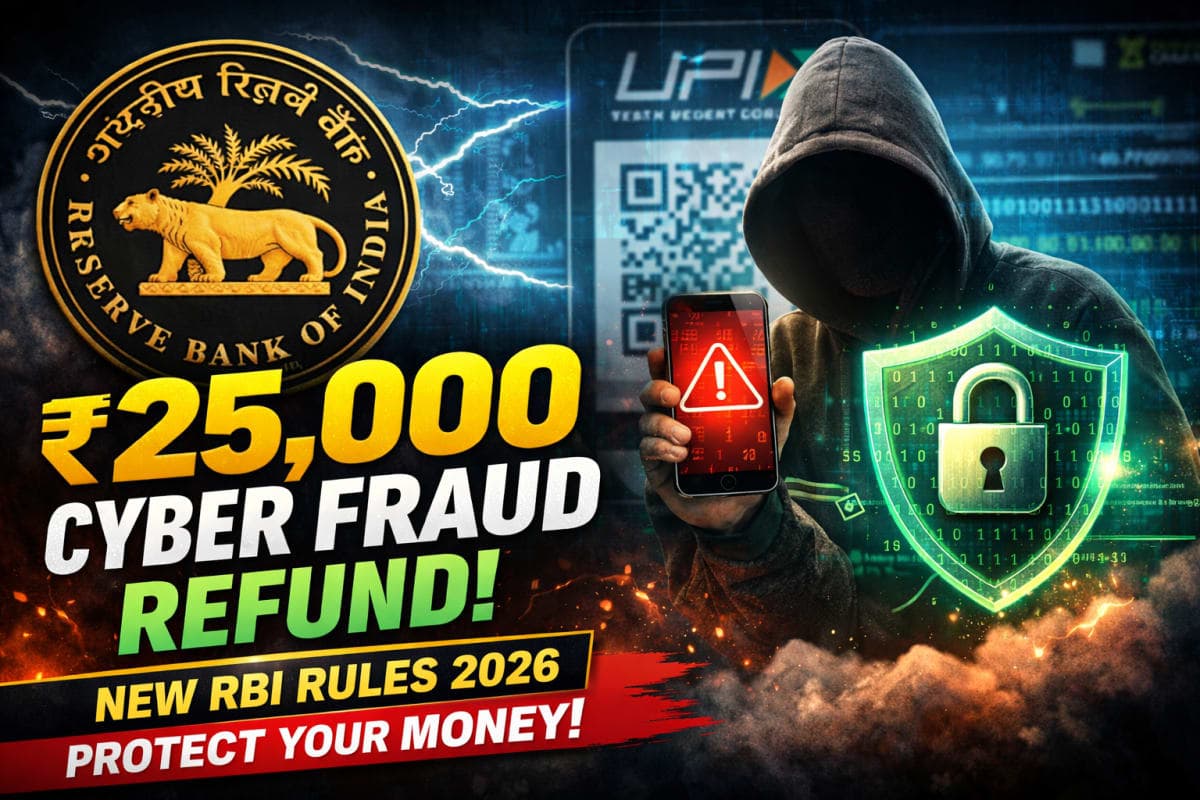
Here’s the headline: Banks may soon be required to compensate you up to ₹25,000 for losses arising from digital fraud, subject to certain conditions.
The idea is simple: The RBI acknowledges that digital fraud is no longer just "user error" it’s a systemic risk. By making banks pay, they’re forcing the entire financial system to build better "firewalls" rather than just sending you "don't share your OTP" text messages.
So What?
This is a game-changer for the "vulnerable" users our parents, senior citizens, and people new to the digital economy.
- The Relief: If you lose a small amount (under ₹25,000), you won’t have to fight a three-month legal battle to get it back. The burden of proof is shifting slightly away from the customer.
- The "Lagged" Credit: The RBI is also discussing "lagged credits" for high-risk transactions. Think of it like a "cooling-off period" where the money stays in limbo for a few minutes before reaching the scammer, giving you a chance to hit the "undo" button.
The Closing
Don't get us wrong this isn't a license to be careless. If you hand over your password and keys to a stranger, the bank still won't be able to help much. But for the thousands of Indians who fall prey to sophisticated technical glitches and "zero-day" scams, the floor just got a lot less slippery.
As the RBI moves toward a "trust-based" system, the message to banks is loud and clear: If you want us to use your digital pipes, you better make sure they don't leak.
Until then... keep those PINs private and your eyes on the "verified" tick. ;-)