The Story
In today's FirstScroll, we break down the cooling craze of SME IPOs and why the "easy money" party is finally ending.
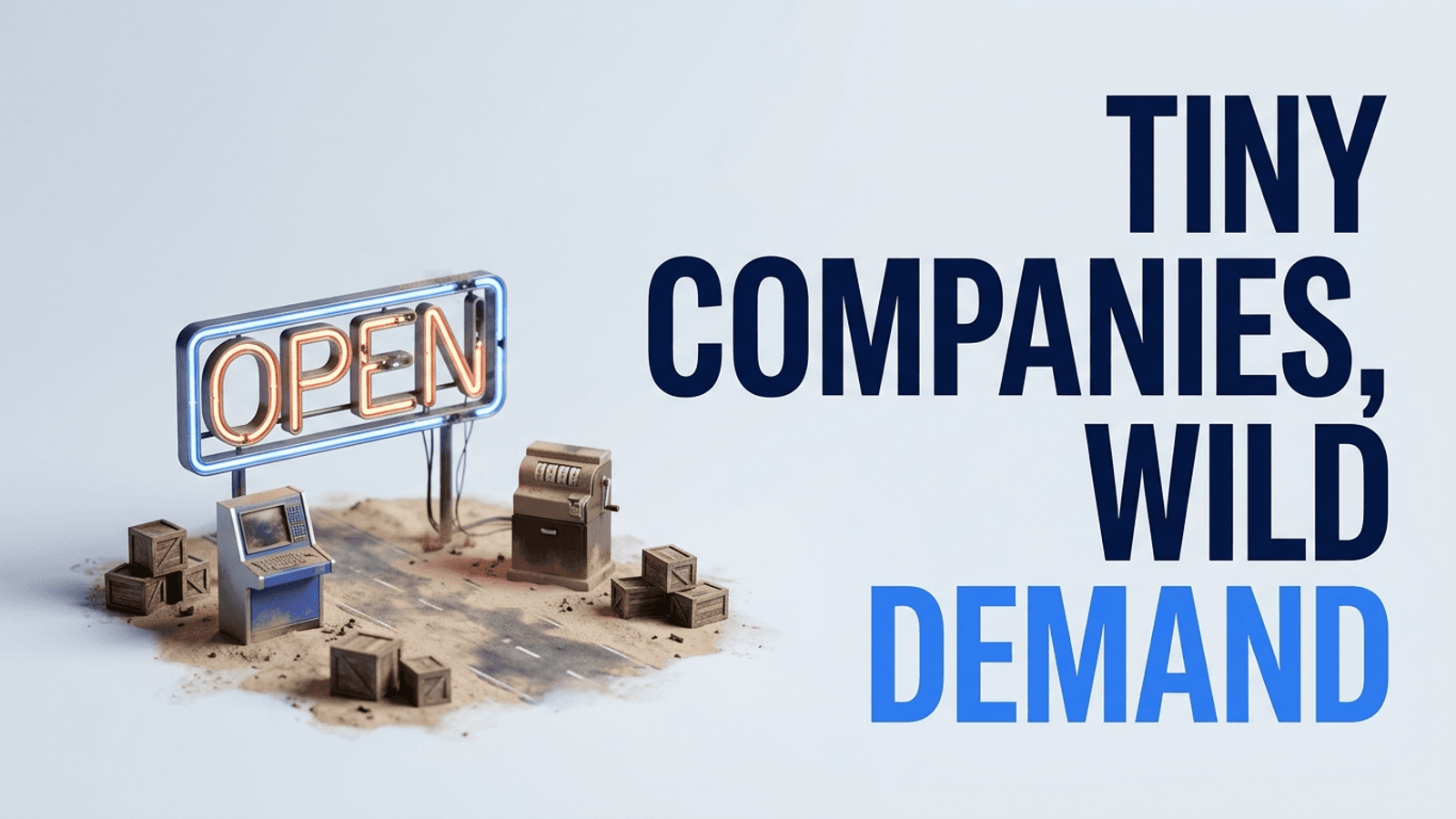
Picture this. You find a local business that makes specialized nuts and bolts. They want to raise a little money to buy a new machine.
They ask for a few crores. By the time the weekend is over, they have 400x the demand they needed. It feels like a glitch in the matrix, right?
Well, that is exactly what has been happening in the SME IPO market. It is the "small and medium enterprise" corner of the stock exchange.
For context, SME IPOs are a different beast compared to the big names you see on the mainboard. Think of it like the difference between a neighborhood gully cricket match and the IPL.
When a giant like Hyundai launches an IPO worth ₹27,870 crore (roughly $3.3 billion), everyone is watching. The rules are strict. The paperwork is mountainous.
But the SME exchange was built to be a simpler "launchpad" for smaller companies. It was designed to help them grow without the crushing weight of mainboard regulations.
However, that simplicity turned into a loophole. It became a playground for high speed speculation and eye watering listing gains.
But there is a catch here. The euphoria that defined 2024 and 2025 has hit a massive reality check in early 2026.
Recent data shows that 23 out of 30 SME IPOs listed so far this year have debuted at a loss. The era of "guaranteed" 100 percent gains on day one is fading into the sunset.
Why is a segment once famous for 400x demand suddenly leaving investors holding empty bags?
To put things in perspective, you have to understand the math of scarcity. SME IPOs are usually tiny. A company might only be selling shares worth ₹10 crore or ₹20 crore.
Think of it this way. If you have a very small cake and a thousand hungry people, everyone will fight for a crumb. That fight drives the price up instantly.
You see, when a few thousand retail investors all pile into a tiny issue, it triggers a massive oversubscription. This makes the company look more successful and desirable than it actually is.
This "scarcity" creates a feedback loop. Investors see the high subscription numbers and assume the company is a gold mine. They bid more, the numbers go higher, and the frenzy continues.
But there is a darker twist to this story. Our markets regulator, SEBI, has been waving red flags for months about "pump and dump" schemes.
In these cases, some promoters have been caught using rosy operation projections that do not match reality. They paint a picture of massive future profits that simply are not there.
Once the company goes public, they might release "good news" like bonus shares or stock splits. This pumps the price even higher for a short time.
While retail investors are busy celebrating their "paper wealth," the promoters often find a way to offload their own shares at the peak. When the dust settles, the stock price crashes, and the small investor is left with a loss.
SEBI has finally decided that the Wild West needs a new sheriff. They have implemented a series of "filters" to make it harder for low quality companies to go public.
First, a company now needs to show a minimum operating profit of ₹3 crore (about $358,000) in at least two of the last three years. Before this, the thresholds were significantly lower, allowing many pre-profit companies to list.
Second, the entry fee for investors has been hiked. The minimum application size is now ₹2 lakh ($2,400) per bid. This is a deliberate move to keep out small, uninformed investors who are just chasing the hype.
SEBI has also capped how many shares a promoter can sell during the IPO. They want the people running the company to stay invested for the long haul.
So yeah, the market is changing. We are moving from a "buy anything" phase to a "do your homework" phase. The sheer volume of negative debuts in 2026 shows that the new rules are starting to bite.
Investors are finally realizing that a high subscription number is not a badge of quality. It might just be a sign of a very crowded, very hot room.
Do you see the SME exchange as a bridge for future unicorns or a "Wild West" for unsuspecting retail traders? How you answer that determines whether you look for value or just follow the crowd.
The market is finally learning that high demand is often a sign of high heat, not high value.
Until then…
Know someone who is chasing the next "10x" SME IPO? Share this with them and save their portfolio from a pump-and-dump trap.