The "Finance Bros" officially lost this round.
For years, the skepticism surrounding Quick-Commerce was treated as common sense. Critics looked at the unit economics of delivering a ₹20 pack of Maggi in 10 minutes and called it a "burning pile of cash." They weren't just skeptical; they were certain of its failure.
Yesterday, Blinkit effectively muted them.
Zomato’s parent entity, Eternal, just dropped its Q 3 2026 results, and the numbers are a total vibe-shift for the Indian tech ecosystem. We aren't just talking about growth anymore; we are talking about a fundamental transformation in how India buys things.
Here is the deep-dive story of the "startup of the decade" finally growing up.
For five years, the industry asked: How do you make money when you’re paying a rider, renting a warehouse, and delivering a single bag of chips?
The Q 3 results provided the answer: ₹102 Crore Net Profit (up 73% Yo Y). Blinkit didn’t just survive; it became the engine driving Eternal’s ₹16,000 Crore empire.
The secret lies in the Contribution Profit. In Q 3 FY 26, Blinkit achieved a contribution of ₹30.00 per order, a 25% jump from the previous quarter. This is the "Goldilocks Zone" of unit economics. If we look at the simplified formula for their success:
Blinkit has optimized every variable in this equation. They aren't just a delivery company; they are a Logistics-as-a-Service platform.
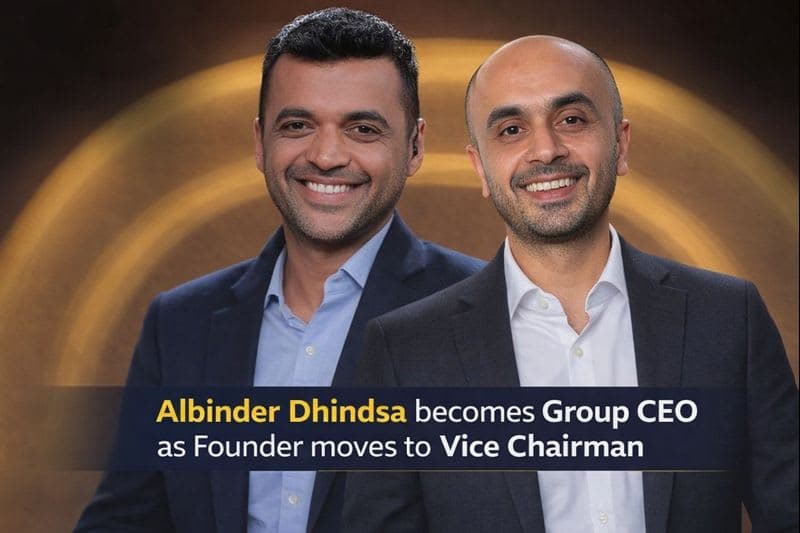
The most shocking part of the report wasn't the profit it was the leadership. Deepinder Goyal, the "OG" founder who fought the bloody battles for survival, is stepping down as CEO effective February 1, 2026.
He’s handing the keys to Albinder Dhindsa, the Blinkit founder.
- The Logic: Founders are often "War-time Generals." They are great at disruption, high-risk bets, and survival.
- The Transition: But large, profitable public companies need "Peace-time Administrators." Deepinder is moving to Vice Chairman to focus on "long-term vision" (and his growing interests in health-tech and space experimentation), while Dhindsa the man who actually built the profitability engine takes over the day-to-day execution.
Why is Blinkit suddenly making money? It’s not just the delivery fees. It’s the Advertising.
Brands are now panicking. In the 30–40 seconds you spend on the Blinkit app, you make 80% of your purchasing decisions. If a brand isn't in the top three results, they don't exist. Consequently, ad costs for FMCG brands (like HUL or Marico) have doubled in peak morning and evening slots.
For Blinkit, this is 100% margin revenue. They have turned their "virtual shelf space" into the most expensive real estate in India.
Blinkit realized that a rider carrying a ₹50,000 i Phone costs the same in fuel and time as a rider carrying a loaf of bread. By expanding into High-Ticket Electronics and Beauty, they’ve boosted their Average Order Value (AOV) to over ₹600.
To support this, they now operate 2,027 Dark Stores. These are mini-warehouses strategically hidden in residential neighborhoods where you aren't even allowed to enter.
- Density > Distance: Riders now do short "last-mile" sprints rather than cross-city journeys.
- The Result: More trips per hour per rider = Lower cost per delivery.
As Blinkit crosses the "Valley of Death," the traditional landscape is being reshaped:
Amazon & Flipkart: The "24-hour delivery" model is starting to look ancient. In urban India, waiting "until tomorrow" for a charger feels like an eternity when Blinkit can do it in 10 minutes.
The Kirana Store: The local shop is facing a silent crisis. The "Dark Store" is more efficient, holds more variety, and never asks you to wait in line.
The Consumer: The era of VC-funded "Free Delivery" is over. Now that they are profitable, the focus is on convenience over discounts. You are no longer paying for the groceries; you are paying for your own time.
Quick commerce has moved from a "luxury for the lazy" to a "utility for the busy." Zomato proved that the Indian consumer will pay for speed, and they’ve built a machine that can finally scale without burning a hole in the balance sheet.
The only question left: Can a "Professional CEO" keep the "Disruptor Energy" alive without the founder at the helm?