If you were one of the millions of Indians refreshing your phone on New Year’s Eve, praying for your biryani to arrive before the clock struck twelve, you were not alone.
I spent the night watching my “delivery partner assigned” screen like it was a suspense thriller, wondering if my party snacks were actually going to show up or if I would be serving tap water to my guests.
It turns out that anxiety was part of a much bigger battlefield.
On paper, India’s quick commerce giants had the best night of their lives.
Zomato and Blinkit CEO Deepinder Goyal took to X to announce a victory lap.
The numbers were frankly ridiculous.
Combined, the platforms delivered an all time high of 75 lakh orders in a single day.
Over 63 lakh unique customers ordered everything from condoms to chips.
Swiggy was not far behind, clocking 2.19 lakh biryani orders before 7:30 PM alone.
If you believe the corporate press release version, the night was a smashing success.
Swiggy Instamart saw a massive surge in grape orders on New Year’s Eve.
A Spanish tradition of eating 12 grapes at midnight has gone viral in India.
Proof that we will import literally any trend if it can be delivered in 10 minutes.
This is where the story gets murky.
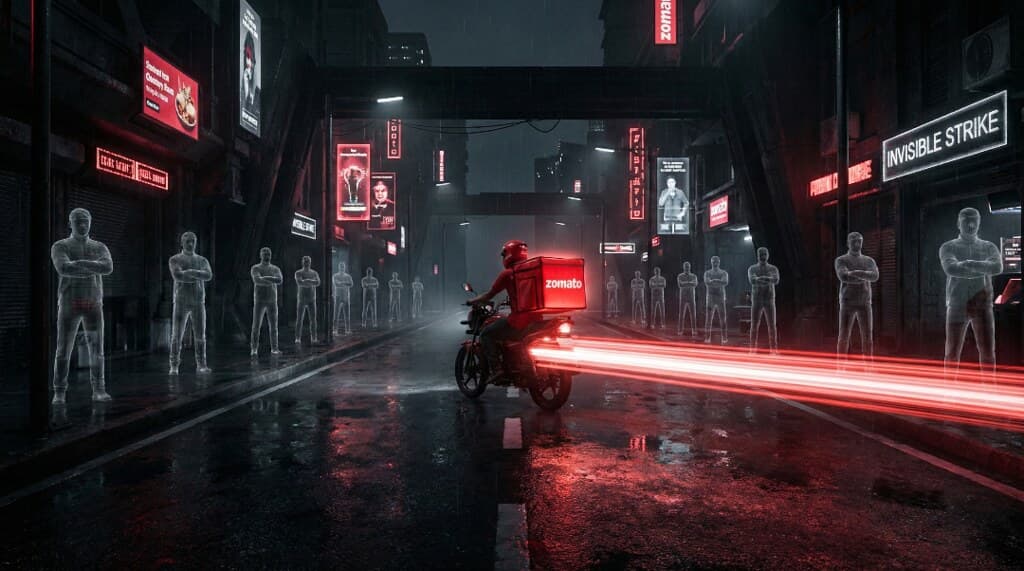
While apps were flashing “Order Delivered,” a storm was brewing offline.
The Gig and Platform Service Workers Union claims that over 1,00,000 delivery partners across 22 cities were on strike.
The protest was over pay, incentives, and unsafe working conditions.
This is the classic gig economy standoff.
The companies say the strike had negligible impact.
The unions say the chaos was real and that the record numbers were achieved only by throwing money at the problem.
Imagine you run a lemonade stand, but your workers refuse to work because the pay is low.
To keep selling, you either shut shop or pay the remaining workers double to work faster.
Platforms likely chose the second option. Surge fees paid by customers became higher incentives for riders, weakening the strike.
You got your biryani.
The rider got a bonus.
The strike lost momentum.
Now comes the uncomfortable question.
Who actually paid for this record night?
If platforms had to pay massive incentives to keep riders on the road during a strike, margins for New Year’s Eve may have been thinner than a dosa.
There is also a bigger risk.
Claiming victory over a work force that is increasingly organizing is a dangerous long term game.
You can surge price your way out of one night.
You cannot surge price your way out of regulation forever.
With the government watching the gig economy closely in 2026, this record could be the calm before a regulatory storm.
1. Quick commerce addiction is permanent
The grape spike shows quick commerce is no longer for emergencies. It is replacing kirana stores even for planned events.
2. Labor is waking up
Even if the strike failed to stop deliveries, coordinating action across 22 cities on the biggest night of the year is a warning sign.
Watch the stock price of Zomato and the private valuations of Swiggy and Zepto.
Investors love volume.
They hate labor unrest.
If unions release data showing hidden delays or inflated incentive costs, the record night narrative could flip fast.
Also expect closer scrutiny from the labor ministry before the next festive season.
The Bottom Line: Zomato won the New Year’s Eve battle with brute force volume, but the war with its own work force is just getting started.
Fun fact: While pizza and biryani fought for the top spot, condoms were Blinkit’s most ordered item after 11 PM. Stay safe, India.
If markets stress you out, you are not alone.
That is exactly why we built First Scroll. It is a daily, five minute, mobile first finance read that explains what happened, why it matters, and what to remember without hype or panic.
Subscribe to First ScrollSources: Business Standard | Times of India | Entrepreneur India