In today's FirstScroll, we watch a giant get ambushed. For decades, Asian Paints was untouchable, a stock so reliable it was practically a synonym for "safe investment". Then one rival walked in and, in barely a year, cracked a wall that had held for 70 years. Here's exactly how the impossible happened.
The Story
In the world of Indian business, some companies feel permanent.
Asian Paints was one of them. Founded in 1942, it spent decades as the undisputed king of Indian paint, so dominant that investors treated its stock like a government bond with better returns. It just went up, year after year, for generations. If you wanted a "buy it and forget it" stock, this was the poster child.
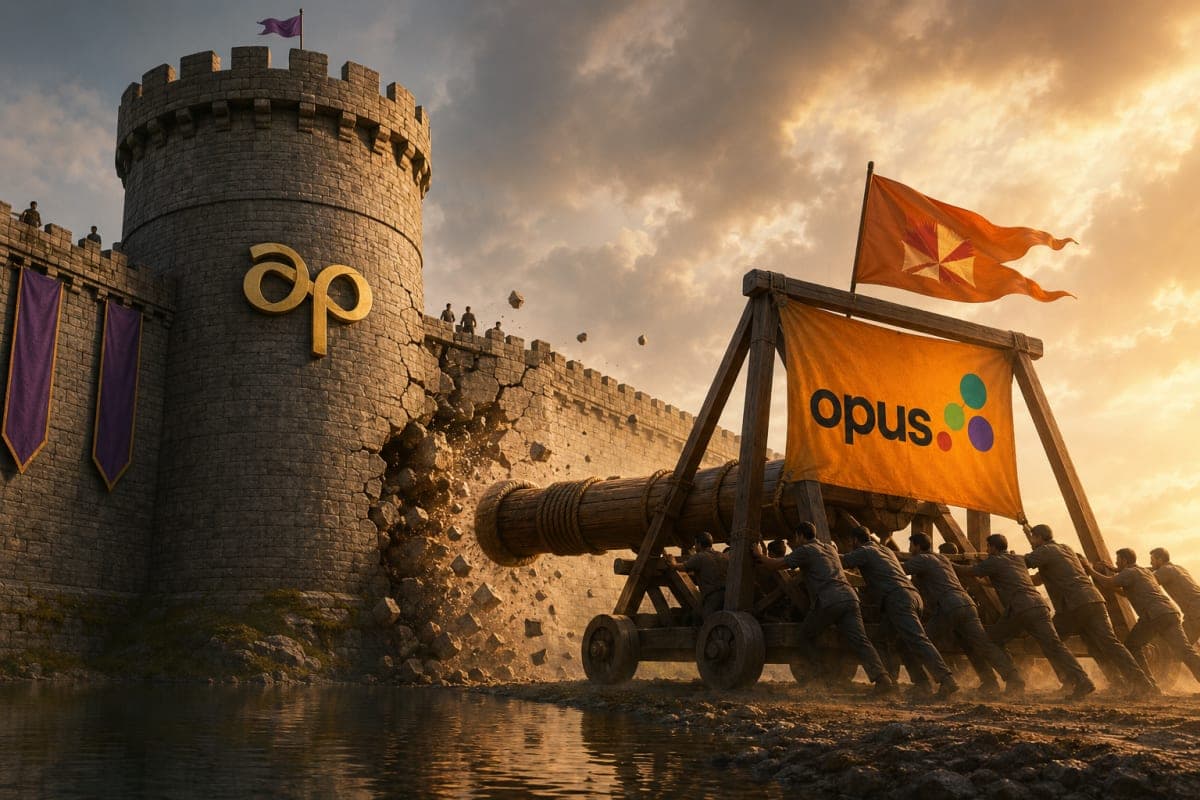
A business that strong usually has what investors call a "moat", a deep, protective barrier that keeps competitors out, just like the water around a castle. And Asian Paints' moat looked unbreakable.
Then, starting in 2024, the unthinkable began. The castle started taking damage. Asian Paints' market share fell from 59% to 52% in just twelve months, a shocking drop for a company that hadn't been seriously challenged in decades. Its stock slid, its margins shrank, and the aura of invincibility cracked.
So what happened? Who managed to do what nobody had done in 70 years?
To understand the attack, you first have to understand the wall it broke.
Asian Paints' real moat was never the paint.
Here's the thing most people get wrong. They assume Asian Paints won because its paint was the best. But paint is paint, most customers can't tell a huge difference. The real moat was something far cleverer, and almost invisible: its dealer network.
Asian Paints spent decades building relationships with over 150,000 dealers across India, those little shops you go to when your wall needs a fresh coat. And it didn't just sell to them. It made their lives easier with colour-mixing machines, fast delivery, technical support, and generous credit terms.
This created a powerful loop. Dealers loved stocking Asian Paints because the company served them so well, so they pushed it to customers, so it sold more, so it could afford to serve dealers even better. Round and round. A new competitor couldn't just make good paint. They'd have to somehow win over 150,000 loyal shopkeepers who had every reason to stay put.
That, for 70 years, was the unbreakable wall. Until someone showed up with a battering ram made of money.
Enter Birla Opus.
In February 2024, Grasim Industries, part of the giant Aditya Birla Group, launched a paint brand called Birla Opus. And this was no scrappy startup. It came in with a war chest of around ₹10,000 crore, one of the most aggressive market entries Indian business had ever seen.
Now here's the genius part. Birla Opus didn't try to invent a clever new way to sell paint. It looked at exactly why Asian Paints was winning, the dealer moat, and decided to attack that specific wall with overwhelming force.
How? By making dealers an offer they couldn't refuse.
Birla Opus went straight to those same shopkeepers and dangled better margins, better payment terms, and aggressive incentives. Suddenly a dealer who had loyally sold Asian Paints for years was being offered more money to give Birla Opus some shelf space. And money talks. Some dealers started dedicating 30 to 40% of their shelf space and working capital to Birla Opus.
It got even more pointed. According to reports, Birla Opus hired managers straight from Asian Paints and even set up factories near its rival's units. It studied the champion's playbook and then used it against the champion.
The results came shockingly fast. Within about a year, Birla Opus had grabbed a revenue share of over 10% in decorative paints, becoming the third-largest brand and the fastest-growing challenger the industry had ever seen, reportedly expanding at nearly three times the industry's growth rate. Analysts who'd expected it to grab maybe 1 to 2% of the market were stunned.
Why couldn't Asian Paints just crush it?
Good question. The king isn't helpless, so why didn't it simply flex its muscles and bury the newcomer?
Because it's caught in a painful trap.
To fight back, Asian Paints has to match those juicy dealer incentives and discounts. But spending more to keep dealers happy eats into its profits. You can literally see it in the numbers, its operating margins fell from around 21.7% to 17.1% in a single year. So defending its turf is expensive, and every rupee spent defending is a rupee less in profit.
At the same time, rising crude oil prices (paint is made largely from crude-based chemicals) are pushing up its costs. Normally Asian Paints would just raise prices to cover that. But now it can't raise prices freely, because if it does, customers might just switch to the cheaper Birla Opus. Competition has stolen its pricing power.
That's the cruel squeeze. Higher costs on one side, a price-cutting rival on the other, and a dealer network that suddenly has options. The very moat that made Asian Paints so profitable is exactly what's now expensive to defend.
There's even a legal twist. The competition got so fierce that India's competition watchdog, the CCI, ordered an investigation into Asian Paints after Birla Opus complained it was allegedly pressuring dealers into exclusivity to block rivals. The fight moved from the shop counter to the courtroom.
So is Asian Paints finished? Not even close, but the game has changed.
Let's be fair and clear-eyed here. Asian Paints is still the leader by a mile, holding over 50% of the market, with the strongest brand and deepest trust in the business. It isn't going anywhere. Reports of its death are wildly exaggerated.
But something fundamental has shifted. For 70 years, Asian Paints played a game with no real opponent, which let it enjoy fat, monopoly-like profits. That era is over. Even if it successfully defends its crown, it now has to fight, spend, and discount to keep it, which means the dreamy days of effortless, ever-rising profits are likely gone for good. That's why even its stock has been re-rated downward, with investors no longer willing to pay any price for it.
So, why did Asian Paints' 70-year moat suddenly crack?
Because a rival finally showed up who understood that the moat was never the paint, it was the dealers. Instead of competing on product, Birla Opus brought ₹10,000 crore and went straight for the relationships that made Asian Paints unbeatable, simply paying dealers enough to share their loyalty. A castle wall that looked impenetrable turned out to have one weakness: it was held together by incentives, and someone arrived willing to offer bigger ones.
The lesson is almost timeless. No moat is permanent if a competitor is rich enough, patient enough, and smart enough to attack the exact thing that makes you strong. Even a 70-year-old castle can crack when someone finally aims at the right brick.
Until next time...