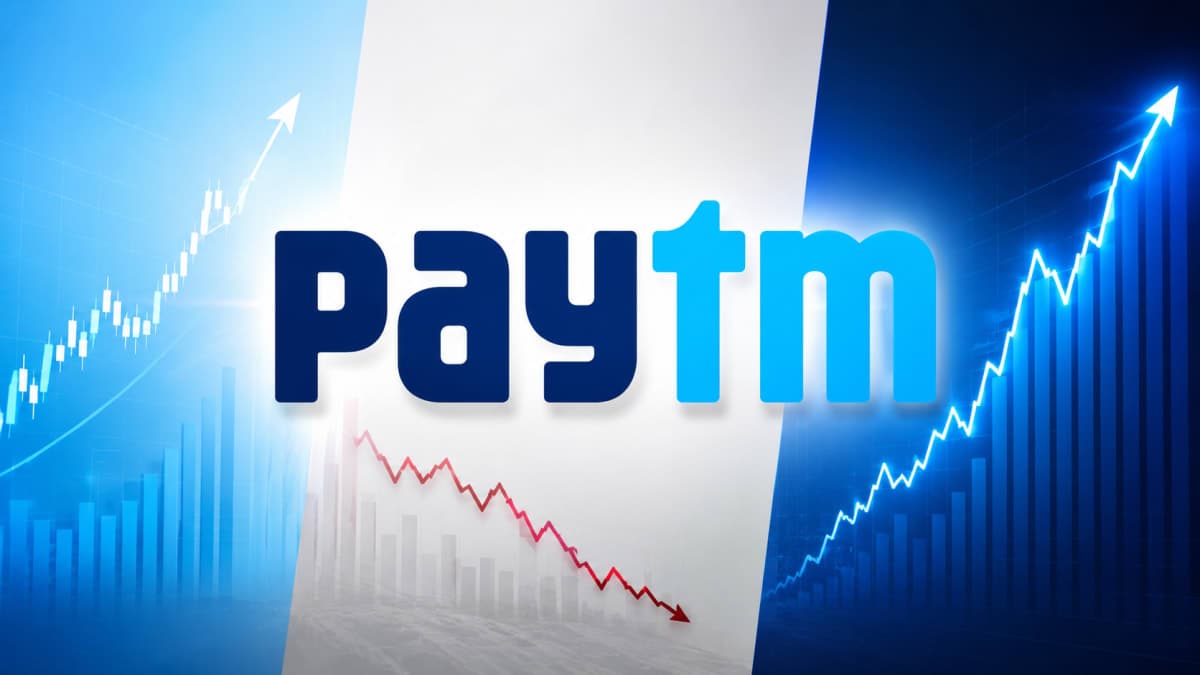
In today's FirstScroll, we trace the wildest rollercoaster in Indian startup history. The app that taught India to scan and pay launched the country's biggest-ever IPO, then crashed so hard people wrote its obituary, and then quietly clawed its way back. Three acts: the hype, the fall, and the comeback nobody saw coming.
The Story
For a whole generation of Indians, "Paytm karo" wasn't a brand. It was a verb.
After demonetisation in 2016, Paytm was everywhere. Every shopkeeper, every auto driver, every paanwala had that blue QR code taped to the wall. It taught a cash-loving country how to pay with a phone. It was the original poster child of digital India.
So when Paytm went public in November 2021, it felt like a coronation. The IPO was massive, India's largest ever at the time, raising ₹18,300 crore at ₹2,150 a share, valuing the company at roughly $20 billion. The hottest startup in the country was finally hitting the stock market. What could go wrong?
Almost everything, as it turned out.
Act 1: The fall nobody could stop.
The crash started on day one. The stock fell 30% within its first month, and just kept sliding. At its worst, it was down a brutal 75% from the issue price. Lakhs of retail investors who bought the "India's biggest IPO" dream watched their money evaporate.
Why did it collapse so fast? Two reasons.
One, the price was simply too high. Even at listing, most experts felt the valuation was wildly exaggerated for a company that was losing money hand over fist with no clear path to profit.
Two, and this is the deeper problem, Paytm was doing everything. Payments, lending, wealth management, ticketing, a bank, insurance, gaming. It was spread across a dozen businesses but didn't dominate or make money in any single one. Investors looked at it and asked a simple, deadly question: "Okay, but how exactly does this thing make money?" And nobody had a clean answer.
A company trying to be ten things rarely convinces anyone it's great at one. That was Paytm's original sin.
But the stock crash was just the warm-up. The real gut-punch was coming.
Act 2: The regulator drops the hammer.
Paytm had a secret weapon that powered its whole empire: its own bank, Paytm Payments Bank. It quietly ran the wallets, the merchant settlements, the backend plumbing that made the app feel seamless. Owning the bank meant Paytm controlled its own rails end to end.
The problem? That bank kept getting in trouble with the RBI, India's banking regulator. And not once. Over and over.
The warning signs stretched back years. In 2021 the RBI found the bank had submitted false information and fined it. In 2022 it was caught with serious lapses in cybersecurity and KYC rules, and was even sharing servers with Paytm's other businesses, which is a big no-no. The RBI told it to stop onboarding new customers. Then fined it again in 2023 for not fixing things.
Then came the knockout blow. In January 2024, the RBI effectively ordered Paytm Payments Bank to stop taking deposits and halt most of its services, citing "persistent non-compliances". In plain English: the regulator had lost patience and pulled the plug.
The market reaction was carnage. The stock crashed over 40% in days, wiping out billions. At one point in February 2024, Paytm was trading around ₹310, down nearly 80% from its IPO price, and worth a fraction of its former self. People openly wrote its obituary. The "Paytm karo" giant looked like it was finished.
And then, the final nail, or so it seemed. In April 2026, the RBI fully cancelled the licence, winding it down for good. The secret weapon was officially dead.
So how is Paytm not a corpse right now? Here's where the story flips.
Act 3: The comeback nobody expected.
While everyone was writing it off, Paytm went into brutal survival mode and quietly did three things right.
First, it stopped trying to be everything. It sold off non-core stuff like its entertainment ticketing business and its stake in Japan's PayPay, and ruthlessly focused on what actually made money: payments and lending to its army of merchants.
Second, it turned the bank disaster into an opportunity. Forced to give up its own bank, Paytm rebuilt its system on top of partner banks instead. It lost some control, yes, but it also shed the regulatory baggage that had been dragging it down for years. By the time the licence was finally cancelled in 2026, the bank had already become irrelevant to Paytm's business. The thing that nearly killed it had been quietly defused.
Third, it found its actual money-maker: its merchant ecosystem. Those millions of shopkeepers with Paytm soundboxes and card machines pay a subscription fee. That's recurring revenue, predictable, not the volatile transaction volumes investors hated. Paytm now has over 1.5 crore merchants paying it regularly, plus a booming business distributing loans.
And the numbers tell the redemption story. After years of brutal losses, Paytm posted its first-ever full-year profit in FY26: ₹552 crore, a swing of over ₹1,200 crore from the previous year's loss. It strung together four straight profitable quarters. The stock, left for dead at ₹310, recovered over 275% to cross ₹1,175. It even became a majority Indian-owned company as foreign investors who fled were replaced by domestic ones. Most big brokerages flipped from doubt to "Buy".
To be clear, it's still not back to its IPO price, and plenty of risks remain, including a ₹13,000 crore cash pile that it could spend wisely or waste. But from "obituary written" to "first annual profit", the turnaround is real.
So, why did Paytm fall from a $20 billion darling to a survival story, and then back?
Because it learned the hardest lesson in business, the expensive way. It fell because it was overpriced and overextended, a company doing ten things and mastering none, propped up by a bank that kept breaking the rules. It survived because it was finally forced to do the opposite: cut the fat, drop the dangerous bits, and focus relentlessly on the few things it could actually make money from.
The "Paytm karo" empire nearly died not because it was too small, but because it was too sprawling. And it came back only when it got smaller, sharper, and humbler.
Sometimes the most powerful move a company can make isn't adding more. It's having the discipline to do less, and finally figuring out how it actually makes money.
Until next time...