You pay your credit card bill on CRED. You get some coins. You redeem them for a 10% discount on artisanal coffee.
Meanwhile, CRED just made ₹2,735 crore in revenue last year.
Wait. How?
First, what even is CRED?
Straight from CRED's own website: CRED is a members-only club that rewards individuals for their timely credit card bill payments by providing them with exclusive offers and access to premium experiences. It is a platform that allows credit card users to manage multiple cards along with an analysis of their credit score. (cred.club/about) CRED
But there is a catch that makes CRED different from every other payments app in India. To become a CRED member, you need a credit score of 750 or above. (cred.club) CRED
In India, most people have no credit score at all. Getting above 750 puts you in a very small, very financially disciplined club. That exclusivity is the entire business. Everything else flows from it.
The philosophy that built the company
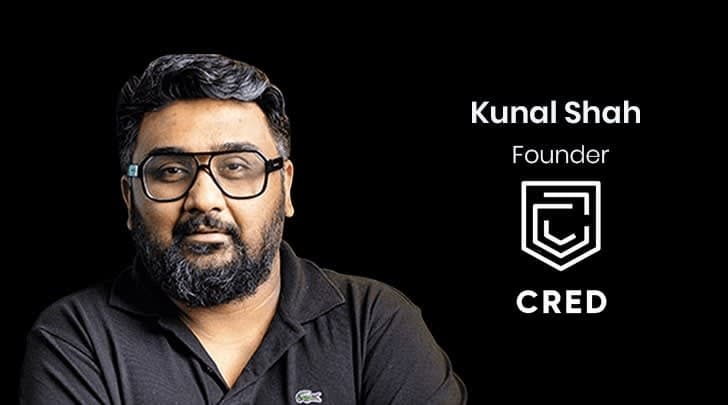
Kunal Shah studied philosophy in college before dropping out of his MBA. That background shows up directly in how CRED was built.
He developed something called the Delta 4 theory a framework for predicting which startups will actually create wealth. In his view, successful startups produce at least four times superior solutions to the current ones. If a solution is not 4x better, it will not be able to induce a behaviour change in customers. The conventional bill payments were boring and passive. CRED made them addictive and rewarding. (startuppulse.co.in) Startuppulse
Once the user experiences a significantly better way of using a product, there is no way they are going back to the old way of doing things. (seedtoscale.com) SeedToScale
That is the trap CRED was designed to create. Once you start earning coins for paying bills, going back to your bank's clunky portal feels like a downgrade.
The audience is the actual product
Before CRED figured out how to make money, it figured out who it wanted. Here is how CRED pitches this to brands on its own partner page: CRED members spend 4X more than the national average on shopping, travel and entertainment. (partner.cred.club) Cred
CRED is trusted by over 25 million creditworthy members. (cred.club) And from the same partner page: CRED currently has over 1,000 brand partners. (partner.cred.club) CREDCred
This audience is what every premium brand, bank, and lender in India wants to reach. CRED built the club. Now it charges for entry.
Revenue Stream 1: Lending (the big one)
CRED knows an enormous amount about its users — credit scores, payment history, spending patterns across multiple cards. That is a lender's dream dataset. CRED partners with banks and NBFCs: here are verified, creditworthy people who might want a loan. The bank lends. CRED earns a referral fee or commission. It takes none of the credit risk.
Lending remained a key revenue contributor in FY25, with managed AUM reaching ₹22,000 crore. CRED also expanded into CRED Cash+, a secured lending product allowing loans against mutual funds. (Entrackr, sourced from CRED's press release) Entrackr
CRED's lending business was among its top three revenue contributors in FY25. (The Head and Tale) The Head and Tale
Revenue Stream 2: Brand Partnerships (the clever one)
Those coins you earn after paying your bill? Brands are paying real money to be where you spend them. CRED officially offers brands four ways to partner on its site: CRED Store (list products for members to shop), CRED Pay (get members to shop from your website), CRED Rewards (give your products as rewards and jackpots), and CRED Marketing (special brand collaborations). (partner.cred.club) Cred
Advertising on a regular platform reaches mostly people who cannot afford your product. On CRED, every person who sees your offer is pre-vetted, high income, and financially responsible. That targeting premium is worth serious money.
Revenue Stream 3: Payments (the daily habit one)
Credit card bill payments happen once a month. That is a terrible foundation for a daily-use app. So CRED launched CRED Pay. Their own product page describes it as: scan and pay via UPI, earn assured rewards, claim collectibles all in a secure payment experience the creditworthy deserve. (cred.club/cred-pay) CRED
The goal: get users opening the app every day, not just once a month. More opens means more data, which powers better lending, which drives more revenue.
As of March to August 2025, CRED processed 144 to 147 million UPI transactions monthly, ranking it as the 4th largest UPI player in India. Its average UPI transaction value of ₹3,700 is the highest among major fintech competitors. (TheFinthusiastic) TheFinthusiastic
Revenue Stream 4: Wealth Management (the new bet)
This is where CRED's acquisition strategy becomes clear. In February 2024, CRED reached an agreement to buy mutual fund and stock investment platform Kuvera as part of an expansion into wealth management. (TechCrunch) TechCrunch
The Kuvera investor's average SIP size is over ₹5,000 2x more than the industry average and total mutual fund investment of over ₹12 lakh is 5x higher than the industry average. (Entrackr) Entrackr
In other words, Kuvera's users look exactly like CRED's users. Premium, high-investment, financially serious. CRED plugged this directly into its app as CRED Money, which its own product page describes as: track your mutual funds, stocks, EPF, NPS, deposits, and bank balances in one place. (cred.club/money) CRED
Revenue Stream 5: Insurance (the quiet one)
CRED Garage manages your vehicle insurance renewals, traffic challans, pollution checks. It became an insurance marketplace where you browse and buy covers in the same flow. CRED Garage added more insurers in FY25, contributing to insurance revenue growth. (Entrackr, sourced from CRED press release) Entrackr
It fits the user profile perfectly. High-income people with cars, health covers, and multiple financial products to manage. Low effort upsell inside an app they already trust.
The acquisition playbook
Most people know CRED as an app. What they miss is that CRED has been quietly buying companies to expand its revenue surface. CRED has made 5 acquisitions: Happay (expense management, $180M deal in 2021), HipBar (liquor payments, 2021), CreditVidya (lending tech, 2022), Spenny (micro-investing, 2023), and Kuvera (wealth management, 2024). (Owler) owler
Each acquisition added a piece of the puzzle. CreditVidya strengthened its lending underwriting. Kuvera gave it wealth management. Spenny gave it micro-investment tools for younger users. This is not random diversification it is deliberate infrastructure-building around one core asset: the creditworthy Indian.
The numbers, straight from CRED's press release
FY23: Revenue ₹1,484 crore
FY24: Revenue ₹2,473 crore, operating loss ₹609 crore revenue up 66%, losses down 41%
FY25: Revenue ₹2,735 crore. Operating losses fell 51% to ₹298 crore. Gross margins stood at 70%. Total losses narrowed 11.5% to ₹1,457 crore. Monthly transacting users rose 14.5% to 12.6 million. Transaction frequency increased 34% to 14.4 transactions per user per month. Total payment value grew 23% to ₹8.5 lakh crore. (YourStory, sourced from CRED's official press release) YourStory
Around 45% of active members used three or more products, resulting in average revenue per user of approximately ₹2,000 — the highest in India's payments ecosystem. (YourStory) YourStory
In Kunal Shah's own words from the FY25 results: "FY24-25 was about widening the monetisation pipeline and accelerating product velocity. More members trusted CRED for higher-value transactions and adopted a wider range of products, positioning us for sustained revenue growth as they scale." (The Head and Tale) The Head and Tale
The valuation drop nobody talks about properly
CRED was valued at $6.4 billion in 2022. In May 2025, it raised $72 million in a down round led by GIC, cutting its valuation to $3.64 billion from $6.4 billion in 2022. (Entrackr) Entrackr
A 43% drop in valuation. But operating losses also dropped 51% in the same period.
What most people miss: Kunal Shah invested ₹162 crore personally through his family office in this same round, signalling long-term confidence. (TheFinthusiastic) When the founder puts personal money into what looks like a down round, that is worth paying attention to. TheFinthusiastic
One real risk worth knowing
India's RBI guidelines require credit card payments through third-party apps to route via the Bharat Bill Payment System. If banks have not linked up with BBPS, these apps will not work for bill payments — affecting major banks like HDFC and ICICI, pushing users toward bank apps. (GrowthX) That directly hits CRED's original core product and remains the most significant regulatory risk on the horizon. Growthx
So is CRED actually a good business?
The lending business is real and growing to ₹22,000 crore AUM. The brand marketplace has 1,000 partners. The acquisition pipeline has been strategic, not scattered. Unit economics are improving every year. And CRED is targeting full profitability in FY26.
The open question is not whether the business works. The numbers are now clear enough that it does. The question is how big the ceiling is and whether being the platform for India's top 1% is enough of a moat as India's credit card base grows from 120 million today toward a projected 200 million by FY29.
CRED currently monetises only one-third of its monthly transacting users. CEO Kunal Shah has called this the company's most important statistic. As those monetisation rates increase, revenue growth accelerates without requiring new user acquisition. (Value For Startups) Valueforstartups
That is the bull case. FY26 will tell us if it is real.