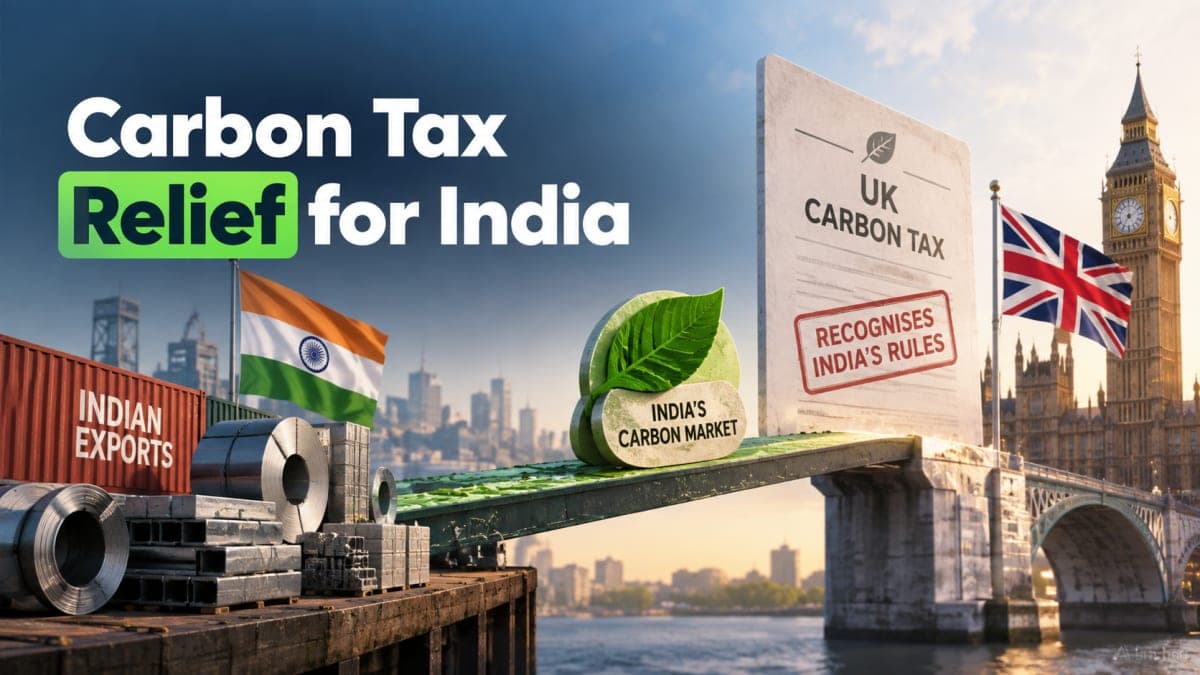
In today's FirstScroll, we break down why the government is extending a multibillion-rupee lifeline to Indian exporters, and why these aren't actually gifts but a way to stop India from exporting its own taxes.
The Story
Picture a textile factory owner in Tirupur, Tamil Nadu. His machines are humming, turning rolls of cotton into high-end shirts bound for a boutique in Dubai.
On paper, he's doing everything right. But his margins are razor-thin. Before the shirts even leave the factory, he has already paid taxes on the electricity used to power the looms, the fuel used by the delivery trucks, and the mandi charges for the raw cotton.
Because these are "embedded" local taxes, they don't get a simple refund like GST does. This makes his shirts more expensive on the global stage compared to a shirt made in Vietnam or Bangladesh.
Then, the geopolitical temperature rose. A deepening crisis in West Asia has made shipping riskier and international buyers more cautious about placing long-term orders.
With the global trade environment getting tougher, the Indian government stepped in. On Wednesday, the Centre extended key duty refund schemes for another three months until December 31, 2026.
And here is the strange part. These schemes were set to expire just as India's exports showed a healthy spark, jumping 17.85 per cent between April and August this year.
So here's the question: if Indian exports are already growing, why is the government rushing to provide a multibillion-rupee "lifeline" right now?
You see, the problem is not that "Made in India" products aren't competitive. It is that India cannot afford to "export its taxes" to the rest of the world.
Think of these schemes as a toll-booth refund. If you pay a toll every ten kilometers to get your goods to the port, that cost gets baked into the final price of the shirt. By the time it reaches a shelf in Dubai, it carries the weight of every Indian tax paid along the way.
This is where RoDTEP comes in. The name is a mouthful: Remission of Duties and Taxes on Exported Products. It ensures that taxes and levies incurred during manufacturing that aren't refunded elsewhere are paid back to the exporter.
The rates aren't huge. They typically range from 0.3 per cent to 3.9 per cent. But in global trade, where contracts are won or lost on a few cents, that tiny percentage is the difference between a full order book and a silent factory.
Now add the second ingredient: the crisis in West Asia. To help exporters navigate the chaos, the government is also continuing enhanced insurance cover against payment defaults until March 31, 2027, specifically for consignments heading to that region.
Now, these sound like dry policy acronyms, so why should you care? Because India is chasing a massive $1 trillion export target for goods and services this fiscal year. To get there, every factory needs to stay busy.
If the RBI is rushing exporters to bring their dollars home quickly, it is because those dollars are the lifeblood of the economy. When global markets get shaky, the government uses these schemes to give exporters the "predictability" they need to sign contracts months in advance.
So who wants what here? The exporter wants a level playing field where they don't pay more tax than their global rivals. The government wants to boost the "Made in India" brand while staying within strict World Trade Organization (WTO) rules.
This is the clever bit. These schemes aren't "subsidies" or "handouts" in the eyes of the WTO. Because they only refund taxes already paid, they aren't seen as unfair trade advantages. It's a way for India to avoid the kind of trade friction that leads to headlines about mirror taxes on Indian goods.
This support reaches deep into the heartland. One specific version of the scheme for textiles, called RoSCTL, benefited more than 15,400 exporters across 444 districts last year. Most of these are small and medium businesses (MSMEs).
But here's the twist. While exporters are cheering the extension, they are also worried. A three month extension is essentially a band-aid. Exporters say they need a five-year window to truly plan their pricing and secure fresh orders without fear of the scheme disappearing.
The money involved is also shrinking. The budget for the scheme this fiscal year stands at ₹10,000 crore, which is a significant drop from the ₹18,232 crore allocated in the previous year. If the budget runs dry, the "predictability" the government promises might vanish.
Now to be clear, the government's caution comes from a place of fiscal discipline. They are balancing the need to support exporters with the need to keep the national deficit in check, all while the RBI buys dollars to manage the currency's strength.
So, is this multibillion-rupee lifeline about a government playing favorites? Not really. It is about acknowledging that in a world of high-tension geopolitics and thin margins, India cannot expect its factories to compete if they are carrying the heavy baggage of local taxes on their backs.
India has the ambition to be a global export powerhouse. Whether it can provide the long-term policy certainty that exporters are begging for is something only time will tell.
Until then…
If this story helped you make sense of the RoDTEP scheme extension, share it with a friend on WhatsApp, LinkedIn, or X. You might also enjoy our story on why the RBI is rushing exporters to bring dollars home.