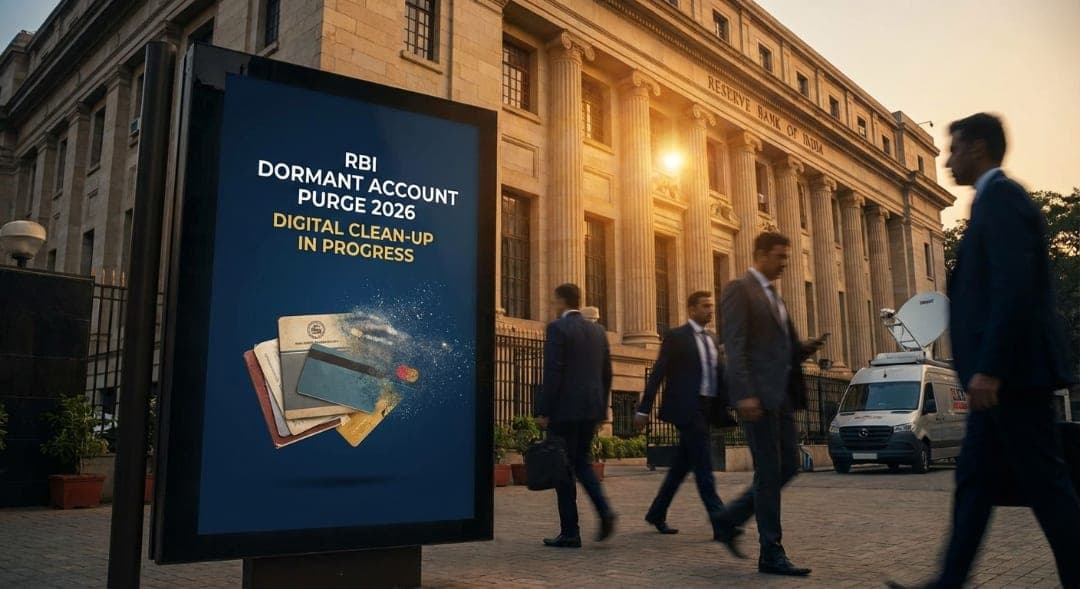
India is currently sitting on a mountain of unclaimed deposits over ₹67,000 crore as of early 2026. These are accounts that haven’t been touched in over 10 years. But the real headache for the RBI isn’t just the old money; it’s the “Mule Accounts” (accounts used to move illegal or stolen money).
Cybercriminals love dormant accounts. Because you aren’t checking the app or getting SMS alerts, hackers can hijack these accounts to funnel stolen money, making it nearly impossible for police to trace the real villain. By shutting down these inactive doors, the RBI is essentially cutting off the oxygen supply for digital scammers.
The 2026 guidelines are particularly aggressive. Here is how the RBI classifies your “silence”:
- Inactive (12 Months): If you haven’t initiated a single transaction (UPI, ATM, or transfer) in a year, you’re flagged.
- Dormant (24 Months): After two years of silence, the “Safe Mode” kicks in. Your internet banking is often disabled, and your debit card stops working.
- The “Zero-Balance” Purge: The February 1 st drive is specifically hunting for zero-balance accounts that have seen no activity. These are often the ones opened during mass enrollment drives but never used.
Scroll-Stopper: “Automatic entries” like the bank crediting interest or deducting a service charge do not count as activity. You have to actually do something to keep the account alive.
If your account is closed, your money doesn’t just vanish into the void.
- The DEA Fund: After 10 years of inactivity, funds are transferred to the RBI’s Depositor Education and Awareness (DEA) Fund.
- UDGAM Portal: The RBI has launched the UDGAM portal where you can search for and reclaim “lost” money across multiple banks in one place.
If you realized you actually need that old account, don’t panic. You have roughly 48 hours before the February 1 st deadline kicks in.
Step 1: The ₹10 Test. Make a quick UPI transfer or a small deposit into the account. A single “customer-induced” transaction is usually enough to reset the clock.
Step 2: Check Your KYC. If the account is already dormant, you might need to perform a Re-KYC. Many banks now allow this via Video KYC or their mobile apps, so you don’t necessarily have to visit a branch.
Step 3: Consolidate. If you don’t need it, close it. Having five different “ghost” accounts is a security liability. Download your last three years of statements for your tax records and say goodbye.
While the cleanup helps fight fraud, critics worry about Financial Inclusion. Millions of rural Indians were encouraged to open Jan Dhan accounts over the last decade. If a farmer hasn’t used their account for 14 months due to a bad harvest, is it fair to pull the plug?
The RBI has asked banks to make “extra efforts” like physical notices and phone calls before closing these specific accounts, but the effectiveness of this outreach remains a major question mark for 2026.
The message from North Block is clear: a “leaner” banking system is a safer one. By cleaning out the digital clutter, the RBI is trying to build a fortress against the next wave of cybercrime.
If markets stress you out, you are not alone. That is exactly why we built First Scroll. It is a daily, five-minute read that explains what happened, why it matters, and what to remember without hype or panic.
Subscribe to First Scroll