Back in 2008, I joined Facebook. I remember uploading a blurry photo of my college canteen lunch, tagging three friends, and feeling a rush of dopamine when I got four likes. I didn’t know it then, but I was working. We all were.
For the last 15 years, we’ve been the unpaid interns of the internet. We wrote the reviews that trained Google Maps. We posted the photos that taught Instagram’s algorithms to see. We wrote the tweets that taught chatbots how to sound human. We tilled the digital land, and the tech giants harvested the crops, keeping almost all the profit.
We accepted the deal because the products felt "free." But yesterday, the Global Data Sovereignty Accord (GDSA) was ratified by a coalition of nations, including India. The headline is simple: the free lunch is over, for them, and maybe for us too.
This is one of the biggest proposed shifts in the internet’s economic model since ads took over everything. The new regulation says that any large AI system trained on user generated content must compensate the creators of that content.
In other words, your digital footprint is no longer treated like public property. It’s being treated like an asset. Policymakers are calling it a "data dividend." Tech Twitter is calling it a wealth transfer. I’m calling it a logistical headache that might still end with money in your pocket.
It’s the idea that data is subject to the laws of the country where it is collected. Earlier, if your data sat on servers in California, US rules mostly governed the story. Now the logic flips. If you are in Pune, your data is treated as Indian property, and you are the landlord. If a company wants to use it, they have to pay rent.
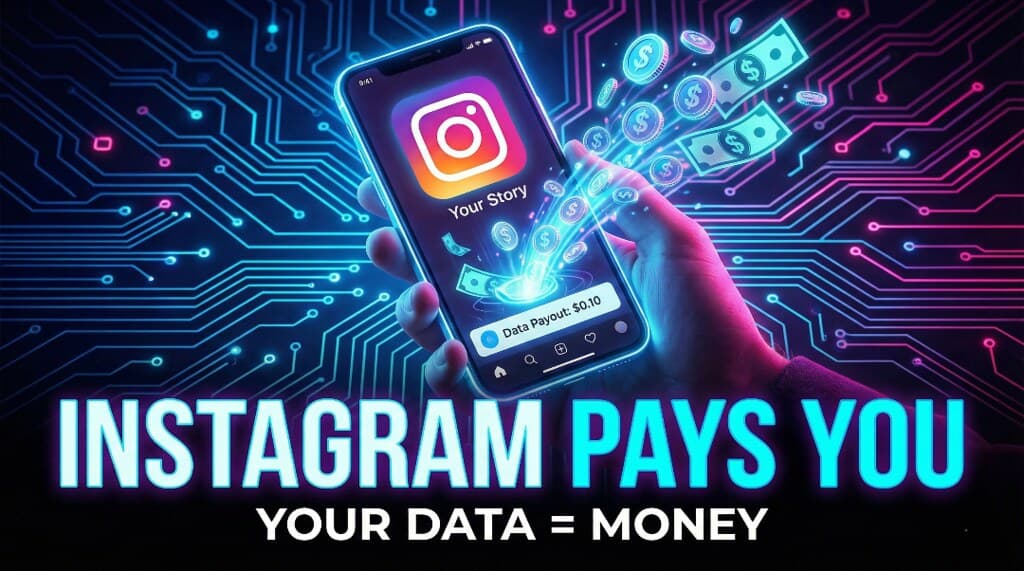
You are not going to get a cheque from Mark Zuckerberg in the mail. The proposed system works more like tiny automated tips.
The framework suggests a micropayment ledger that plugs into India’s payments rails, potentially via UPI linked wallets.
In simple steps:
- You post something public, like a restaurant review.
- An AI system uses that content to learn patterns.
- That usage is recorded.
- A tiny amount is credited to your linked wallet.
One payment will look laughably small. But the argument is scale. You produce thousands of micro pieces of data every year without realising it. Under this model, that passive trail becomes something you can get paid for.
Analysts are floating estimates that an active internet user could earn somewhere around ₹5,000 to ₹15,000 per year just from normal online activity.
Imagine the internet is a massive community garden.
For years, you’ve been planting tomatoes for fun. A giant corporation comes at night, collects your tomatoes, makes ketchup, sells it for billions, and pays you back with a like button.
The new rules put a fence around your patch. Big Tech can still make ketchup. But now they have to measure what they take from your patch and leave money behind. They cannot treat the harvest like free ingredients anymore.
Now, before you start planning a vacation funded by your data dividend, put the skeptic glasses on. There is no such thing as free money.
If Google and Meta have to pay for the data that powers their models, their costs go up. Do you think they will quietly absorb that hit. No chance.
This is where the scary possibility enters: the death of the free tier.
Right now, you pay for Gmail with your attention and your data. If the rules force Google to pay you for that data, Google might respond with something like: "Fine, here’s ₹500 for your data. Also, Gmail now costs ₹800 a month."
So we could end up in a weird trap where we earn pennies from our data but pay real money for services we’ve become dependent on.
The internet might split into two worlds:
- A premium internet for people who pay subscriptions.
- A bargain internet for people who sell their data for small payouts.
This is the estimated annual compliance cost for the biggest tech companies under this kind of regime. Money like that does not vanish. It usually comes back to you as higher subscription fees, more paywalls, or new charges disguised as "features."
There is another catch. Tech giants are not stupid. If human data becomes expensive, they will try to use less of it.
We are already seeing the rise of synthetic data, where AI models generate training data for other AI models. If that becomes good enough, your content becomes less valuable.
So the data dividend might be a real payout, but only for a window of time, before humans get reduced in the training loop.
For India, this is massive. We generate insane amounts of data, thanks to cheap mobile internet and the Jio era.
If data becomes a paid commodity, Indian households could see a new stream of passive income.
But there is a darker version of this story too. We could become data farms. Imagine click farms, but instead of fake likes, people churn out content just to feed AI for a few rupees.
It monetises creativity, and monetising creativity can sometimes kill the soul of it. Are we ready for an internet where everyone posts mainly to get paid.
Register for the new data wallet if and when it launches, but do not quit your day job. We might be trading free services for cheap labour. And in most systems, the landlord still wins.
Fun fact: Jaron Lanier, one of the early voices in VR, argued for "data dignity" back in 2013. People laughed. The world is taking it seriously now.
If market noise stresses you out, you are not alone. That is exactly why we built First Scroll.
It is a daily, five minute, mobile first finance read that explains what happened, why it matters, and what to remember without hype or panic.
If this article helped you think clearly today, you will enjoy reading First Scroll every morning.
Subscribe to First ScrollSources: Reuters Technology | Ministry of Electronics and IT | Wired