Let us start with a number that should make you put your phone down for a second.
If you have Rs 1 lakh in credit card debt and you only pay the minimum due every month, it will take you over nine years to clear it. And by the time you do, you will have paid Rs 2.1 lakh in interest alone on top of the Rs 1 lakh you originally borrowed.
You borrowed one lakh. You paid back three lakh. To a bank.
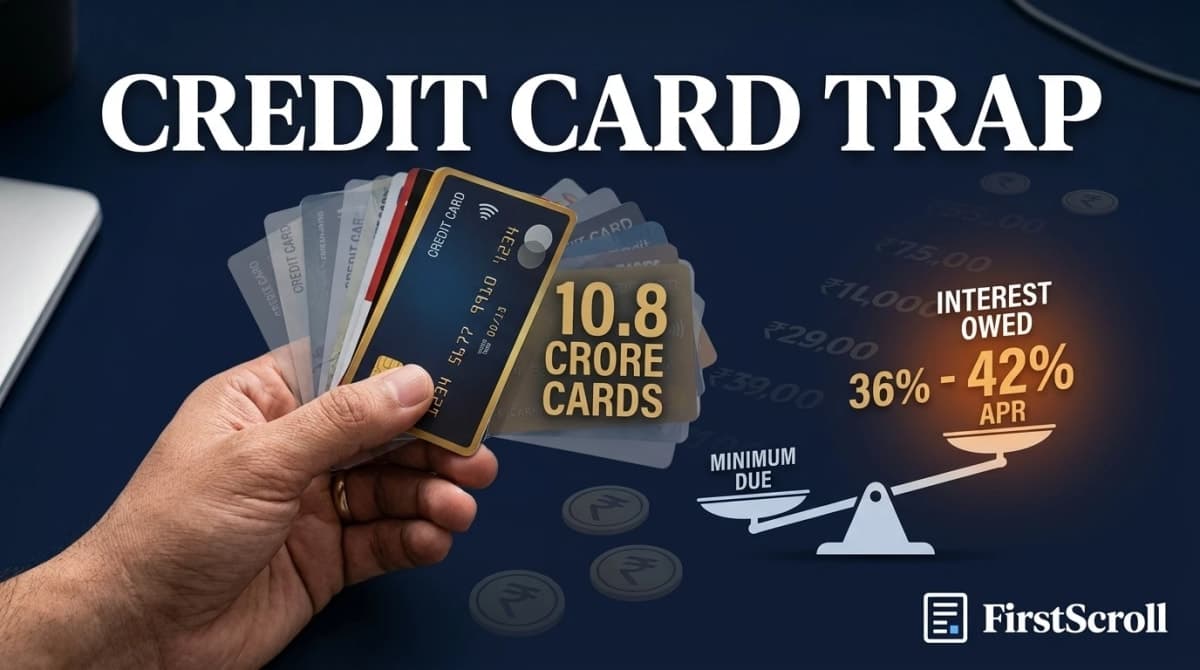
Most people do not know this. Banks definitely do not advertise it. And yet it is the mathematical reality of how credit card interest works in India, where annual interest rates sit between 36% and 42% on most cards.
India now has 10.8 crore active credit cards in circulation. That number has nearly doubled in five years. UPI credit cards linked to RuPay have crossed 100 million users. BNPL apps are embedded into every food delivery, every shopping checkout, every OTT subscription. Credit has never been easier to access.
And that is exactly the problem.
The minimum due trap is the most expensive trap in Indian personal finance
Every month, when your credit card statement arrives, it shows you two numbers. The total amount due and the minimum amount due.
The minimum is usually 5% of your outstanding balance, or a flat amount like Rs 200, whichever is higher. Paying this keeps your account in good standing. Your bank does not call you. Your CIBIL score does not immediately suffer. Life feels fine.
But what actually happens is this. The remaining 95% of your balance starts accumulating interest at 3% to 3.5% per month. Not per year. Per month. That compounds. Fast.
To put it plainly, paying only the minimum due on a credit card is not paying your bill. It is renting debt at one of the most expensive rates legally available in India.
The banks designed it this way on purpose. The minimum due is calibrated to keep you in the system paying interest for as long as possible while feeling just responsible enough not to worry. It is genuinely one of the most clever financial product designs ever created, if you are the bank.
How did we get here? The credit explosion explained.
In 2019, India had around 5.5 crore active credit cards. By 2024, that was 10.8 crore. Outstanding credit card dues, which is the total amount Indians owe on their cards at any given moment, crossed Rs 3.4 lakh crore by late 2025. That is a 21% increase year on year.
Two things drove this explosion. The first is easy access. Getting a credit card in India has never been simpler. Banks compete aggressively for customers. Fintech apps issue virtual cards in minutes. BNPL products appear at checkout without you even applying for credit. The friction that used to exist between wanting a card and having one has almost completely vanished.
The second is genuine income pressure. After the pandemic, a combination of stagnant real wages and rising costs pushed many Indian households to use credit cards not for luxuries but for regular monthly expenses. When your salary has not grown but your grocery bill, fuel bill, and school fee have, the credit card quietly becomes a coping mechanism rather than a convenience.
The RBI flagged something alarming in this context. Net household financial savings in India are near a 50-year low. Indians are earning, spending more than they save, and increasingly borrowing the gap. The credit card industry is the most visible symptom of a deeper household finance stress.
BNPL is the new version of the same trap, with better marketing
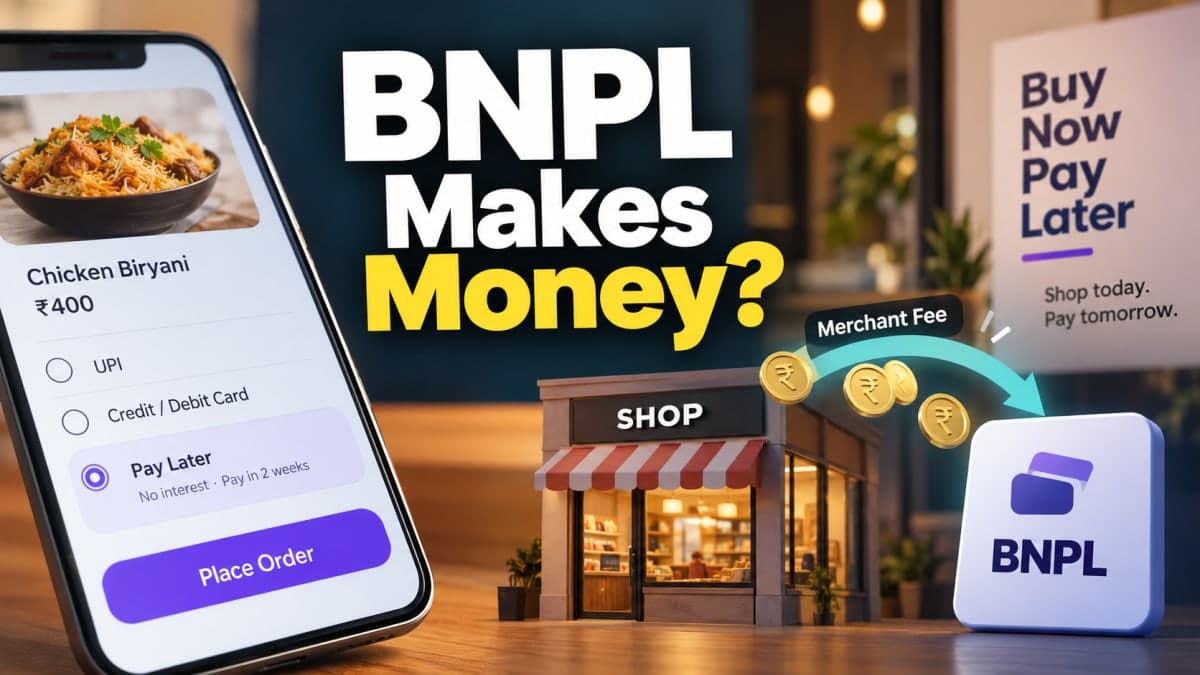
Buy Now Pay Later apps have made the credit trap invisible and frictionless.
Swiggy Instamart. Zepto. Myntra. Zomato. Flipkart. Every major platform now has a BNPL option at checkout. One tap. No forms. No credit card needed. You get the product now and pay in three or six or twelve installments.
It sounds harmless. For many people, used carefully, it is. But the structure has some dangerous features that most young users do not fully understand.
First, every BNPL account is reported to credit bureaus as a small ticket personal loan. Miss one payment, even by a day, and your CIBIL score takes a hit. A bad CIBIL score can later affect your ability to get a home loan, a car loan, or even a job at some companies.
Second, the phenomenon called phantom debt is real. When you have three BNPL apps running simultaneously, each with small monthly payments of Rs 500 or Rs 800, the total is easy to lose track of. Suddenly 30% of your take-home pay is committed to small EMIs you forgot you had. The individual amounts felt painless. The total does not.
Third, the late fee structure on many BNPL apps is steep, often Rs 100 to Rs 500 per missed payment plus daily interest. And if you ever think deleting the app makes the debt go away, it does not. The lender continues to report the default to CIBIL and initiates recovery. The app is gone. The debt is not.
Who is most at risk?
New-to-credit borrowers are the most exposed. These are people who just got their first credit card or BNPL account, often in their early to mid 20s, and have no prior experience with how compound interest and minimum payment cycles actually work.
This matters in India specifically because financial literacy around credit is genuinely low. Most people understand that interest exists. Far fewer understand how 36% annual interest compounds, what the true cost of paying only the minimum is, or how a CIBIL score affects their future financial life.
Public sector bank credit card holders are in a particularly tricky position. Data from Care Ratings showed that public sector banks had a bad loan ratio of 12.7% on their credit card portfolios by September 2024, compared to 2.1% for private banks. This suggests that the customers who got cards from government banks, often lower-income borrowers who found it harder to access private bank products, are struggling to repay at a much higher rate.
The RBI noticed. In late 2023 it raised risk weights on unsecured consumer credit including credit card receivables by 25 percentage points, which was a signal to banks to slow down the aggressive credit expansion. New digital lending rules introduced in May 2025 tightened transparency requirements and grievance mechanisms. The regulator is watching this space carefully. That does not mean every borrower is protected. Regulations lag behaviour.
The three numbers every credit card user in India should know
None of this is a reason to cut up your credit card and live in fear. Credit, used well, is one of the most powerful financial tools available to ordinary people. But using it well requires understanding three numbers that most people ignore.
The first is your actual APR. Annual Percentage Rate. On most Indian credit cards this is between 36% and 42% per year. That is not a typo. That is the interest rate you pay if you carry a balance. Not 3.6%. Thirty-six percent. Some premium cards are lower, around 24%. Check yours specifically.
The second is your statement balance versus your minimum due. Always pay the full statement balance, not the minimum. If you genuinely cannot pay the full balance this month, pay as much as you can and treat clearing the remaining amount as an emergency. A month of carrying credit card interest can wipe out the cashback rewards you earned in six months.
The third is your CIBIL score. Check it once every three months. It is free on most banking apps and CIBIL's own website. Understanding your score and what affects it gives you meaningful control over your financial future. A score above 750 is the difference between getting a home loan at 8.5% and being denied entirely or charged 12%.
What about UPI credit cards specifically?
This is where it gets interesting for 2026 India.
UPI credit cards, RuPay cards linked to your phone, have made credit feel exactly like UPI. You scan a QR code at a vegetable seller, a dhaba, a local pharmacy. The money comes from your credit limit, not your bank account. The rewards pile up. It feels completely normal.
And it is genuinely a useful product. Using a UPI credit card responsibly, spending what you would have spent anyway, paying the full balance every month, is essentially free money through rewards and cashback.
But the same feature that makes it powerful makes it dangerous. When paying with credit feels identical to paying from your savings, the psychological brake that used to make people hesitate before swiping a card disappears. You scan the same way you would with UPI. The pain of paying, which psychologists call the friction that stops impulsive spending, is gone.
Over 500 million people use UPI in India. As more of them link credit cards to that habit, the stakes of understanding credit get much higher for many more people.
The bottom line
India's credit expansion is genuinely good in many ways. More people have access to financial tools they did not have before. BNPL helps smooth cash flow for millions of households. Credit cards build credit history for people entering the formal economy for the first time.
But access without understanding is its own kind of trap.
The minimum due is not your bill. It is a leash. BNPL installments are not free money. They are loans in comfortable packaging. And a credit card charging 36% annually is the most expensive debt most people will ever carry, sitting right next to their debit card like it is the same thing.
India has 10.8 crore credit cards. It needs 10.8 crore people who understand how they actually work.