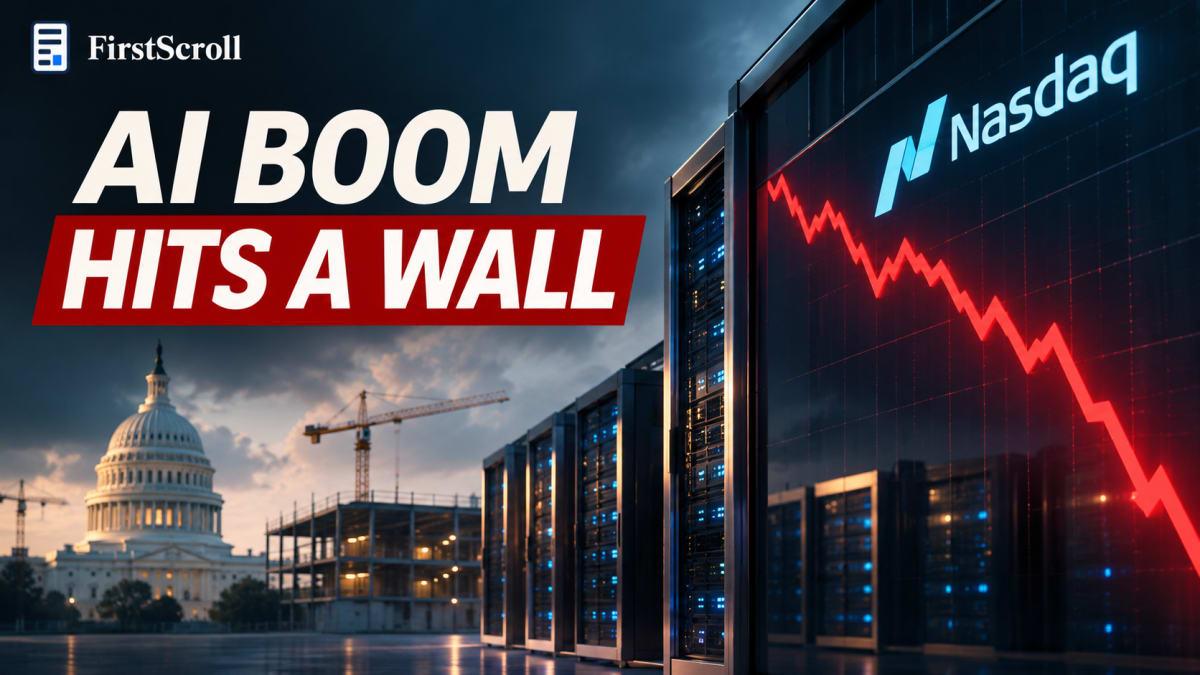
The short answer: The Nasdaq crashed 6.4% after a "Blue Sweep" in the US midterms signaled a move toward aggressive AI regulation and slower data center approvals. Investors erased $2.3 trillion in value as they feared political pushback would stall the infrastructure spending that powers global chipmakers.
The Story
On the morning of November 5, 2026, the mood on the floor of the New York Stock Exchange shifted from cautious optimism to a flat-out scramble. Just a day earlier, investors had cheered, betting that a divided government would keep things predictable.
By Thursday, the reality of the midterm results sank in. The Democratic Party had not just gained ground: they had secured a "Blue Sweep," winning control of Congress and key governor seats in states like Texas and Ohio. For the tech world, this was the equivalent of a "stop" sign appearing on a high-speed highway.
The selling started fast and never let up. By the time the closing bell rang, the Nasdaq 100 was down 6.4%, its deepest plunge since the dark days of the pandemic in early 2020. The Dow Jones Industrial Average did not fare much better, shedding 1,833 points as every single one of its 30 member companies ended the day in the red.
Then, the damage hit the heart of the modern portfolio: the chipmakers. Nvidia, the world’s most valuable company and a staple in many Indian retail investors' global baskets, tumbled over 9%. It was its worst slide in nearly two years, erasing all the gains it had made in 2026 in a single session.
And here is the strange part. Nothing had changed about the technology itself. The AI models were still powerful, and the demand for data was still growing. Yet, the market acted as if the entire industry had hit a brick wall.
So here's the question: if AI is supposed to be the most transformative technology of our time, why did a single election result trigger the biggest tech crash in six years?
Why did a simple election break the tech trade?
You see, the problem is not that the AI boom is over. It is that the political "permission" to build it has suddenly become much more expensive and complicated.
Think of the AI industry like a massive housing project. For two years, developers have had a "green light" to build as fast as possible. But after this election, the "local council" has changed. The new members are worried about the noise, the massive amount of electricity these projects gulp down, and the strain they put on the local water supply.
This is where the "Blue Sweep" matters. Democrats won governor races in Texas, Georgia, and Ohio: three states that were supposed to be the primary hubs for new data centers. These centers are the physical homes of AI, filled with thousands of chips from companies like Nvidia and AMD. If a new governor decides to pause a permit because the local power grid is failing, the entire supply chain feels the heat.
Analysts at UBS estimated that nearly 30% of expected capacity additions for data centers by 2028 could now be at risk. When you realize that billions of dollars have already been plowed into these projects, any delay turns a "growth story" into a "spending problem." We have previously discussed why Big Tech's AI spending is tanking stocks, but this political shift adds a new layer of regulatory friction.
So who wants what here? The tech giants want to keep building to stay ahead in the AI race. But the voters who fueled this midterm result were reportedly frustrated by high energy costs and the impact of these massive "neocloud" facilities in their backyards. For a politician, protecting the local power grid is often more important than protecting a Silicon Valley stock price.
Now, this might feel like a purely American problem, so why should you care? Because most global index funds are heavily concentrated in these few tech giants. When the leaders fall, the whole pack follows. On Thursday, a specific index of semiconductor shares dropped 12%, its worst day since the pandemic began.
Is the AI bubble finally popping?
But here's the twist. The crash was not just about politics: it was also about a sudden "buyer's strike." Investors are starting to realize that the rosy profit forecasts they relied on might be built on shaky ground.
According to market strategists, many analysts were valuing tech stocks based on the assumption that AI spending would grow forever. But if policies change, those forecasts are no longer valid. As one fund manager put it:
"The market's moving from the promise of AI to the price of AI."
The scale of the sell-off was captured in the performance of the most popular chip stocks. While some had high valuations, others were hit by specific business setbacks that compounded the political fear.
| Company | One-Day Decline | Primary Trigger |
|---|---|---|
| AMD | 17% | Deepest plunge among major chipmakers |
| Arm Holdings | 15% | Revenue guidance failed to impress |
| Qualcomm | 14% | Disappointing profit forecast |
| Micron | 13% | Paused plans for a new plant |
The panic was so widespread that even the "fear gauge," known as the VIX, surged to 28.18, its highest level since March. This suggests that traders are no longer just "dipping their toes" in the market: they are paying high prices for protection against even deeper falls. You might find that why cheap valuations can't stop the 2026 stock slide explains this sentiment of staying cautious despite lower prices.
Now to be clear, the AI industry is not vanishing. Companies like Amazon and Alphabet still have massive war chests, and the long term potential of the technology remains. The rally in the US government bond market on Thursday shows that investors are not quitting the market entirely: they are simply moving their money from "risky" tech to "safe" havens like Treasuries.
So, is the tech rout about a failed election? Not really. It is about the realization that AI cannot grow in a vacuum. It needs land, power, and political goodwill. When those three things were put to a vote, the market realized it had priced in a future that might take much longer to arrive.
The next big signal will come on December 9, when the US Federal Reserve holds its final meeting of the year. Investors are already betting that the tech slowdown might force the Fed to rethink its plan for higher interest rates. For now, the "momentum" that carried the market to record highs has officially stalled.
If this helped the global tech rout make sense, share it with a friend on WhatsApp, LinkedIn, or X. You might also enjoy our story on whether the AI boom is making index funds too risky.