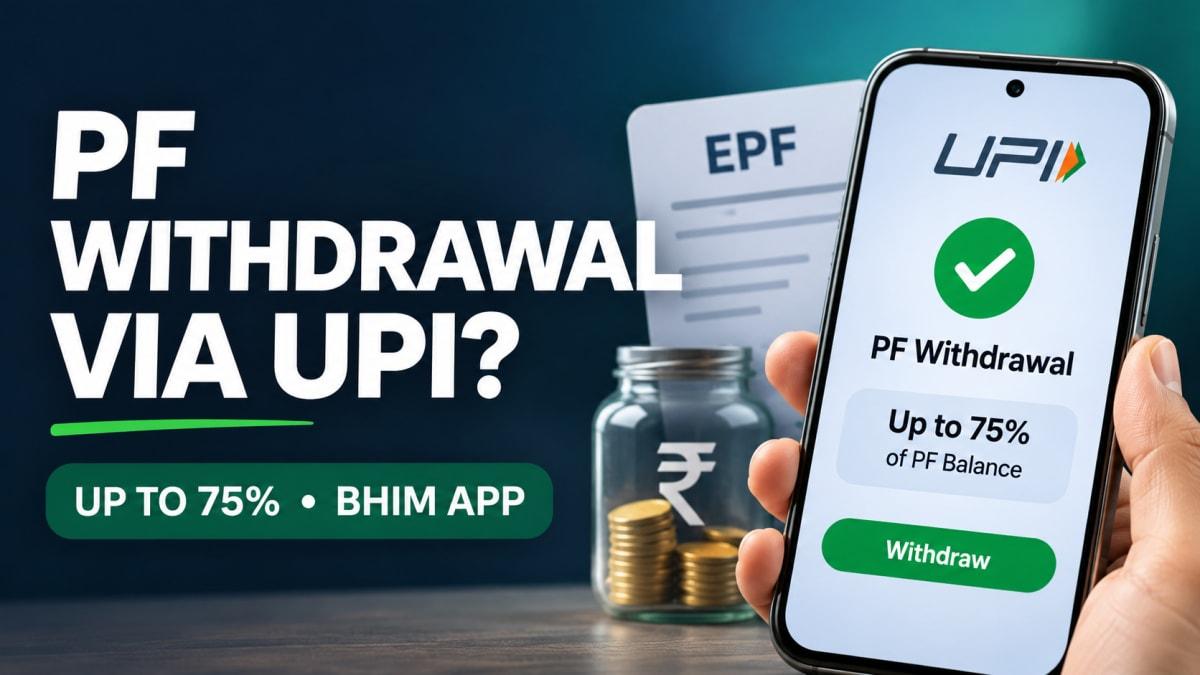
The same retirement fund that takes years to build can often take weeks to reach your pocket, but a new digital bridge is about to make that delay a thing of the past.
The EPFO is launching a new UPI interface on the BHIM app to let 7.48 crore active subscribers withdraw money instantly. By using Aadhaar-linked bank accounts, the system removes the old bank-verification bottlenecks that kept retirement funds stuck in paperwork for weeks.
The Story
Right now, somewhere in India, a group of exactly one hundred people are checking their phones with more than the usual curiosity. These individuals were shortlisted from across the country to take part in a high-stakes experiment.
They are the test subjects for a pilot project that has been undergoing debugging for a month. Their task is simple but vital: to see if the complex machinery of India's retirement system can finally talk to the speed of a UPI scan.
For decades, withdrawing money from the Employees’ Provident Fund (EPF) felt like navigating a maze. Even after your employer signed off, your request had to travel to the EPFO, then to a bank for verification, and then back again before the cash finally hit your account.
But recently, the Ministry of Labour and Employment decided it was time for a change. They are preparing to roll out what they call the EPFO 3.0 reform, a plan to move legacy data into a central pool and offer banking-style speed to millions of workers.
Then, the news broke that the BHIM app will soon host a dedicated icon for the EPFO. This will allow users to bypass the old, slow verification routes by using their 12-digit unique Universal Account Number (UAN) and Aadhaar details to link their funds directly to UPI.
And here is the strange part. While the EPFO is making it easier to take money out, the broader economy is actually speeding up. Recent data shows India's 9 per cent economic activity growth in October hit a four-year high, suggesting that people might soon have more reasons to manage their savings more actively.
So here's the question: if the EPFO already has your bank details, why did it take a new UPI link to make withdrawals nearly instantaneous?
How does the new interface bypass the old hurdles?
You see, the problem is not that the EPFO does not have your money. It is that the plumbing between the government and your private bank account was full of manual checkpoints.
Think of the old PF withdrawal process as a physical cheque that has to be hand-delivered to three different offices for a signature. Each office takes a few days to look at it, and if one person finds a tiny mismatch in your name or bank code, the whole cheque is sent back to the start.
The new UPI interface acts like a digital drone delivery. By using Aadhaar as the primary key, the system does not need to ask a bank clerk to verify your identity. If your Aadhaar matches your UAN and your bank account, the money moves through the same rails you use to pay for chai.
Now, you might wonder why the government is pushing so hard for this now. It is about a massive cleanup of the system. In the past, the friction in the system led to thousands of legal battles between workers and the EPFO.
By streamlining the digital process, the total number of 27,639 litigation cases pending as of April 2026 is the lowest it has ever been, down from more than 31,000 just a year earlier.
But building this kind of speed costs money. While we often think of UPI as a free service, the banks that maintain the servers have to pay the bills. This is where the strategy of lenders like Bank of Baroda comes in.
The bank plans to take the fee income it earns from a 0.4 per cent on specific transactions and reinvest it into better UPI infrastructure. Even though 95 per cent of users will never pay these fees, the high-value payments from merchants provide the "fuel" to keep the system running fast for everyone else.
Why can't you withdraw your entire balance?
But here's the twist. Even with the fastest UPI link in the world, you still cannot empty your entire PF account with one click for a simple emergency.
The new rules being tested only allow subscribers to withdraw 75 per cent of their balance through this direct interface. The remaining quarter stays locked in, ensuring you still have a safety net for the long term. This is a deliberate speed bump designed to prevent people from spending their retirement on a whim.
There is also the matter of the "ghost" accounts. While there are 29 crore registered PF accounts in India, only about a quarter of them are active. The rest are dormant, often because workers found the old withdrawal process so painful that they simply abandoned their money when they switched jobs.
Now to be clear, the UPI interface is still in its trial phase. The Ministry has not set a final launch date yet because they are still migrating massive amounts of legacy data into the new central pool. They want to ensure that when millions of people hit the "withdraw" button on day one, the system does not crash under the weight of its own success.
So, is the EPFO change about a new app? Not really. It is about a fundamental shift in how the government views your savings. For years, the system was designed to keep money in by making it hard to get out. Now, the logic has flipped: if you know your money is easy to access, you might be more willing to save even more.
The next big milestone will be the official launch of the EPFO 3.0 reform. Until then, the hundred people in the pilot group are the only ones who know exactly how it feels to have a retirement fund that moves at the speed of light.
If this helped the EPFO's new UPI move make sense, share it with a friend on WhatsApp, LinkedIn, or X. You might also enjoy our story on Why Is My October Salary Lower?