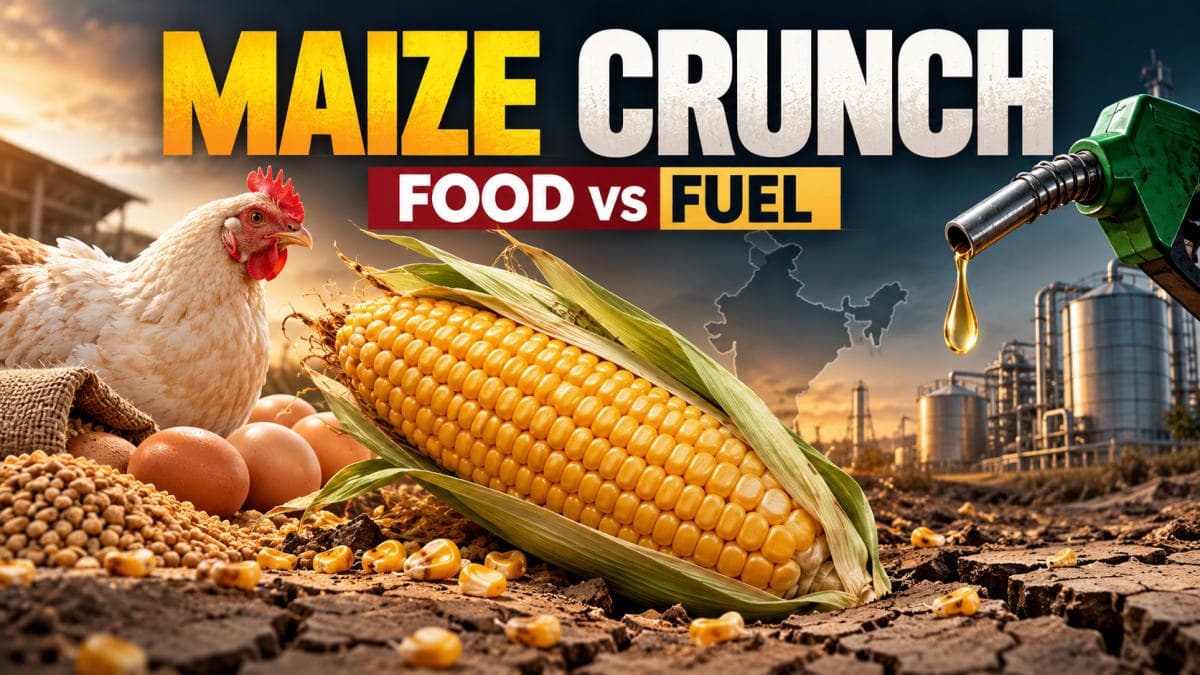
In today's FirstScroll, we break down why the government is cutting the price of corn-based fuel, and why your Sunday chicken curry depends on the cost of ethanol.
The short answer: The government cut the purchase price of maize-based ethanol by Rs 3 per litre to prevent a food inflation crisis. A severe drought has shrunk maize supplies, sparking a bidding war. By lowering what oil companies pay for this fuel, the government is ensuring that enough corn stays in the market for poultry feed rather than being diverted to petrol tanks.
The Story
Picture a poultry farmer in a drought-affected district. He is walking through his sheds, looking at thousands of hungry birds that need a steady diet of maize-based feed to grow.
Usually, his biggest worry is the weather or a sudden flu outbreak. But this year, he is facing a competitor he never expected: your car.
Because the government wants more ethanol in our petrol, massive distilleries are now buying up the same corn that feeds India's chickens. When the harvest is plenty, there is enough for everyone. When a drought hits, it becomes a fight for survival.
Then, the shortage became impossible to ignore. Drought conditions caused a significant decrease in maize supply, leaving poultry producers and starch manufacturers in a me first fight for limited resources.
As maize prices climbed, the poultry industry warned that they simply could not afford to keep feeding their birds. If the birds do not eat, the price of chicken and eggs in your local market starts to soar.
And here is the strange part. While the world is worried about energy, the government decided to make one type of green fuel less attractive to produce just to keep food on your plate.
So here's the question: if India is pushing for a green energy future, why did the government slash ethanol prices just when the shortage got serious?
You see, the problem is not about hitting green targets. It is about a fundamental trade-off between fuel and food.
Think of the country's maize supply as a single kitchen pantry. In a good year, the pantry is overflowing. You can use the extra corn to make ethanol, which helps lower the bill for crude oil like Brent, which recently closed below $109 a barrel.
But when a drought hits, the pantry is half-empty. If the government keeps paying high prices for ethanol, the fuel makers will keep outbidding the farmers for every last grain of corn.
To fix this, the government stepped in. For the first time since the ethanol blending programme began, oil marketing companies (OMCs) have lowered the purchase price for maize-based fuel.
This is a major shift. The OMCs have floated a tender to buy 1100 crore litres of ethanol for the 2026 to 2027 supply year. By cutting the price of the maize-based version, they are essentially telling distilleries to look elsewhere for their ingredients.
Now, maize is just one grain, so why should you care? Because food prices are the biggest driver of the inflation that hits your wallet every month.
If you have wondered why are edible oil prices falling in India while other groceries get costlier, it is because the government constantly tweaks these price levers to keep the thali affordable.
So who wants what here? The poultry farmer wants cheap corn to keep his business alive. The oil companies want enough ethanol to meet their blending targets. And the government wants to avoid a headline-grabbing spike in egg prices.
This is where the balancing act gets tricky. While the government cut the maize ethanol price, it kept the rate for ethanol made from damaged foodgrains like broken rice steady at Rs 64 per litre.
But here's the twist. While the fuel price for maize went down, the cost of the raw material for other types of ethanol is going up. The government recently hiked the rate of rice sold by the Food Corporation of India by Rs 1.82 per litre.
This has left grain-based distilleries feeling squeezed. They argue that cutting the incentive while costs are rising makes their investments unviable. They feel they are being punished for a drought they did not cause.
The sugar industry is also on edge. They usually provide the bulk of India's ethanol from molasses, but they are worried about El Niño conditions affecting their own crop yields. They do not want the government to give special treatment to dedicated ethanol plants at the cost of sugar mills.
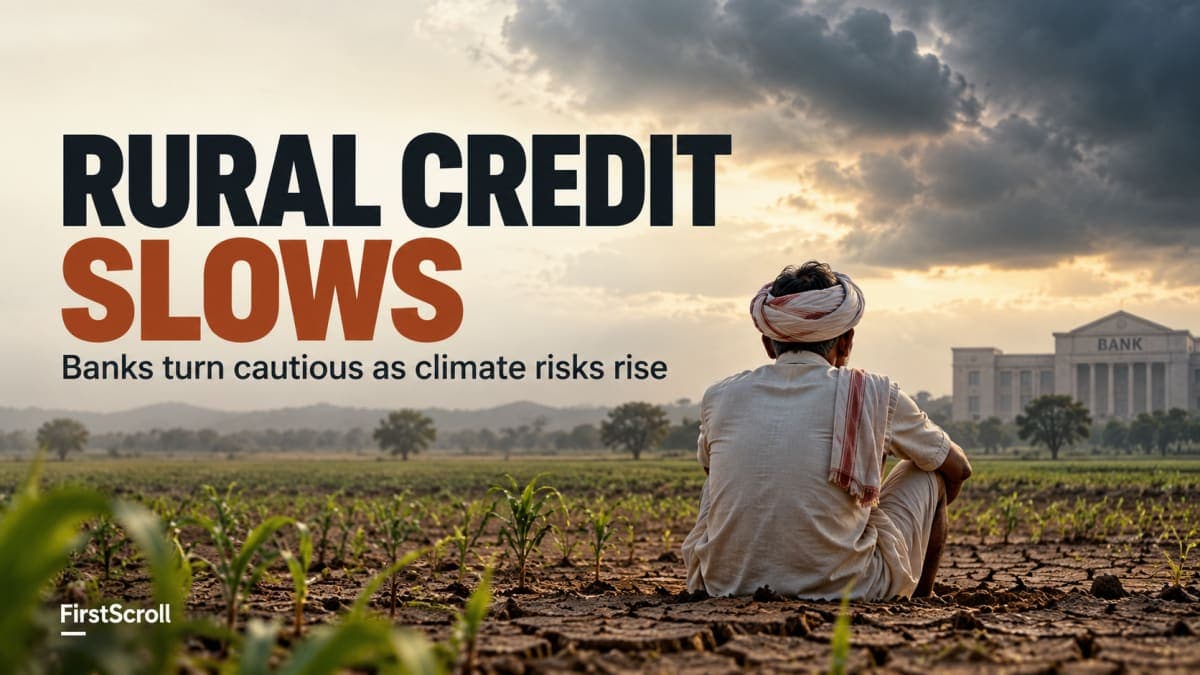
The rural economy is already feeling the heat of these weather shifts. You can see the impact in other sectors, such as why are tractor sales falling while car sales boom, as farm incomes face the double whammy of low yields and shifting government priorities.
Now to be clear, the government is not abandoning its green goals. It is simply trying to find a more sustainable path. During the 2022 to 2023 supply year, procurement prices were low before being hiked to encourage production. This latest cut is a "price correction" to reflect the reality of the market.
So, is the maize crisis about fuel? Not really. It is about a country learning that its green ambitions cannot come at the cost of its food security.
India wants to drive cleaner cars, but it needs to feed its people first. Whether the government can manage to keep both the distilleries running and the chickens eating is something only time will tell.
Until then…
If this story helped you make sense of the fuel versus food trade-off, share it with a friend on WhatsApp, LinkedIn, or X. You might also enjoy our story on why are edible oil prices falling in India.