In today's FirstScroll, we break down why the RBI is selling dollars directly to oil companies, and how the rbi special window for oil marketing companies explained helps us understand the hidden plumbing of the Rupee.
The short answer: The RBI is supplying dollars directly to state-run oil companies through a private channel to stop them from overwhelming the public currency market. This move protects the Rupee, which hit 96.73 against the US dollar this week. By acting as a private supplier, the RBI keeps the currency stable without triggering a public panic.
The Story
Imagine a massive oil tanker docked at a port in Jamnagar. It is carrying millions of barrels of crude oil that India needs to keep its cars running and its factories humming.
When the bill arrives, the seller does not want Rupees. They want US dollars.
For a small company, this is not an issue. They go to their bank, swap their Rupees for dollars, and pay the invoice. But for India's oil giants, the math is terrifying.
They need so many dollars every single day that if they showed up at the market all at once, they would blow the doors off. The sheer scale of their demand would send the price of the dollar soaring.
Then, the central bank decided to step in. The RBI announced it is opening a special window for three public sector oil marketing companies, known as OMCs.
And here is the strange part. Instead of telling these companies to buy dollars from banks like everyone else, the RBI is now selling the dollars to them directly.
So here's the question: if the market is where currency is traded, why is the RBI acting as a private currency dealer for oil companies?
You see, the problem is not that these companies lack money. It is that their demand is so large it could break the price of the Rupee for the rest of us.
Think of the currency market as a crowded local train. If one person tries to get on, nobody notices. But if three Sumo wrestlers try to barge through the same door at the same time, the whole line stops.
The "Big Three" oil companies, Indian Oil Corporation Limited, Hindustan Petroleum Corporation Limited and Bharat Petroleum Corporation Limited, are those wrestlers. Because India imports the vast majority of its oil, these firms are the single biggest buyers of dollars in the country.
If they go to the public market to buy billions of dollars, the supply of dollars shrinks instantly. When dollars become scarce, their price goes up and the value of the Rupee falls.
This is a major headache right now because the intervention but dollar demand persists in the broader market. The Rupee has been under immense pressure, and any extra demand from oil companies could cause it to spiral.
Now, you might wonder Why Is Rupee Falling Despite Low Oil Prices? even when the global economy seems stable. One reason is that currency markets are sensitive to big trades, and oil companies are the biggest traders around.
So who wants what here? The oil companies want a steady supply of dollars to pay their bills without driving the exchange rate up against themselves.
And the government? It wants to keep the Rupee stable to prevent imported inflation. When the Rupee gets weaker, every barrel of oil we buy becomes more expensive, which eventually leads to higher prices at your local petrol pump.
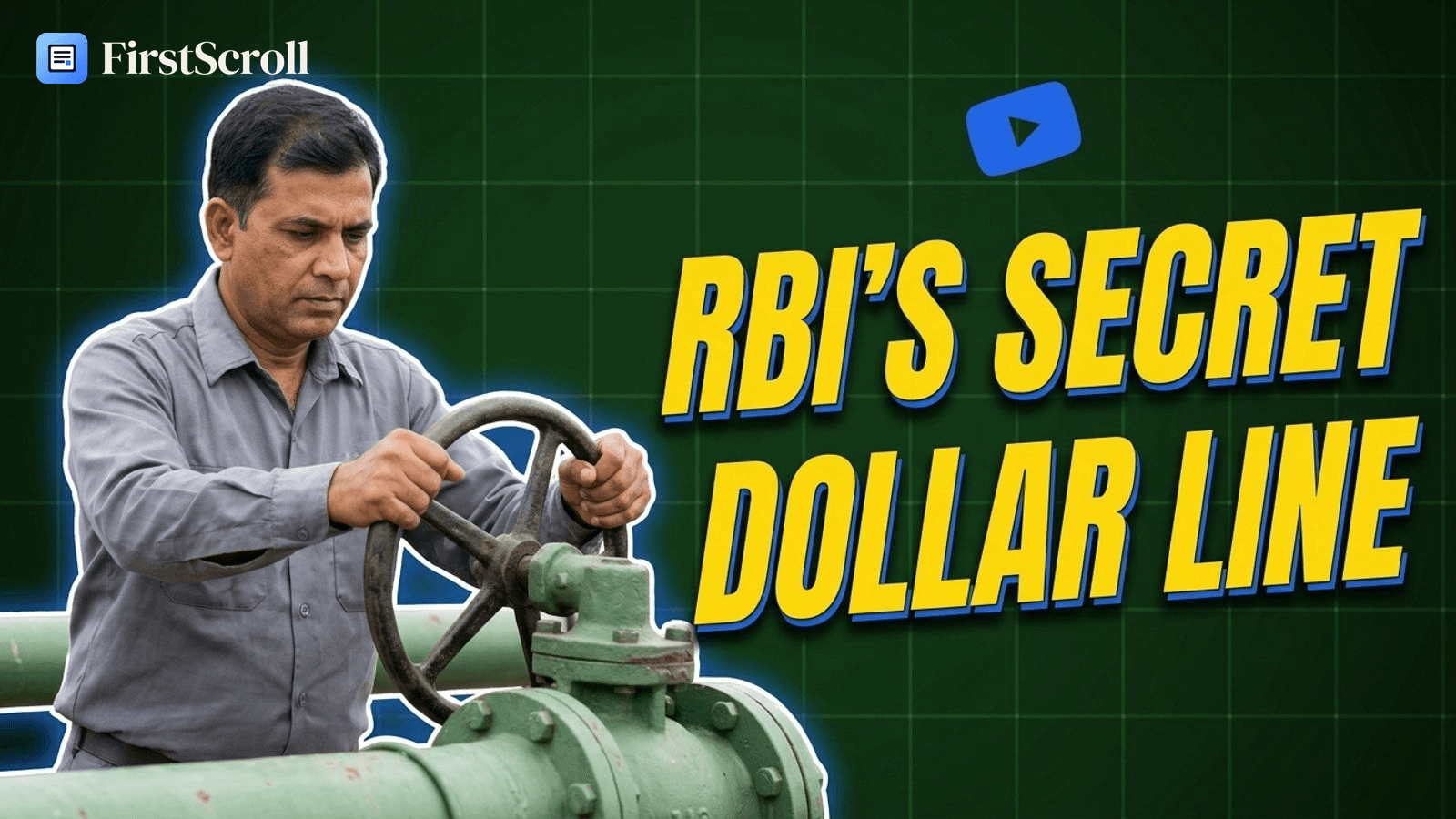
This is where the special window comes in. It is essentially a side door. Instead of the oil companies going to the public market, they go straight to the RBI.
The RBI reaches into its "war chest" and hands over the dollars in exchange for Rupees. You might have seen news about a record drop in India forex reserves recently, and this is exactly what that looks like in action: the RBI using its savings to keep the market calm.
But here's the twist. While the RBI is selling dollars to help the Rupee, it is also fighting a battle on another front: liquidity. To buy those dollars from the RBI, the oil companies have to give the central bank a mountain of Rupees, which pulls cash out of the banking system.
At the same time, the bond market is getting nervous. The benchmark 10-year G-Sec yield touched 7.31 per cent, its highest level since November 2023. Traders are worried that the RBI will keep sucking cash out to control inflation.
The RBI has even planned an OMO sale of ₹25,000 crore for October 13. OMO stands for Open Market Operations, which is just a fancy way of saying the RBI is selling bonds to drain even more cash from banks.
Now, why should you care about bond yields? Because when they rise, it usually means the era of cheap loans is over. Some treasury officials now expect the interest rate to peak as high as 6.25 per cent by FY27, a significant jump from where many expected it to settle.
Now to be clear, this special window is not a permanent solution. It is a plumbing fix used when the markets are too volatile to handle the Big Three's massive dollar needs.
The RBI is essentially ring-fencing the oil companies. By dealing with them in private, it ensures that the everyday currency market stays calm for everyone else.
So, is the special window about helping oil companies? Not really. It is about protecting the Rupee and keeping the broader economy from catching a cold every time an oil bill comes due.
Whether the RBI can keep this up without draining too many of our dollar reserves is something only time will tell.
Until then…
If this story helped you make sense of the rbi special window for oil marketing companies explained, share it with a friend on WhatsApp, LinkedIn, or X. You might also enjoy our story on Why is the RBI Hiking Rates.