You know that split-second of anxiety when the low-fuel light pings on your dashboard? You pull into the nearest station, tap your card, and grumble about the price of petrol without a second thought. But the liquid pumping into your tank might have just traveled 15,000 kilometers from a tiny South American country you couldn't find on a map two years ago.
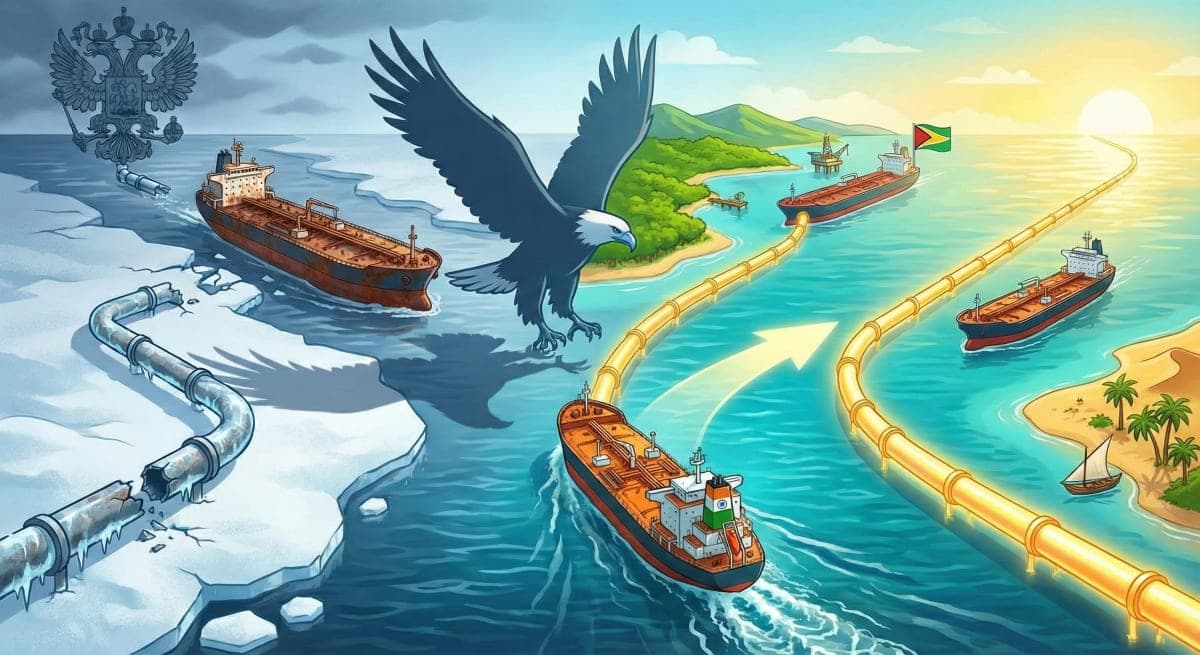
For the last three years, India and Russian oil were in a "situationship." It was cheap, it was plentiful, and it kept our inflation from spiraling. But as of January 2026, that relationship is officially in the "it’s complicated" phase. A new wave of US pressure is squeezing the flow of Russian crude, and Indian refiners are redrawing the map of our energy future.
The numbers are in: In December 2025, India’s Russian oil imports plummeted by 29% month-on-month to their lowest levels since the price cap began.
The Compliance Squeeze: Giant private players like Reliance Industries have essentially halted Russian imports to stay in Washington's good books. With the "Russian discount" shrinking to a measly $2–$5 per barrel, the geopolitical drama is starting to outweigh the savings.
If we aren't swiping right on Russia, who’s the new favorite? Enter Guyana. This South American nation is the world's fastest-growing oil producer. In early January 2026, Indian refiners lifted their first cargo from Guyana in two years, procuring about 297,000 barrels per day (bpd).
| Supplier | Trend (Jan 2026) | The "Vibe" |
|---|---|---|
| Russia | 📉 Down ~30% | "The Toxic Ex" |
| Saudi Arabia | 📈 Up 36% | "The Reliable Old Flame" |
| Iraq | 📈 Up 18% | "The Steady Partner" |
| Guyana | 🆕 New Entry | "The International Crush" |
This pivot is expensive. Shifting from discounted Russian barrels to "premium" global crude could increase India's annual import bill by $9–$11 billion.
- OMC Margins: While marketing margins remain healthy at roughly ₹8/litre, higher procurement costs from further distances (like Guyana) are beginning to squeeze the bottom line.
- The Budget Factor: With the Union Budget on February 1 st, the government faces a choice: keep fuel prices stable or protect the fiscal deficit.
India isn't just sitting ducks. We are building massive underground "oil banks." A new 5.3 Million Tonne strategic reserve is planned for the salt caverns of Bikaner, RajasthanIndia's first of its kind.
Imagine buying a massive 10 kg bag of rice when it’s on sale because you’re worried the shop might close. A salt cavern is a giant, natural "underground tupperware" that can store oil (and even Green Hydrogen) for years without it leaking or spoiling.
India is trading a "cheap but risky" situationship for a "stable but expensive" global network. In a world of trade wars, your fuel tank is now the ultimate geopolitical map.