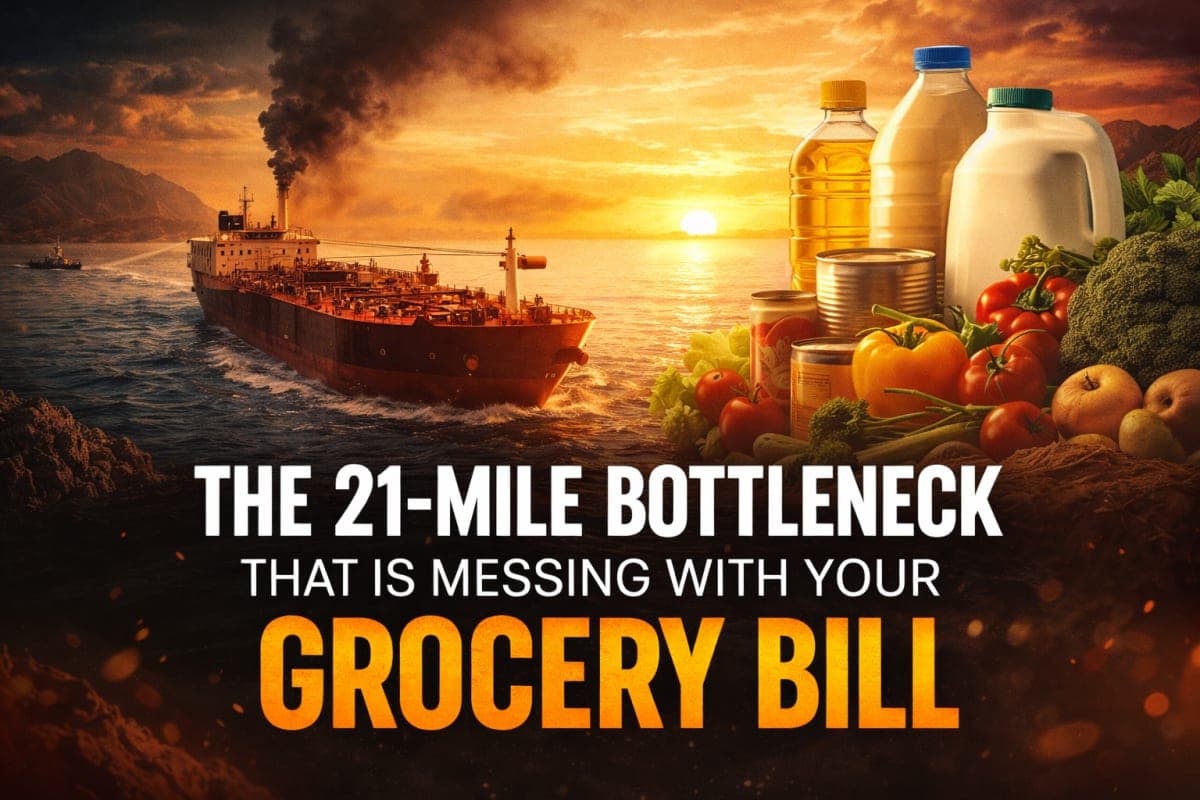
Imagine the global economy as a living, breathing organism. If the flow of energy is its blood, the Strait of Hormuz is the carotid artery. It is a narrow, 21-mile-wide stretch of water separating the rugged coastline of Iran from the Musandam Peninsula of Oman. For decades, it has been the world’s most sensitive geopolitical barometer. Today, that barometer has shattered.
Since late February 2026, a simmering shadow war between the United States, Israel, and Iran has boiled over into a full-scale maritime blockade. The "21-mile corridor" is no longer a transit point; it is a fortress. With the strait effectively closed to commercial traffic, the world is facing an economic cardiac arrest. We aren't just talking about a spike in fuel prices we are talking about a fundamental restructuring of how the world eats, moves, and pays its bills.
The Anatomy of a Chokepoint
To understand why a tiny strip of water matters so much, you have to look at the math of survival. At its narrowest, the shipping lane in the Strait of Hormuz is only two miles wide in either direction, separated by a two-mile buffer zone. Through this needle’s eye, roughly 20 million barrels of oil pass every single day.
To put that in perspective, that is one-fifth of the entire world’s daily consumption. If you drive a car in Tokyo, heat a home in Berlin, or run a factory in Chennai, there is a statistical certainty that your life is powered by the molecules that squeeze through this gap.
When the conflict escalated in February, the shift was instantaneous. Maritime insurance giants like Lloyd's of London and various P&I Clubs "noped out," as the industry says. When insurance premiums for a single voyage exceed the value of the cargo itself or when coverage is denied entirely due to "war risk" tankers stop dead in their tracks. As IEA Executive Director Fatih Birol noted, this is not just another market hiccup; it is the largest supply disruption in human history, dwarfing the 1973 oil embargo and the 1990 invasion of Kuwait.
The Domino Effect on Energy and Industry
The closure of Hormuz doesn't just stop "oil." It stops the specialized derivatives that keep the modern world functioning. While Brent crude grabbed headlines by peaking at $126 per barrel in March 2026, the secondary effects are arguably more dangerous.
Liquefied Natural Gas (LNG): Qatar is the world’s leading exporter of LNG. Almost all of its shipments must pass through the Strait. With the blockade in place, one-fifth of the global LNG supply has vanished overnight. This has sent electricity prices in Europe and Asia into a vertical climb, forcing industrial plants to curtail production.
Methanol and Petrochemicals: The Persian Gulf is the heartbeat of the global plastics and chemicals industry. One-third of the global methanol trade essential for everything from paints to car parts is now stuck behind the "Hormuz Wall."
Sulfur: Nearly half of the world's sulfur exports originate here. Without sulfur, you cannot make phosphate fertilizers. This leads us to the most terrifying part of the crisis: the dinner table.
The Indian Perspective: A Perfect Storm
India finds itself in a uniquely vulnerable position. As the world’s third-largest oil consumer, India imports roughly 85% of its crude. A significant portion of that comes directly from the Gulf nations Saudi Arabia, Iraq, and the UAE. When the strait closes, India’s energy security isn't just threatened; it is compromised.
But the pain goes deeper than the petrol pump. India is a titan of agriculture, yet it relies on the Middle East for 40% of its fertilizer imports. Global urea prices have surged by 50% since the conflict began. For the Indian farmer, this means the cost of sowing a crop has doubled. For the Indian consumer, it means food inflation that could reach double digits by the next harvest.
The financial fallout is equally grim. The Indian Rupee is under immense pressure. As the country spends more US dollars to buy increasingly expensive oil, the value of the Rupee weakens. Economists are now eyeing the 95 mark for USD/INR. A weaker Rupee makes every other import from electronics to edible oils more expensive, creating a vicious cycle of "imported inflation."
The Ghost of Stagflation
Central bankers around the world are currently losing sleep over one word: Stagflation.
This is the "economic villain" that combines the worst of two worlds: Stagnant growth and high inflation. Usually, inflation happens when an economy is "hot" and growing too fast. Stagflation happens when the cost of living explodes while the economy actually shrinks.
The Dallas Fed has released chilling estimates: a single quarter of a total Hormuz closure could slash global GDP growth by 2.9 percentage points. In a world that was already struggling with post-pandemic debt and regional instabilities, a 3% hit to global growth is the difference between a difficult year and a global depression.
A Humanitarian Crisis in the Gulf
While the world worries about oil prices, the residents of the Gulf states are facing a more immediate threat: food security.
Nations like the UAE, Qatar, and Kuwait import over 80% of their food. Much of this arrives via the same shipping lanes used by oil tankers. With major shipping lines like Maersk and Hapag-Lloyd suspending their Middle East routes, grocery shelves in these desert nations are emptying. Reports indicate that basic food prices in the region have jumped anywhere from 40% to 120%. What began as a military conflict has rapidly devolved into a grocery supply emergency for millions of people.
What Happens Next?
The closure of the Strait of Hormuz is a "Black Swan" event that the global supply chain was never truly prepared for. While Saudi Arabia has a "Petroline" that can move some oil to the Red Sea, its capacity is a drop in the bucket compared to the 20 million barrels that usually transit the Strait.
For the rest of the world, there are no easy workarounds. The next few weeks are critical. If diplomacy fails and the blockade remains, the "painful quarter" we are currently experiencing will transform into a multi-year economic realignment.
The Bottom Line: We are witnessing the fragility of globalism. A 21-mile strip of water has proven that despite all our digital advancements, the world still runs on physical atoms and right now, those atoms are stuck. Keep a close watch on the price of Brent crude and the strength of the Rupee. They are the pulse monitors of a global economy currently in the ICU.