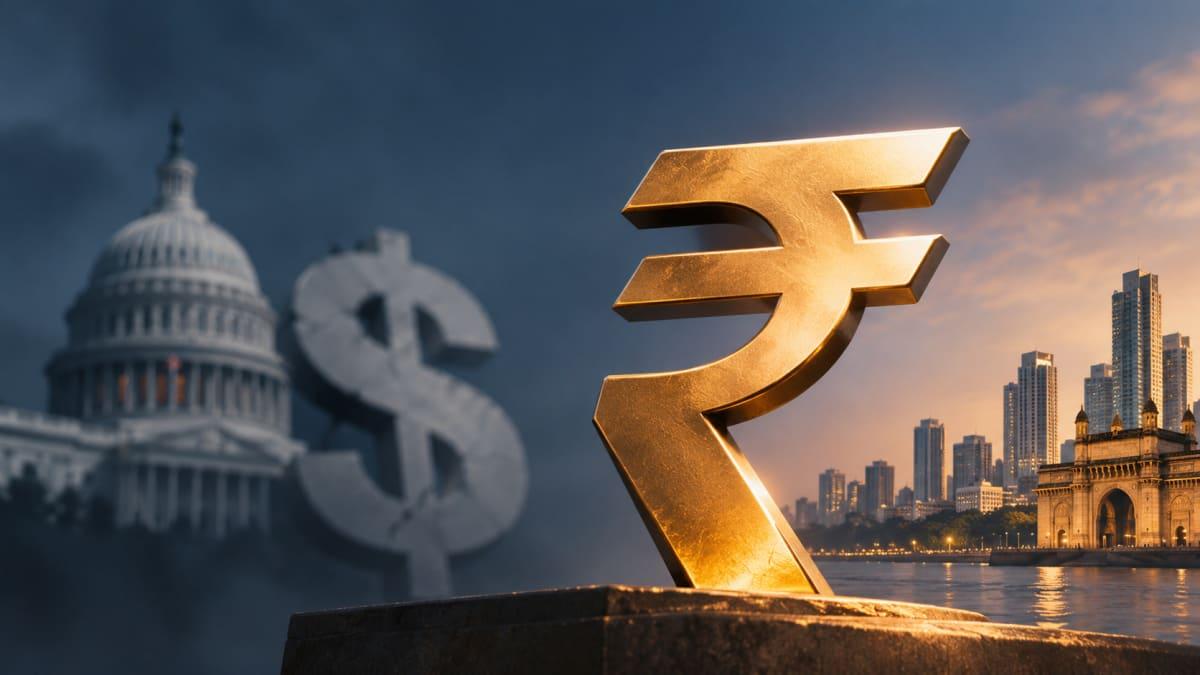
A paycheck in Ohio might seem worlds away from a jewelry store in Zaveri Bazaar, but the two are connected by a global financial invisible string.
The short answer: Strong US hiring signals a robust economy, which gives the US Federal Reserve room to keep interest rates higher for longer. Because gold offers no regular interest or "yield," it becomes less attractive than bonds when rates rise, causing gold prices to drop globally as the dollar strengthens.
The Story
Last Tuesday, the atmosphere in the bullion markets was actually quite optimistic. After a few weeks of sliding prices, the yellow metal was finally showing some muscle.
In the global market, gold had managed to bounce off a long-term support level and had reclaimed the $4,000 mark. For investors who had been watching prices dip, it felt like the worst was over.
In India, traders at the Multi Commodity Exchange (MCX) saw a similar recovery. Domestic gold futures for December delivery rallied from a support level of ₹1,38,000, suggesting that the wedding season demand might finally have a floor beneath it.
By the end of the week, the numbers looked solid. International gold was trading at $4,070.60 per ounce, up 5 per cent over the week. In India, gold futures settled at ₹1,42,167 per 10 gram.
Then, the music stopped. On Friday evening, the US government released its latest payrolls report, showing that American companies were hiring at a much faster clip than anyone expected.
Almost instantly, the US dollar jumped against major currencies. In the global commodities market, the "rebound" hit a wall as investors started selling off their gold holdings.
So here's the question: if American companies are hiring more people, why does that make the gold in an Indian locker lose its shine?
Why does a strong job market hurt gold?
You see, the price of gold is not just about how many people want to buy necklaces or coins. It is mostly a game of "opportunity cost" played by global fund managers.
Think of gold as a flat you own that stays empty. It might become more valuable over ten years, but it does not pay you any monthly rent. Now, think of US government bonds as a flat that pays a guaranteed rent every single month.
When the US jobs report comes out and shows a strong labor market, it tells the US Federal Reserve that the economy is running hot. When an economy is hot, there is a risk of inflation. To cool things down, the Fed keeps interest rates high.
When interest rates are high, the "rent" on bonds goes up. If you can earn a safe, high return from a bond, why would you keep your money in gold which pays zero interest? This is why bond yields rising often forces gold prices to take a backseat.
Now add the second ingredient: the US dollar. Since gold is priced in dollars worldwide, the two have an inverse relationship. When the dollar gets stronger because of high interest rates, gold becomes more expensive for people using other currencies, like the Euro or the Yen. That kills demand, pushing the price further down.
So who wants what here? The US Federal Reserve wants a stable economy without runaway prices. Global investors want the highest possible "yield" or return on their cash. And the Indian buyer? They just want a hedge against uncertainty.
The table below, based on data from The Hindu Business Line, shows how the different assets performed during this volatile week before the jobs data impact fully settled in.
| Asset Class | Global Price / Rate | Weekly Gain / Change |
|---|---|---|
| International Gold | $4,070.60 / ounce | 5 per cent |
| International Silver | $51.70 / ounce | 5.8 per cent |
| MCX Gold Futures | ₹1,42,167 / 10 gram | 2.7 per cent |
| Indian Rupee | Strengthened vs USD | 1.1 per cent |
Now, gold is a global commodity, so why should you care about US payrolls? Because these swings dictate the prices at your local jeweler. When the US hiring data is strong, the global price of gold drops, and usually, Indian prices follow.
But here's the twist
In India, the price you pay for gold is not just the global price converted to rupees. It is a mix of the global dollar price and the strength of the rupee itself.
Last week, while global gold prices rose 5 per cent, the gains in India were much smaller at 2.7 per cent. This happened because the rupee strengthened 1.1 per cent against the dollar at the same time.
When the rupee gets stronger, it takes fewer rupees to buy the same amount of dollar-priced gold. This actually acted as a "cooler" for the price hike in India. If the rupee had stayed weak, your gold would have become even more expensive last week.
This creates a strange paradox for Indian investors. Sometimes, "good news" for the Indian economy, like a stronger rupee, can actually lead to lower returns on your gold investment. You can see a similar logic in our piece on why the rupee falls even when oil prices are low.
Now to be clear, the long term outlook for gold remains positive according to market analysts. Even after the jobs report dip, gold is trading well above its support of $3,850, and many believe the bullish trend is still alive as long as it stays above certain technical levels.
So, is the gold price drop about a weak economy? Not really. It is actually about a US economy that is perceived to be "too strong" for its own good, forcing the central bank to keep the cost of money high.
The next big test for your gold's value will be the upcoming US inflation data. If hiring remains strong but inflation stays low, the Fed might finally consider cutting rates. Until then, gold remains stuck in a tug-of-war with a very muscular US dollar.
If this helped the gold and US jobs link make sense, share it with a friend on WhatsApp, LinkedIn, or X. You might also enjoy our story on why the RBI is cracking down on India's gold loan surge.