Imagine owning the biggest mansion on the block, but the roof is caved in, the plumbing is shot, and you are broke. That has been Venezuela for the last decade. Sitting on the world’s largest proven oil reserves, more than Saudi Arabia, yet pumping less than 1 percent of global supply.
Yesterday, the landlord got evicted.
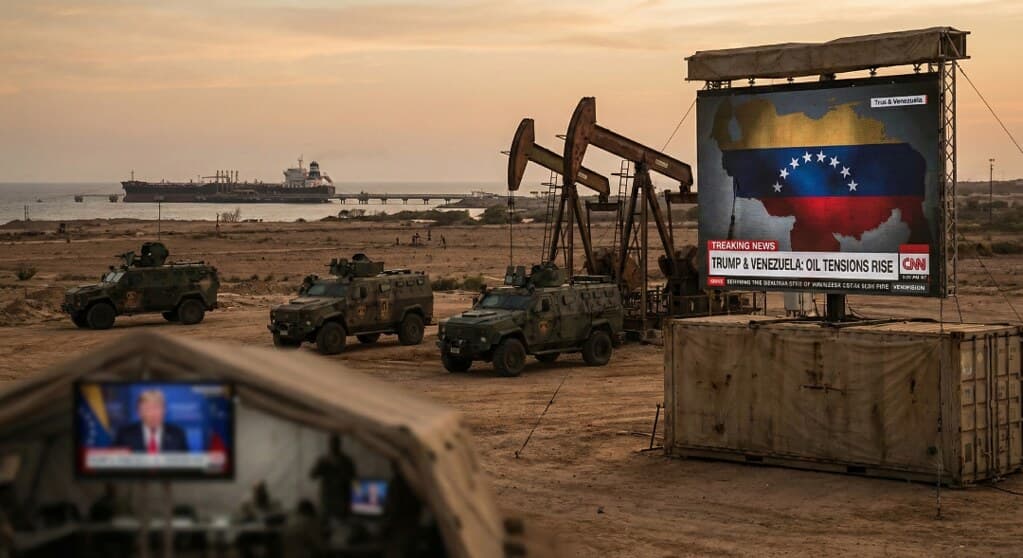
In a move that sounded more like a Hollywood script than a geopolitical update, reports confirmed a US military operation has resulted in the capture of Venezuelan President Nicolás Maduro. Former and now active player President Donald Trump immediately declared that the US will be very strongly involved in controlling and rebuilding Venezuela’s oil industry.
For the world, it is a shock. For India, it is a complex puzzle of lost money, future oil flows, and diplomatic tightropes. Here is what you need to know over your Sunday coffee.
The headline is the capture, but the story is the oil.
Trump called the Venezuelan oil industry a bust and said American companies would now fix it. The promise is simple. Remove old management, bring in US technology, and revive production.
Think of Venezuela as a massive, rusty treasure chest full of gold and oil. India, through ONGC, owns a share of what is inside.
For years, the guard lost the key and refused to let anyone fix the lock.
Now the Sheriff has kicked down the door and announced he is taking charge. The catch is India is waiting to see whether its share is actually returned.
India is the world’s third largest oil consumer. Normally, turmoil in a petro state causes panic. This time, the response is calmer.
Reliance Industries was once a major buyer of Venezuelan crude. Sanctions forced Indian refiners to diversify years ago.
According to Economic Times reports, Reliance currently has zero exposure to Venezuelan oil, having pivoted to Russian and Middle Eastern supplies.
The real uncertainty lies with ONGC Videsh, which owns a 40 percent stake in the San Cristobal oil field.
Years of sanctions and economic collapse have trapped profits inside Venezuela.
ONGC Videsh is waiting to recover this amount in unpaid dividends.
The hope: A stabilized oil sector could finally unlock payments.
The fear: New control structures may sideline older claims.
Prices will not crash yet.
Venezuela produces roughly 900,000 barrels per day. Even with heavy investment, rebuilding will take years.
Markets understand this. Brent crude remained in the $60 to $65 range, signalling no expectation of a sudden supply surge.
Rebuilding oil infrastructure amid military involvement is historically messy. Security risks, sabotage, and political resistance remain high.
Ironically, disruption could reduce output further and push prices higher in the short term.
The bottom line: For India, this is largely a spectator event. Supplies are secure. Prices are stable. The real wait is for ONGC’s balance sheet.
Fun fact: Despite having the world’s largest oil reserves, Venezuela now produces less oil than the US state of North Dakota.
If markets stress you out, you are not alone.
That is exactly why we built First Scroll. It is a daily, five minute, mobile first finance read that explains what happened, why it matters, and what to remember without hype or panic.
Subscribe to First ScrollSources: Economic Times | Sunday Guardian | Argus Media