Washington has spent years worrying about China flooding the world with cheap goods, but it is now turning its sights on India's factories with a new pay-to-play tariff plan.
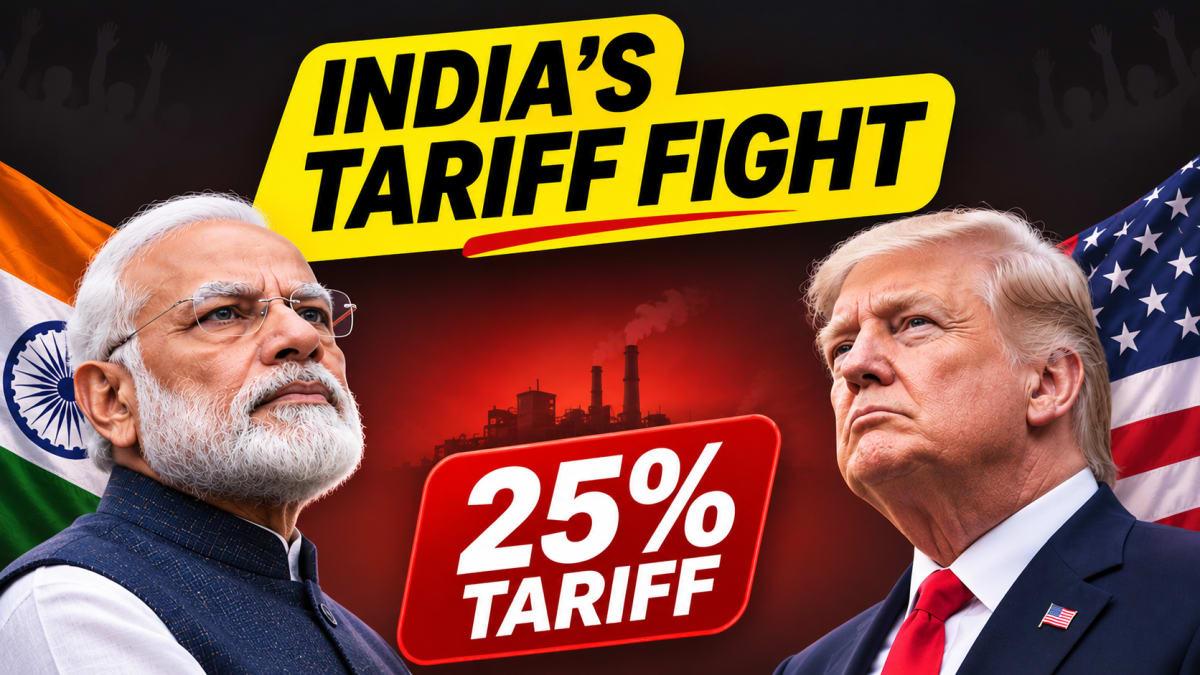
Washington is threatening India with a 25% tariff on exports, accusing the government of creating "excess capacity" through manufacturing subsidies. The US Trade Representative offered a lower 17% tariff if a deal is reached, effectively using taxes as a bargaining chip to force a trade agreement.
The Story
On Wednesday, the US Trade Representative (USTR) Jamieson Greer dropped a report that could change the cost of every Indian-made gadget, car part, or textile sold in America.
The US government has determined that India's industrial policies are "unreasonable" and burden American commerce. Specifically, Washington is pointing a finger at initiatives like Make in India and the Production Linked Incentive (PLI) schemes. They claim these programs are helping India build more factory capacity than its own people can actually use.
Then, the US added a catch. This is not a simple tax hike. It is a tiered system designed to push India toward a dotted line. If India signs a reciprocal trade agreement with the US, it faces a 17% tariff on its goods. If New Delhi refuses to sign a deal, that tax jumps to 25%.
India is not taking this sitting down. The Commerce Ministry issued a statement on Wednesday rejecting the idea that it has any structural excess capacity in any sector. They argue that India's manufacturing growth is about meeting its own needs and growing its economy, not distorting global trade.
And here is the strange part. Even with the lower deal rate, India would still pay more to sell in the US than some of its closest friends. While India’s best-case rate is 17%, nations like Japan and South Korea face 15% under the same proposal.
So here's the question: if India is just trying to build its own manufacturing base, why is the US labeling it a global trade problem?
What exactly is structural excess capacity?
You see, the problem is not that India is making things. It is the fear of what happens when those factories become too large for the Indian market to handle.
Think of it like a neighborhood baker who receives a massive government grant to build a kitchen capable of baking a massive number of loaves of bread a day. If his neighborhood only has 10 families, he is eventually going to have to sell that extra bread in the next town over at prices so low that the local bakers there go out of business. Washington claims India's PLI schemes are the grant, and the US is the next town over.
This is what the US calls "structural excess capacity." They believe that by providing low interest rates and financial incentives, India is creating an artificial manufacturing boom. When the global economy feels the dollar vacuum or a slowdown in demand, the US fears these subsidized Indian goods will flood their markets and hurt American workers.
Now, why should you care? Because trade disputes usually end up hitting the consumer. If Indian exporters have to pay a 25% tax to enter the US, they will either raise their prices or lose business to rivals. To keep India interested, the US has carefully calibrated its offer to give India a tiny lead over its neighbors.
According to the think tank GTRI, the proposed rates are designed to create a "reciprocal-tariff regime." By offering India a 17% rate, the US gives Indian goods a 1% edge over rivals like Bangladesh and Indonesia, which face an 18% rate if they sign a deal. It also puts India 3% ahead of China and Vietnam, who are looking at 20% deal rates.
The USTR has investigated 14 economies including India under Section 301 of the Trade Act of 1974. This is a powerful tool that allows the US to take action against any foreign policy it deems "unreasonable" or "discriminatory."
| Trading Partner | Rate with Trade Deal | Rate without Deal |
|---|---|---|
| Japan, South Korea, EU | 15% | Not specified |
| India | 17% | 25% |
| Bangladesh, Thailand, Malaysia | 18% | Not specified |
| China, Vietnam | 20% | Not specified |
Why is India hesitating to sign?
But here's the twist. While the 17% rate looks better than 25%, India is worried about being "baited" into a one-sided deal. The GTRI warns that this dual-rate structure is a way for Washington to extract "unilateral concessions" from trading partners without actually fixing the underlying issues.
India is also playing a longer game. New Delhi wants to see the final rates imposed on all its competitors before it commits to anything. There is also the lingering threat of separate sanctions under the Lindsey Graham statute for buying Russian oil. Signing a trade deal now might not protect India from other penalties later.
Now to be clear, the Indian government says it is still committed to a deal. The two countries have been working on this since the bilateral trade agreement was announced on 2nd February 2026. India just wants to ensure that any advantage it gets today is "durable" and won't be snatched away next year.
This trade friction comes at a time when India is already sensitive about what it lets into its own borders. Now, the tables have turned, and the US is the one putting up the fences.
So, is this dispute about actual overproduction? Not really. It is about bargaining power. The US is using the threat of a 25% tariff to bring India to the table, while India is trying to protect the subsidies that it believes are essential for its growth.
The next big date to watch is January 5, 2027, which is the deadline for public comments on these new tariffs. Hearings will follow on January 25, just as the global trade landscape prepares for another year of "reciprocal" tension.
If this helped the US-India trade dispute make sense, share it with a friend on WhatsApp, LinkedIn, or X. You might also enjoy our story on how US strength hurts India.