In today's FirstScroll, we break down why the world's most wanted watchmaker keeps its watches so hard to buy, and explain why that might not be the neat marketing trick everyone assumes.
This one is about a queue you cannot pay to skip. With that out of the way, let's dive into today's story.
The Story
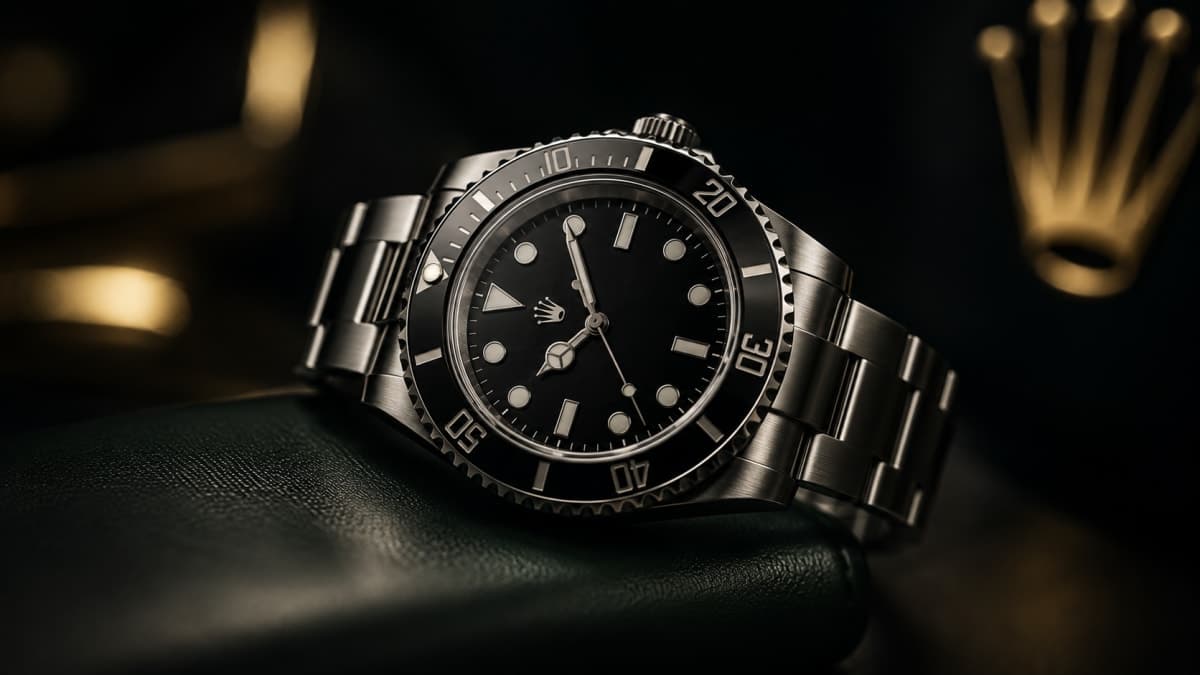
Walk into a Rolex boutique to buy a steel Submariner or a Daytona, cash in hand, and you may walk out with nothing but your name on a list. The watch you want is not in the case. It might arrive in a year. It might arrive in five. Or the dealer might gently suggest you buy a few other pieces first, to prove you are a serious customer.
This is not a struggling brand. Rolex is the most recognised name in watches and one of the most profitable luxury companies on earth. So the empty display case is strange. A company that cannot keep up with demand usually has a problem. Rolex looks like it has built one on purpose.
Here is the tell. Rolex makes only about six to seven percent of the world's Swiss watches by volume, yet it takes home a far larger slice of the industry's money. And in 2024, with buyers still queuing, Rolex cut its production, from roughly 1.24 million watches the year before to 1.18 million. Fewer watches, not more.
So here's the question. Why would the most powerful name in watches, sitting on demand it cannot come close to meeting, choose to build fewer watches rather than more?
You see, most companies are wired to chase volume. More units means more revenue, and shareholders reward the company that grows. If Rolex were an ordinary listed business, an investor would be pounding the table: demand is off the charts, so build another factory and print money.
But Rolex is not an ordinary business. It is entirely owned by a charitable foundation, the Hans Wilsdorf Foundation, set up by its founder so the company could never be sold, floated, or forced to answer to outside shareholders. There is no one demanding a bigger sales number next quarter.
That freedom is the whole game. It lets Rolex treat scarcity not as a failure to keep up, but as the product itself.
Economists even have a name for this. A Rolex behaves like a Veblen good, and [what a Veblen good is](INTERNAL: veblen good luxury pricing) comes down to one strange rule: people want it more precisely because it is expensive and hard to get. Flood the market, and you do not sell more. You break the spell.
So walk through the incentives. For Rolex, making an extra hundred thousand Submariners this year would lift revenue once, then quietly cheapen the very thing that lets it raise prices for decades. For the dealer, a thin trickle of hot models is what keeps customers loyal and coming back. And for the buyer, the difficulty is not a bug. The waiting list is part of what makes owning one feel like a win.
You can see the strategy in the numbers. Even as it made fewer watches in 2024, Rolex's revenue still climbed past CHF 10 billion. It did not grow by selling more. It grew by making each watch cost more, and letting the queue do the rest.
But here's the twist. The tidy story that Rolex starves supply to pump prices is only half right, and Rolex itself flatly denies it. Building these watches in-house is genuinely slow, and the brand insists it will not cut quality to chase a boom. Part of the shortage is simply real.
And when scarcity ran wild, even Rolex lost its grip on it. During the pandemic, the hype curdled into a full speculative mania. The steel Daytona, which lists for around $15,000, peaked above $50,000 on the resale market as flippers piled in.
Then the bubble popped. As interest rates rose and the crypto crowd cashed out, the secondhand Rolex index fell for nine straight quarters from its early 2022 top. That Daytona slid back to the mid-$30,000s. "Rolex always goes up" turned out to be a story, not a law.
Now to be clear, Rolex did not sit still. If your product is being scalped in a market you do not control, you go and take control of it. In 2022 it launched its own Certified Pre-Owned program, selling used Rolexes with an official seal at market prices. A year later it acquired the retailer Bucherer, one of its largest sellers, its first serious move into owning the shops themselves.
Read together, those moves say a lot. The scarcity may not be a pure trick, but Rolex is very deliberately capturing the value that scarcity creates, right down to the resale counter. Even after the correction, the steel Daytona still trades around 130% above its list price.
So, does Rolex keep itself scarce on purpose? The honest answer is that it barely has to try, and it has built a company that wins whether you buy new, wait years, or give up and buy used. The genius is less a single trick than a structure: no shareholders, no pressure to flood the market, and near total patience.
The catch is that the whole machine runs on demand outracing supply. In 2025 and 2026, the frenzy cooled, waitlists shortened, and those sky-high premiums began to compress. Whether Rolex's scarcity is a permanent moat or a pandemic-era bubble slowly letting out air is something only time will tell.
Until then…
If this story helped you make sense of why the hardest watch to buy is also the one everyone wants, share it with a friend on WhatsApp, LinkedIn or X. You might also enjoy our story on AMUL.