Imagine you're a 22-year-old guy living in Bengaluru.
You have a decent job. Maybe at a startup or an IT firm. You care about how you dress. You scroll through Instagram and see guys wearing sharp, well-fitted clothes. You want that. You really do.
But then you check the price tag.
Zara wants ₹4,000 for a shirt. Mango wants ₹5,500. The branded stuff is just too expensive for someone who's just starting out in life.
So what do you do?
You end up buying something from a random brand at a mall. Something that looks okay but doesn't really feel like you. Something your dad might also wear. You settle.
And that settling that quiet frustration of a young Indian man who wants to dress well but can't justify the price is exactly the gap that Snitch decided to own.
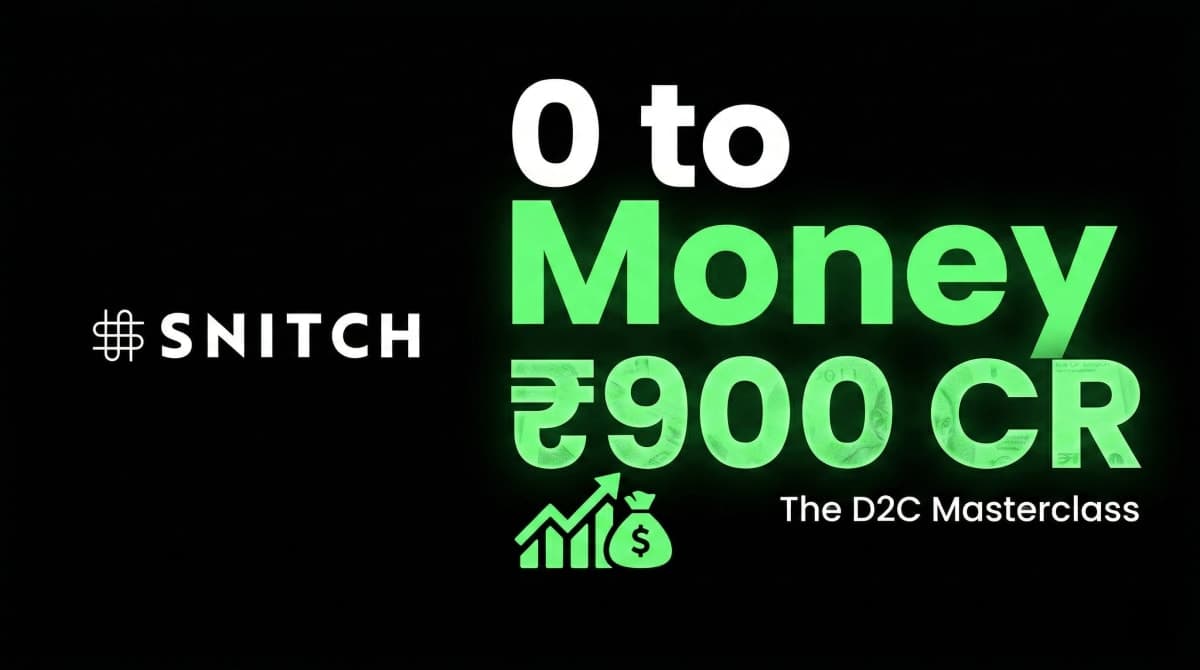
Three years later? They just crossed ₹900 crore in revenue.
No celebrity founder. No Shark Tank moment. No massive funding announcement that made the news. Just a brand that understood one person really, really well and sold to that person relentlessly.
Let's break down how they did it.
First, Let's Talk About the Graveyard
Before we celebrate Snitch, let's talk about everyone who tried and failed.
India has seen hundreds of D2C fashion brands come and go in the last decade. Most of them followed the same playbook. Raise money. Spend on ads. Hire influencers. Offer 50% discounts. Repeat until the money runs out.
Dozens of brands burned through crores of investor money trying to become the next big thing in Indian fashion. Most of them are either dead, struggling, or trying to pivot into something else.
The problem was never the ambition. The problem was that everyone was trying to sell to everyone.
"Young India loves fashion" okay, but which young India? A 19-year-old college student in Jaipur has very different needs from a 28-year-old working professional in Hyderabad. A woman shopping for ethnic wear thinks completely differently from someone buying streetwear.
You can't win a market you haven't defined.
Snitch defined their market so specifically that most investors probably rolled their eyes when they heard the pitch.
"We're selling clothes to young Indian men aged 18 to 30 who want to look good but don't want to pay Zara prices."
That's it. That's the customer.
No women's section. No kids. No ethnic wear. No home decor. Just shirts, trousers, co-ords and casual wear for one very specific guy.
And that focus that ruthless, almost boring focus is what made them win.
The Man Nobody Was Dressing
Here's something funny about Indian fashion.
For decades, the men's clothing market in India was basically ignored. Women's fashion got all the attention. All the investment. All the creativity. Men's fashion was an afterthought you either bought the expensive branded stuff or you went to whatever your neighbourhood store had.
The young Indian man who cared about fashion had two options. Burn money on international brands. Or look like he doesn't care.
Snitch looked at this gap and saw an opportunity the size of a mountain.
India has over 300 million people between the ages of 18 and 35. A massive chunk of them are young men entering the workforce, earning their first salaries, living away from home for the first time. They're building their identity. And a huge part of that identity is how they dress.
These guys are on Instagram every day. They're watching reels. They're seeing what cool looks like. They want in. They just can't afford Zara or Tommy Hilfiger.
Snitch said we'll dress you. Stylish, affordable, and made for your body.
Because here's another thing nobody talks about fit. International brands design for Western body types. The average Indian man has a different build. Snitch understood this and designed accordingly. Clothes that actually fit the Indian body. What a concept.
And if you think this is small India's apparel market is expected to cross $100 billion by 2030. Men's wear alone is a multi-trillion rupee opportunity. Snitch is barely scratching the surface.
The Instagram Generation Grew Up
Let me tell you something about how Snitch actually grew.
They didn't start with a big bang. No massive launch campaign. No Bollywood ambassador. They started where their customer lived Instagram and YouTube.
They went after fashion creators. Not the mega-celebrities with 10 million followers, but the micro-influencers. The guy with 50,000 followers who posts outfit videos every week. The travel creator who always looks sharp. The fitness guy who actually dresses well.
These creators had smaller audiences, but those audiences trusted them. When your favourite fashion creator says "this brand is great," you believe him. Because he's not a celebrity getting paid crores to smile for a camera. He's a real person who actually cares about clothes.
Snitch built relationships with hundreds of these creators. They sent products. They ran collaborations. They let creators be creative with how they styled the clothes.
The result? Their audience grew organically. Authentic. Real people showing real outfits to real followers.
And when those followers clicked the link and saw the prices ₹799 for a shirt, ₹1,299 for co-ords something clicked in their heads.
This is actually affordable.
They bought. They wore. They came back.
The flywheel started spinning.
Speaking of flywheels this is exactly what we wrote about when Namma Yatri took on Uber in Europe. Build something people genuinely love. Let word of mouth do the heavy lifting. Scale from there.
Wait, How Are They Making Money?
This is the part that makes Snitch genuinely interesting.
You see, growing revenue is easy if you're willing to lose money doing it. You offer massive discounts, run ads at a loss, acquire customers cheaply and hope they stick around. Half the D2C brands in India did exactly this and are now either dead or on life support.
Snitch chose a different path.
They kept their prices affordable but not dirt cheap. They managed their supply chain tightly. They didn't run endless sale cycles that train customers to only buy during discounts. They grew their team carefully.
The result is a brand that is actually making money.
In 2026, when most startups are still chasing profitability like it's a distant dream, Snitch is already there. ₹900 crore in revenue and actually profitable.
That is rare. Genuinely rare.
Think about it this way. Nykaa took years to become profitable. Meesho burned through massive amounts before turning the corner. Dozens of well-funded D2C brands are still in the red after years of operation.
Snitch, without the giant funding rounds and the VC fanfare, quietly built a business that works.
And this is not happening in isolation. Remember what we wrote about India's biggest Fintech IPO hitting pause? The market is rewarding profitability right now. Companies that actually make money are the ones investors want to talk to.
The Bigger Picture Nobody Is Talking About
Here's what the Snitch story is really about.
It's not just about a fashion brand. It's about a fundamental shift happening in Indian business.
For a long time, the startup world worshipped growth at all costs. Burn money. Get users. Figure out profits later. Investors funded this model. The media celebrated it. Everyone assumed that's how you build a big company.
Then reality hit.
Interest rates went up globally. Funding dried up. Investors started asking uncomfortable questions like wait, when will you actually make money?
And suddenly the rules changed.
The companies that had been quietly building real businesses actual revenue, actual margins, actual profits started looking like geniuses. Because they didn't need to go back to investors every 18 months with a begging bowl. They were generating their own fuel.
Snitch is one of these companies.
They didn't chase the headline valuation. They didn't raise a massive Series C that gets written about in Economic Times. They just built a brand that people actually love, in a category that was clearly underserved, and they did it profitably.
This is the same story we told when we wrote about foreign investors pulling out a record ₹1.14 lakh crore from Indian markets the smart money is moving toward real fundamentals. And Snitch has exactly that.
That's the new playbook. And more founders are watching.
What Happens Next?
The obvious question is where does Snitch go from here?
₹900 crore is impressive. But the Indian men's fashion market is worth hundreds of thousands of crores. The opportunity is genuinely massive.
A few things to watch:
The IPO question. With revenues at this scale and profitability already achieved, Snitch is exactly the kind of company that could go public. Indian markets have been hungry for profitable consumer brands. If Snitch files a DRHP in the next 12 to 18 months, don't be surprised.
The category expansion question. Right now Snitch is purely men's casual wear. Do they stay focused or do they expand into women's, ethnic, or accessories? This is the critical decision every focused brand faces. Expand too early and you lose what made you special. Stay too focused and you hit a ceiling. How Snitch handles this will define the next chapter.
The offline question. Most D2C brands eventually go offline. Physical stores. Shop-in-shops. Retail partnerships. Snitch has been mostly digital. As they scale, the pressure to go offline will grow. Watch this space.
The copycats question. When something works, everyone copies it. Affordable men's fashion targeting young Indians expect 20 new brands to chase this exact positioning in the next two years. Can Snitch stay ahead? Brand loyalty and community will be the answer. We saw exactly this happen in the 10-minute delivery war between Zepto, Blinkit and Swiggy Instamart first mover advantage matters, but it doesn't last forever.
The One Lesson That Matters
If you take nothing else from this story, take this.
Serve one person better than anyone else in the world.
Not everyone. Not a broad demographic. One specific person with one specific problem and one specific budget.
The Snitch customer is not a mystery. He is a 22-year-old in Pune or Hyderabad or Chennai. He earns between ₹30,000 and ₹80,000 a month. He scrolls Instagram. He wants to look sharp at work and on weekends. He cannot justify spending ₹5,000 on a shirt but he will happily spend ₹900 on something that looks just as good.
Snitch knew this person in their sleep. Every product decision, every pricing call, every campaign all of it was built around this one person.
That is why they won.
In a world obsessed with scale and total addressable market and growth at all costs, Snitch did something quietly radical. They picked their person. They served that person with everything they had. And the crores followed.
The Bottom Line
Snitch just hit ₹900 crore in revenue.
A fashion brand. For young Indian men. Started by people who saw a gap nobody else was filling. Built without the noise and fanfare of the typical startup story.
Profitable. Growing. Real.
In 2026, with markets uncertain and funding harder to come by, the Snitch story is a reminder that the fundamentals always win in the end.
Know your customer. Serve them well. Build a real business.
The rest takes care of itself.
That's your FirstScroll for today. If this made you think, forward it to one friend who'd enjoy it. See you tomorrow morning. ☕